

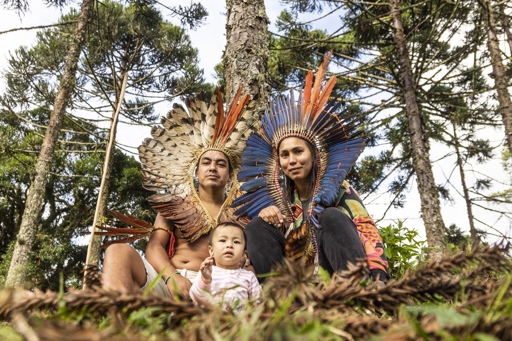
IBIRAMA-LA KLÃNÕ INDIGENOUS TERRITORY, Brazil — Zág, pronounced “zã,” is the Xokleng word for the Brazilian pine. This tree species, Araucaria angustifolia, is typical of the Atlantic Forest that runs along Brazil’s south and southeastern coast, and has been evolving on the planet for about 200 million years. Each female tree produces dozens of cones, which in turn carry hundreds of seeds. Known in Brazil as pinhão, the Brazilian pine seed is a nut eaten by at least 22 animal species as well as humans, who rely on it for both nutrition and income. For some Indigenous peoples, however, it means more than food. It’s part of their culture, history, and origin myths. That’s the case for the Xokleng people, also known as the Laklãnõ, in what is today Santa Catarina state. In their villages, people are even named after the tree. “Brazilian pines are sacred to us,” says Carl Gakran, executive director of the Zág Institute. “You can’t tell the story of our people without speaking of them. Our creation myth says the protective animal was made from that tree, so it appears in the very first story.” Carl decided to do something for the pines in 2016, after learning that the species was critically endangered as a result of deforestation, urban expansion, and logging. Currently, Brazilian pine forests are estimated to cover less than 3% of their original range, which once stretched across much of the states of Paraná, Santa Catarina and Rio Grande do Sul, with small patches…This article was originally published on Mongabay
From Conservation news via This RSS Feed.