

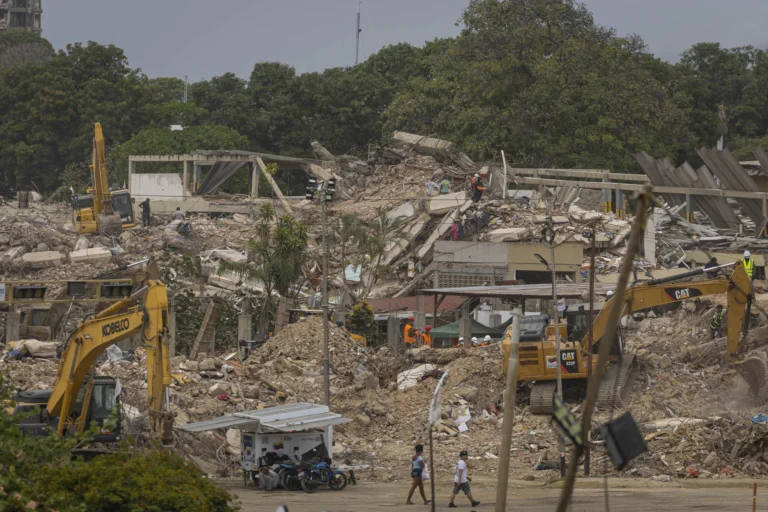
One month after Venezuela’s earthquakes, authorities begin repairing yellow-tagged buildings as recovery operations continue.
Recovery efforts remain underway in La Guaira one month after the earthquakes that struck Venezuela, with authorities launching repairs on buildings deemed structurally safe while debris removal, body recovery and reconstruction continue across the hardest-hit areas.
One month after the earthquakes that severely affected Venezuela, recovery operations continue at full pace in La Guaira, where authorities have entered a new phase focused on repairing buildings classified as safe for rehabilitation while emergency response efforts remain active.
Heavy machinery continues operating overnight to remove debris and recover bodies, although activity decreases after 8:00 p.m.
Correspondent Roberto Hugo Preza reported coordinated work between crews from the Ministry of Public Works and volunteers in communities including Cati La Mar. In the area, damaged walls have been removed to allow repair work to begin on buildings assigned a yellow safety tag.
“The technicians said there was no major risk, that the damage to the walls, roofs and doors could be repaired and that people could continue living in those places,” the correspondent said, referring to buildings that received the yellow classification.
Workers are using manual tools to repair and rebuild damaged structural elements with the aim of ensuring residents’ safety. Residents have expressed appreciation for the authorities’ response following the disaster. Although some remain uneasy about returning to the affected apartment buildings, they have acknowledged the speed of the recovery work.
In sectors where no structural collapses occurred, heavy equipment continues clearing affected areas as economic activity gradually resumes. Authorities have maintained the deployment of personnel and technical resources to address the most urgent needs of communities impacted by the earthquakes.
Seasonal rainfall could increase the risk of larger landslides due to ground displacement caused by the twin earthquakes in Waraira Repano, the mountain between Caracas and La Guaira. However, Feliciano De Santis, president of the Venezuelan Society of Geologists, said that, based on his observations, the situation does not represent an imminent danger.
According to the latest official figures, the twin earthquakes that struck in June have left 5,346 people dead, 16,740 injured and 17,907 without housing.
From teleSUR English via This RSS Feed.