

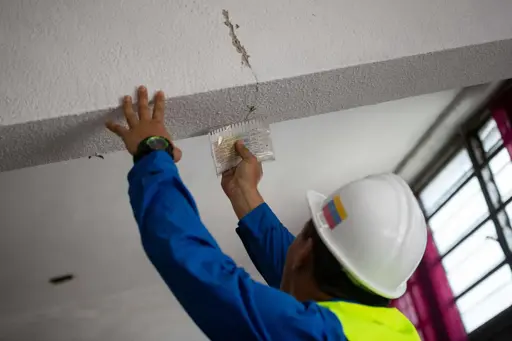
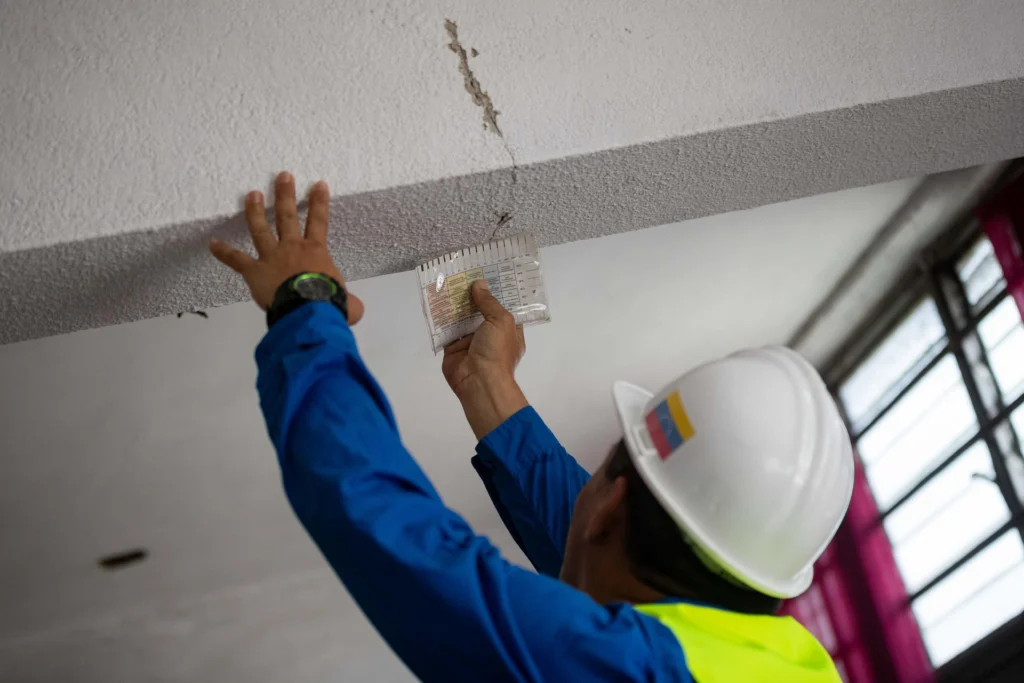
Venezuela has 11,794 homes under reconstruction across seven states through the Venezuela Rises Plan, nearly one month since twin earthquakes of magnitude 7.2 and 7.5 struck the country, displacing thousands of families and causing widespread structural damage.
Operational efforts, led by the Presidential Commission and the General Staff of Camp and Housing in coordination with the National Assembly, include habitability inspections, technical structural classification, and coordination to acquire properties on the secondary market to ensure families currently in temporary shelters receive permanent housing before December.
During the latest official balance of state actions, President of the Venezuela Rises Plan, Jacqueline Faria, detailed that the national figure includes 4,393 single-family or two-family homes and 7,401 apartments distributed across 228 buildings.
RELATED: Venezuela Launches Program for Children Injured in June Earthquakes
“Barely three days before the first month, we have 11,794 homes under reconstruction. This is at the national level, this is the number. 11,000 homes in seven states.”, Faria detailed, highlighting the scope of state coverage.
To prioritize intervention and certify structural safety in affected zones, shelters, and temporary camps, the Executive implemented a color-coded technical classification system. The green label identifies habitable properties without any risk, the yellow label corresponds to buildings with restricted use due to minor structural damage or masonry issues, while the red label is assigned to structures that will undergo a second phase of review to evaluate appropriate repair protocols.
#FromTheSouth News Bits | As engineering teams continue structural repairs to residential buildings in La Guaira, local communities are organizing psychological support for the most affected, in observance of Children’s Day. #WeStandWithVenezuela pic.twitter.com/KF0lxTI4Lb
— teleSUR English (@telesurenglish) July 22, 2026
In the state of La Guaira, the Presidential Commission for the Evaluation of Housing and Infrastructure Habitability has inspected 6,907 buildings. Commission President Francisco Garces reported that 3,237 structures received green classification, 1,785 were categorized as yellow, and 1,885 received the red label. Garcés clarified the situation regarding this last category, noting that “a home receiving the red label does not necessarily mean it must be demolished.”
Historic Largest Housing Plan
Garces confirmed the delivery of guidelines for repairing non-structural elements to institutions linked with Venezuela Rises Plan, norms that will be made available to entities and private citizens through permits processed before mayoralties and state governments. The commission will soon issue directives for minor and major structural damage, which will include shoring and bracing maneuvers under the direct supervision of a certified engineering professional.
In the framework of supervision activities, Acting President of Venezuela Delcy Rodriguez conducted a technical inspection visit on Tuesday across various terrains in La Guaira state to evaluate pending works alongside the General Staff of Camp and Housing. During the activity, Rodriguez reiterated the official commitment to delivery: “We are following a schedule from now until December for housing delivery so that all people in temporary camps know they will have a home. That is our fundamental task at this moment, nothing else.”
The reconstruction plan represents one of the largest housing recovery efforts in Venezuela’s recent history, mobilizing state institutions, engineers, construction crews, and municipal governments to address the devastation caused by the seismic events. With approximately 11,794 properties at various stages of repair -ranging from minor masonry fixes to complete structural rehabilitation- the Venezuelan government has set an ambitious timeline to relocate all families currently housed in temporary shelters before the end of 2026.
The plan also contemplates the acquisition of existing properties in the secondary real estate market as an alternative solution for families whose original homes suffered irreparable damage, ensuring no affected family is left without a permanent housing solution.
The initiative represents an innovative public-private coordination model that leverages existing housing stock to address urgent social needs without requiring extensive new construction timelines.
From teleSUR English via This RSS Feed.