

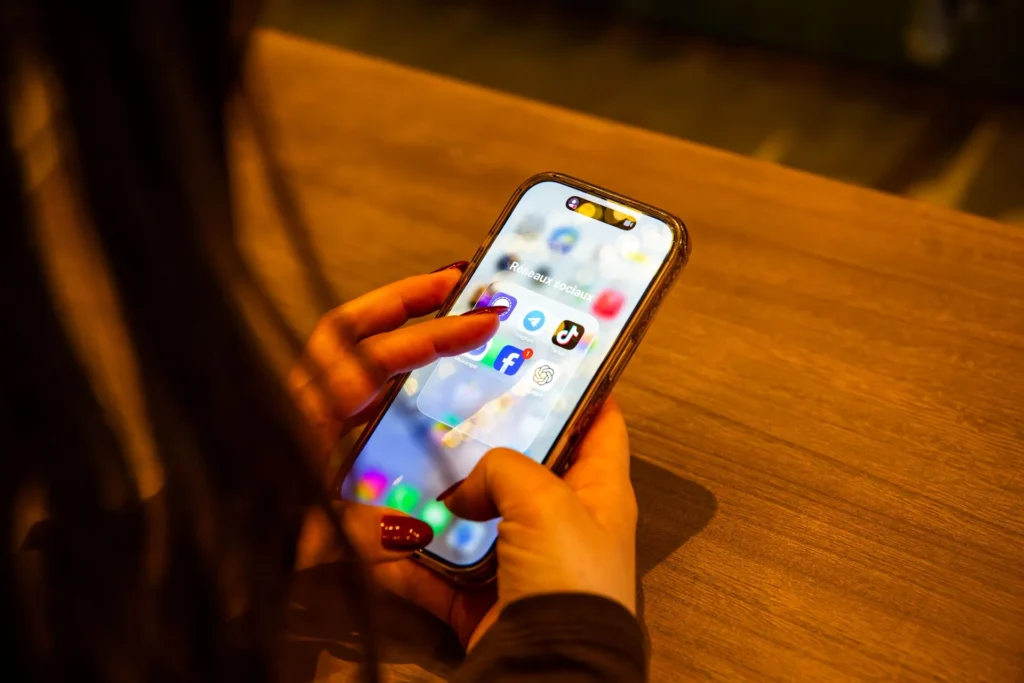
France became on July 22 the first European Union country to approve a blanket ban on social media for minors under 15, a flagship initiative of President Emmanuel Macron’s second term that also prohibits mobile phone use in secondary schools.
The decision arrives amid rising global alarm over the effects of social media and digital content on children and adolescents.
According to France’s health watchdog, one in every two teenagers spends between two and five hours daily on a smartphone. The report cited by French authorities warns of harmful effects associated with the use of these platforms, including low self-esteem and exposure to content linked to self-harm, drug use and suicide.
RELATED: Britain’s Under-16 Social Media Ban Raises Questions Over Effectiveness
Several families in France have filed lawsuits against TikTok over the suicides of adolescents allegedly related to harmful content on the platform. “France is leading the way in Europe in protecting our children and our teenagers,” President Macron declared this Wednesday, backing the decision.
“I had committed to this, and now it has been voted: the use of social networks will be prohibited for minors under 15 at the start of the school year. Now it is up to the Constitutional Council to rule on this and then take measures so that this measure is effective and protects our children on the internet,” he wrote on his X account.
Je m’y étais engagé, c’est désormais voté : les réseaux sociaux seront interdits aux moins de 15 ans à la rentrée. Merci aux parlementaires. Au Conseil constitutionnel de statuer puis place à l’action pour rendre cette mesure concrète et protéger nos enfants en ligne. pic.twitter.com/jC79unxX67
— Emmanuel Macron (@EmmanuelMacron) July 21, 2026
The law will not cover online encyclopedias or educational and scientific directories. However, lawmakers from the left-wing party La France Insoumise objected to the initiative, arguing that its constitutionality is unclear, that it could end anonymity on the internet, and that it would be difficult to enforce.
Enforcement Challenges Ahead
The regulation will not immediately imply a total ban, according to legal experts. Ines Legendre, legal advisor for the online protection group e-Enfance, explained that authorities must address the issue of existing accounts belonging to minors under 15, identify them, suspend them, and implement age verification systems for all new accounts.
“We will also have to address the issue of existing accounts of minors under 15. How do we identify them? How do we suspend them? And then there is the question of age verification for all new accounts that will come into force,” Legendre said.
Macron seeks to have the law enter into force at the start of the new school year in September, although its application could be delayed if the Constitutional Council’s review determines modifications are necessary. The law represents a significant shift in France’s approach to digital regulation, placing the country at the forefront of European efforts to protect minors in the online environment.
The approval is part of a wave of global restrictions on minors’ access to social media. Australia banned social media access for minors under 16 in 2024, imposing fines of up to 35 million dollars on platforms such as TikTok, Facebook, Snapchat, Reddit, X and Instagram for non-compliance. Across Europe, Spain, Denmark, Greece and the United Kingdom are also analyzing similar measures, reflecting a continent-wide reconsideration of children’s digital rights and safety.
UNICEF has welcomed the commitment to child safety but warned that regulation must not be a substitute for platforms investing in child security, improving platform design and content moderation. The agency emphasized that legislative measures should complement -not replace- corporate responsibility in protecting young users.
The French law targets the growing crisis of adolescent mental health linked to social media, with studies across multiple countries establishing correlations between heavy platform use and increased rates of anxiety, depression and self-harm among minors. The legislation positions France as a test case for restrictive digital policies within the European Union, with other member states closely watching the implementation process.
The French approach contrasts with other European strategies that rely on industry self-regulation or age-based content restrictions rather than outright bans. The outcome of France’s experiment could influence policy directions across the continent as governments grapple with the complex challenge of balancing child protection, digital rights and freedom of expression in the online sphere.
From teleSUR English via This RSS Feed.