

Meanwhile, Russian Authorities Ban Transit Flights Over Moscow and Lowers Maximum Permitted Altitude.
On Wednesday, the Russian Defense Ministry confirmed that its forces carried out group strikes on Ukrainian port facilities in Odesa, hitting infrastructure used for unloading and storing military cargo, as well as fuel and lubricant storage tanks.
RELATED:
Ukraine’s Military Leadership Change Will Not Affect Front-Line Situation: Peskov
In addition to the port facilities, a Nova Poshta logistics center used to store military cargo was struck in Odesa. The strikes were carried out with high-precision air- and ground-launched weapons, as well as drones.
A battery of the Neptune-2 missile system was struck near the settlement of Kovalevka, outside Odesa, destroying two launchers and a transport-loading vehicle.
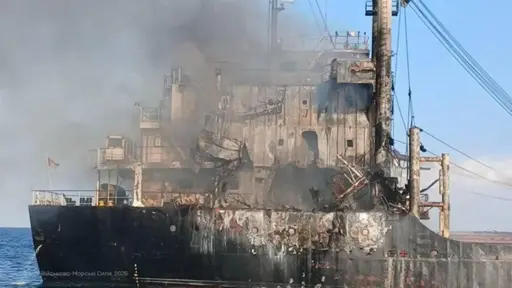
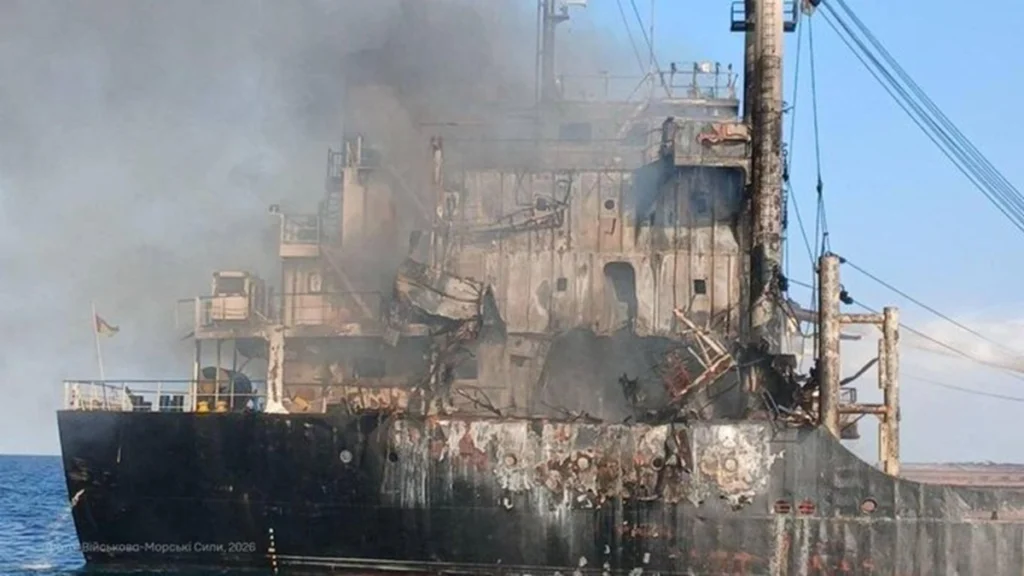
A dry cargo ship and a bulk carrier were also struck at sea while delivering cargo for the Ukrainian Armed Forces to the ports of Odesa and Chornomorsk.
On Wednesday, Krasnodar Gov. Veniamin Kondratyev said one person was killed and 10 others were injured as a result of a massive overnight Ukrainian drone attack.
The Russian Defense Ministry said air defense forces shot down 242 Ukrainian drones over multiple Russian regions overnight.
Las fuerzas armadas rusas atacan el depósito de petróleo más grande de Odesa.
Según el Ministerio de Defensa ruso, fueron alcanzados tanques de almacenamiento de combustible de la empresa “Eximnefteproduct”, cuatro buques de carga e instalaciones de infraestructura… pic.twitter.com/LquhMNZefj
— 𝐄𝐮𝐫𝐞𝐤𝐚 𝐍𝐞𝐰𝐬
(@EurekaNews10) July 21, 2026


The text reads, “Russian armed forces attacked Odesa’s largest oil depot. According to the Russian Ministry of Defense, fuel storage tanks belonging to the company Eximnefteproduct, four cargo ships, and port infrastructure facilities were hit. Following the attack, a thick plume of smoke covered several areas of the city.”
Russia Bans Transit Flights Over Moscow and Lowers Maximum Permitted Altitude
On Wednesday, the newspaper Kommersant reported that Russia’s state air transport agency, Rosaviatsia, has reduced by nearly half the maximum permitted altitude for civilian aircraft within Moscow’s airspace and has banned transit flights over the Russian capital.
The maximum permitted altitude for civilian aircraft was reduced from 8,550 meters to 4,900 meters (from Flight Level 280 to Flight Level 160) through Aug. 26 in areas near Moscow’s Sheremetyevo, Vnukovo and Domodedovo airports. The measures were adopted to ensure flight safety and were implemented on July 11, Kommersant reported, adding that they could be extended to other regions.
The changes were initiated by the Defense Ministry, and the transit flight ban is expected to significantly reduce air traffic in the area. The lower maximum altitude, in turn, will allow aircraft to land more quickly in the event of an emergency.
Since the start of the special military operation in Ukraine in 2022, Russian air carriers have operated under significant difficulties because of the cancellation of routes to the West, repeated airspace and airport closures caused by Ukrainian drone attacks, and the lack of aircraft spare parts resulting from international sanctions imposed on Moscow.
teleSUR/ JF
Sources: EFE – Xinhua
From teleSUR English via This RSS Feed.