

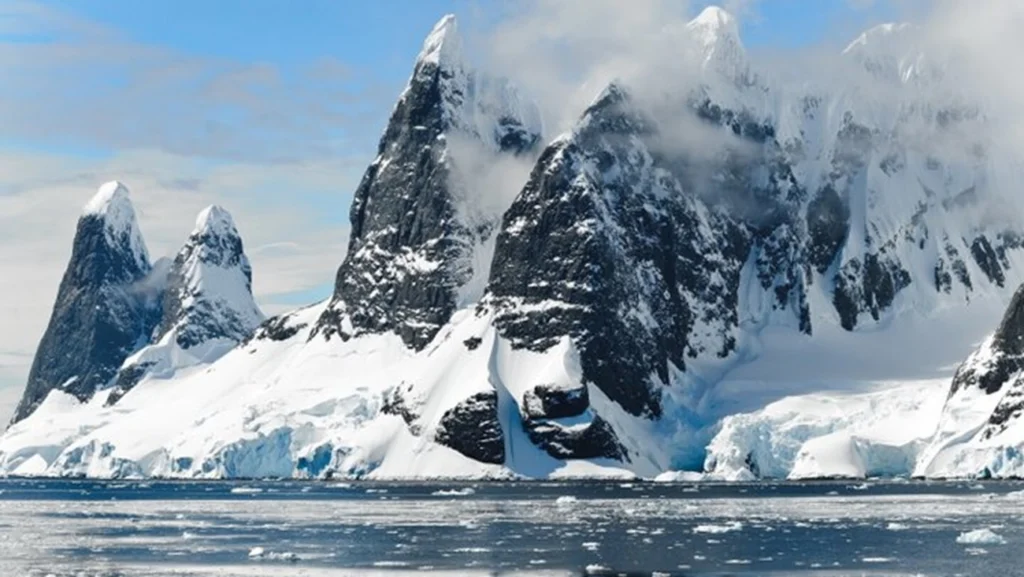
Antarctica is one of the regions where temperatures have risen most rapidly in recent decades.
On Tuesday, the Chilean Ministry of Science, Knowledge, Technology, and Innovation announced a pioneering program studying the combined effects of light pollution and global warming in Antarctica.
RELATED:
Chilean Scientists Confirm Validity of Food Labeling and Advertising Law
The project, called “Disrupting Polar Ecosystems: Light Pollution May Alter the Ecological Effects of Global Warming” (Dipole), aims to generate scientific evidence to inform the design of environmental conservation strategies.
Light pollution, defined as the alteration of natural light levels by artificial lighting, has been studied in other environments, but in Antarctica it remains largely unexplored.
Jose Pulgar, director of Dipole and professor at Andres Bello University (UNAB), explained that multiple ecological disturbances are simultaneously impacting Antarctic biodiversity, making it essential to understand their biological effects.
Australia works closely with Chile on a range of interests – from trade to science collaboration in Antarctica and on astronomy.
Andrew Martin, Ambassador to Chile, explains the inspiration he gains from working across the breadth and depth of the relationship. pic.twitter.com/9aBB6TFuP3
— Department of Foreign Affairs and Trade
(@dfat) July 19, 2026
The research combines fieldwork and laboratory experiments, focusing on coastal areas to assess the impacts on macroalgae, invertebrates, and marine vertebrates, key species for the functioning of southern ecosystems.
Cristian Duarte, deputy director of Dipole and researcher at UNAB, pointed out that the challenge is not to eliminate lighting, but to use it responsibly and intelligently, balancing human needs with environmental protection.
Antarctica is one of the regions where temperatures have risen most rapidly in recent decades, so the study integrates global warming to obtain more comprehensive answers.
A severe storm has swept through central and southern Chile, leaving a trail of destruction, heavy flooding, and damage to critical infrastructure.
The extreme weather event has claimed at least three lives. Intense winds and torrential rains have knocked out power grids,… pic.twitter.com/08KnRchNar
— teleSUR English (@telesurenglish) July 17, 2026
Source: teleSUR
teleSUR: JP
From teleSUR English via This RSS Feed.