

Summary
- As wildfire smoke worsens across Canada, volunteers are teaching people to build low-cost DIY air purifiers.
- The fan-and-filter devices can perform as well as commercial HEPA air purifiers while costing around $60 to make.
- Organizers say the workshops provide practical protection from smoke while building community in the face of climate change.
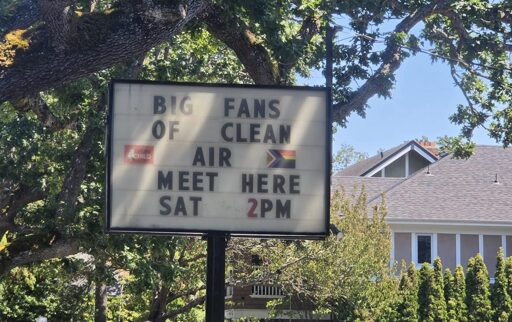
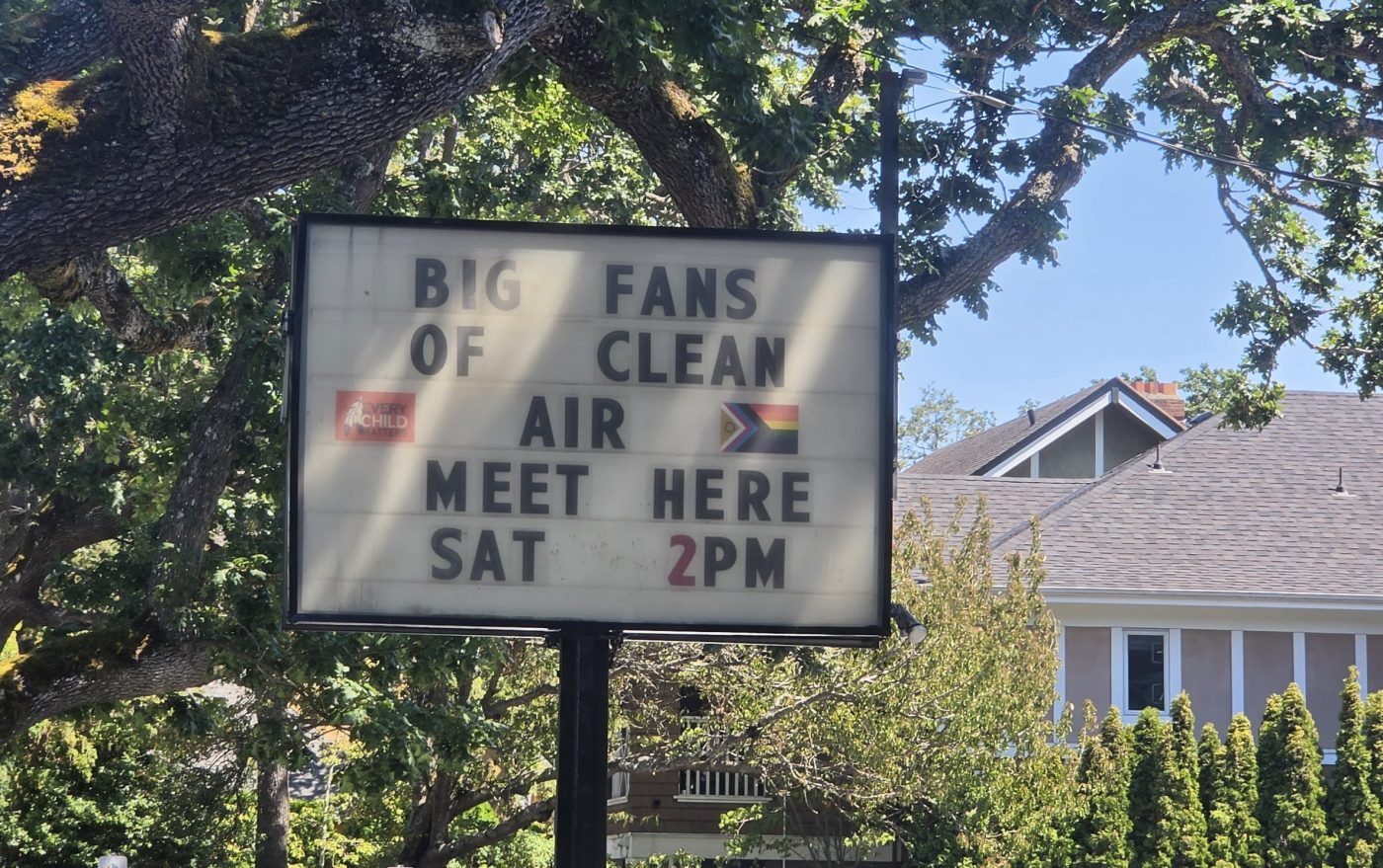
On a sunny Saturday in July, a few dozen people file into a United Church on a quiet, tree-lined street near Victoria. Outside, the sky is clear and cloudless — a far cry from the wildfire smoke blanketing other parts of Canada. Inside, people are taking steps to protect themselves from the toxic smoke that has become a regular feature of Canadian summers.
As climate change makes summers hotter and drier, wildfire season becomes, on average, longer and more severe. More Canadians are experiencing the impacts with every breath they take and three-quarters say they’re concerned about wildfire smoke impacting their air quality. Once smoke rolls in, air purifiers — filtration machines capable of removing toxic chemicals and tiny particulates from the air — can be difficult to find in stores, even for those who can afford them.
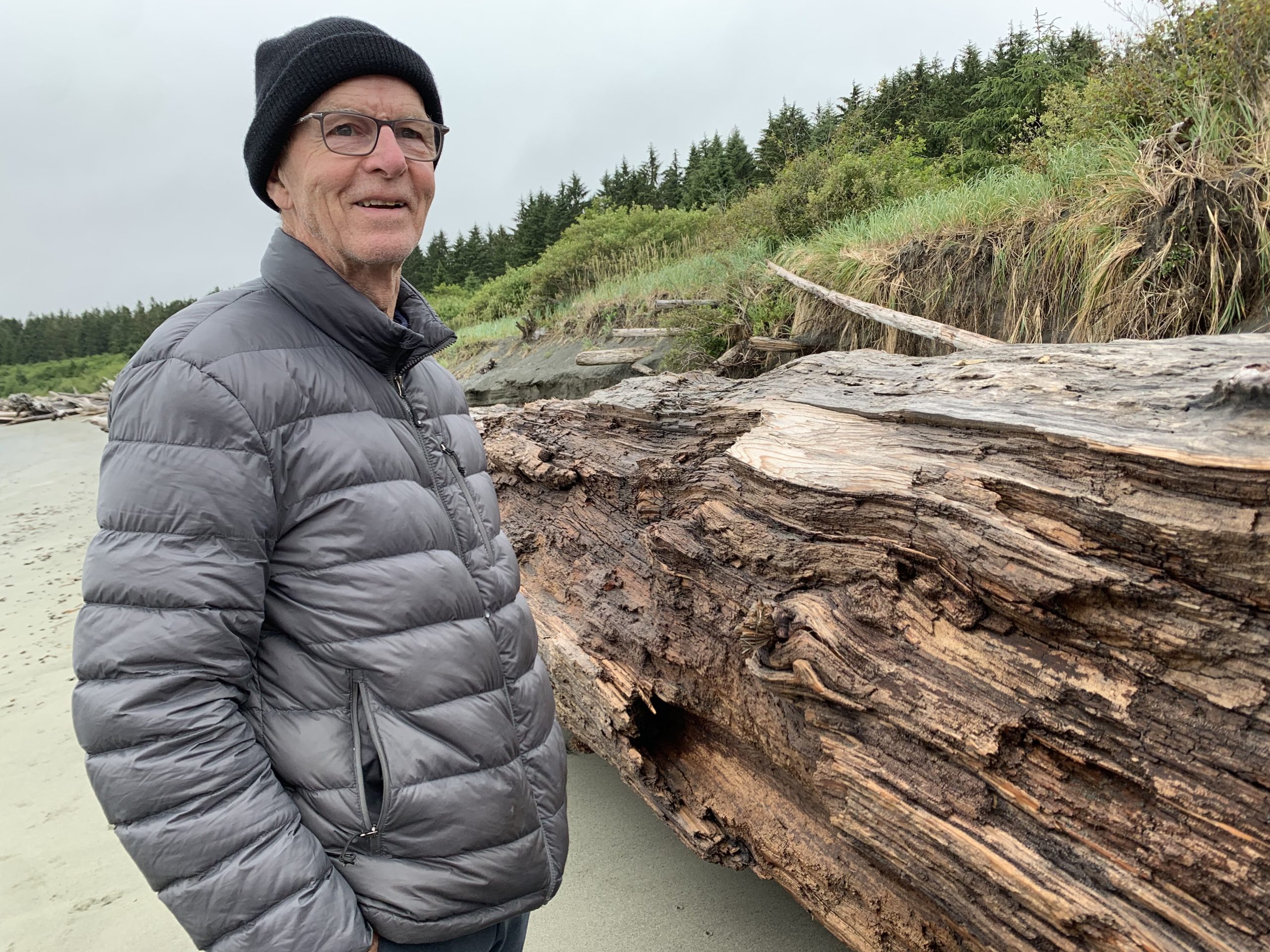
Bill Darnell has been involved in climate action for decades. He was inspired to organize the air purifier workshop after learning about a similar event held in Vancouver’s Downtown Eastside. Photo: Phyllis Beardsley
But at the church, participants are learning to build simple, effective air purifiers at a workshop organized by Bill Darnell, a local resident who helped found Greenpeace in 1970.
“I’ve been involved in social justice and climate action pretty much all my adult life and it’s kind of discouraging that I’m still having to do it at this point,” Darnell tells The Narwhal.
Darnell was inspired to organize the event after learning about a similar workshop that took place in Vancouver’s Downtown Eastside. He and other volunteers use information compiled by the BC Lung Foundation and Simon Fraser University to help people build simple DIY air purifiers, using simple and accessible components like box fans, furnace filters and duct tape.
A 2023 study conducted at the National Collaborating Centre for Environmental Health found these air purifiers can perform as well as commercial air purifiers equipped with high-efficiency particulate air (HEPA) filters. While HEPA-equipped air purifiers often cost hundreds of dollars, the materials for these DIY versions cost less than $60. Since 2023, the BC Lung Association has logged more than 160 community workshops where participants have built more than 3,200 air purifiers.
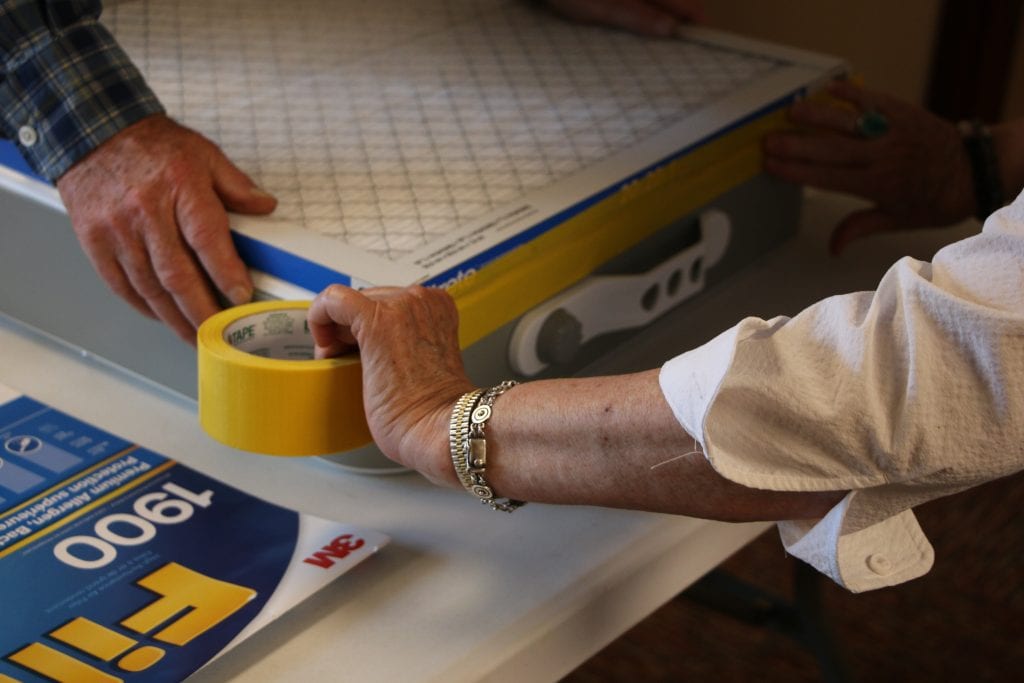
The simple air cleaners are quick and easy to assemble. It takes about 25 minutes to complete one solo; less when people work together. Photo: Shannon Waters / The Narwhal
B.C. has recorded 634 wildfires since April 2026 and 98 are currently burning across the province. The fires have put thousands of British Columbians on evacuation alert, while others have been evacuated — like the community of Boston Bar in the Fraser Valley, where a rapidly spreading wildfire nearby also closed the Trans-Canada Highway for four days in early July. Even so, wildfire smoke has — so far this year — had less of an impact on air quality than in previous years. Most of the province is experiencing low**–to–moderate–**risk air quality. Meanwhile, intense wildfire activity in Ontario made Toronto’s air quality the worst in the world on July 15.
Darnell describes the DIY air purifier workshop as an opportunity to build community and educate people while also empowering them to take action in the face of a direct threat like climate change.
“It really is important to come together when you’re facing a catastrophe,” he says. “There’s the fast-moving ones like floods and fires, and there’s the slower-moving ones like climate change and smoke. The most important resource is the people around you.”
A fan, a filter, a roll of duct tape: a simple solution for cleaner air
Wildfire smoke is more toxic than everyday air pollution. It can travel thousands of kilometres and linger in the air for weeks.
The smoke contains gases, such as carbon dioxide and sulphur dioxide, and volatile organic compounds, like benzene, toluene and butene. There is also particulate matter, which can include soot, dust, pollen and spores, as well as chemical particles. The particles are classified according to size and fine particulates — the really tiny ones, less than 2.5 microns in diameter and typically referred to as PM2.5 — pose the greatest threats to human health because they can travel deeper into the lungs than larger ones.
Fine particulates found in smoke and other types of air pollution have been linked to damage in several organ systems, including the heart, brain and reproductive system.
Certain air filters are capable of removing particulates from the air. The DIY air purifiers use a single MERV 13, commonly used in furnaces and available in Canada for less than $20 per filter, which need to be changed out regularly to maintain performance.
The 20” filters fit perfectly on the back of a 20” box fan, which costs about $35. Duct tape seals the filter to the fan, allowing air to be drawn through the filter and pushed out through the fan. To increase the air purifier’s efficiency, a “shroud” can be placed on the side of the fan opposite the filter. Made of duct tape or cardboard, the shroud blocks off the corners of the fan face, preventing air backflow.
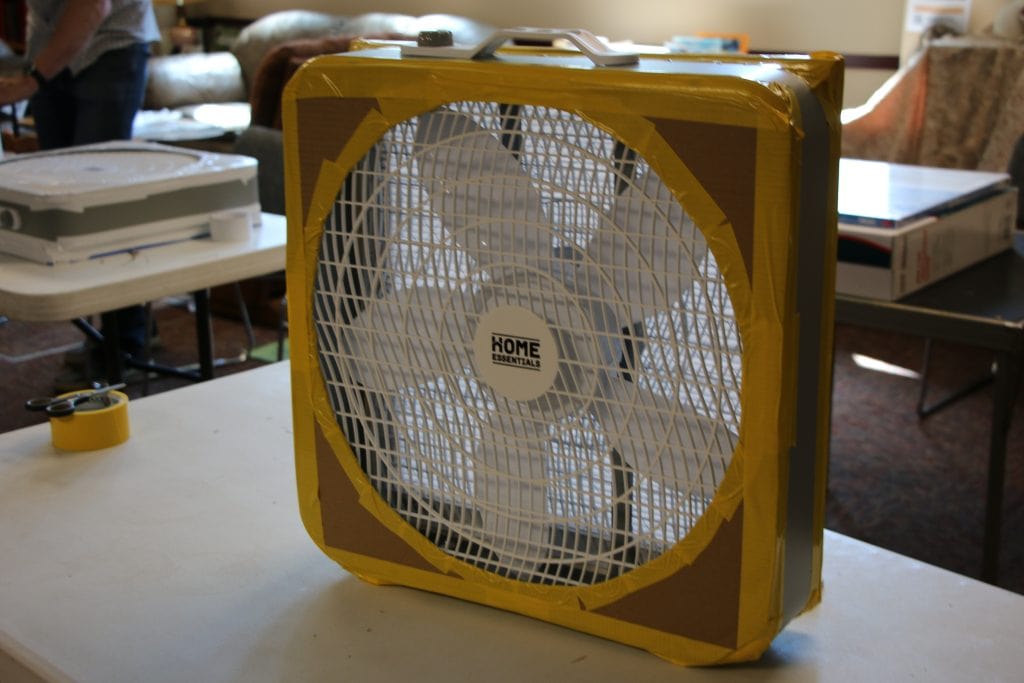
The “shroud” on the face of the fan helps prevent air backflow and increases the air purifier’s efficiency. Photo: Shannon Waters / The Narwhal
It takes about 25 minutes to assemble one air purifier, which can be used immediately to clean the air in a space of up to 400 square feet. At the Victoria workshop, each table soon sports at least one, some of them decorated with colourful duct tape designs, others sleek and white.
Community in the face of climate crisis
Among the workshop attendees is Victoria city councillor Dave Thompson, who is considering putting on a workshop in the neighbouring municipality.
“I wanted to see how it got organized,” Thompson says. “We’ve been very active on climate change and this is a piece we haven’t done yet.”
Many participants express a desire to do what they can in the face of the climate emergency.
“I feel like whatever we can do on an individual basis for ourselves and our families is always helpful,” Mary Jean, a nurse, tells a fellow participants at her table.
Around the room, several signs feature prompts for conversations about climate change and climate action.
“According to polls, 80 per cent of Canadians are worried about climate, but we often think we’re the only ones,” Darnell says. “So what we’re providing is a place where we can come, do something positive, have fun and know that we’re among people and we can talk about it.”
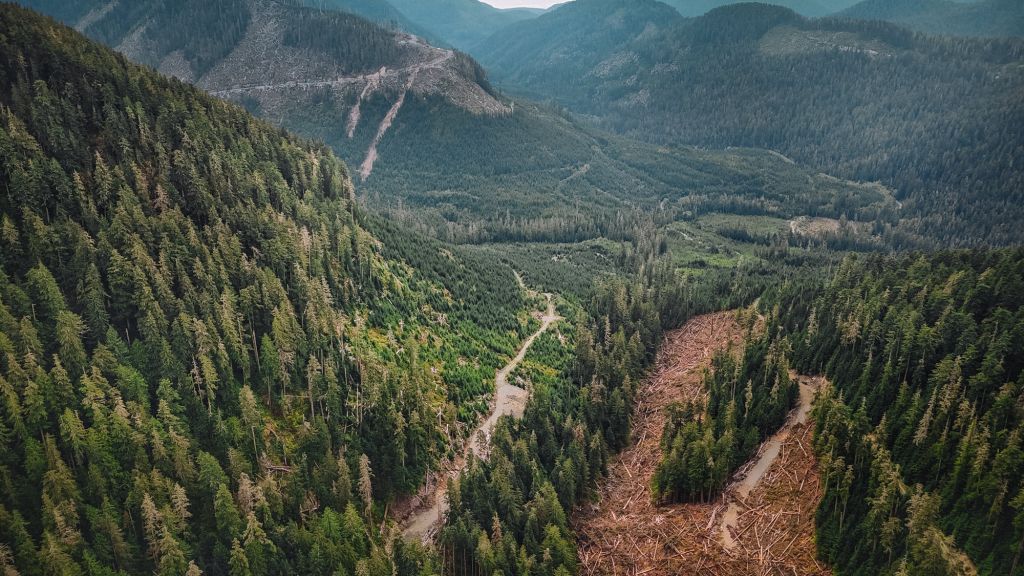
More than 930,000 hectares of Canada’s forests were logged between 1990 and 2020, according to Natural Resources Canada. Research has found forest canopies help regulate the water cycle, lowering the likelihood wildfires will start and slowing their spread. Photo: Mike Graeme / The Narwhal
Climate change is making wildfires more likely and more intense. Between 1948 and 2024, annual average temperatures in Canada increased by an average of 2.8 C, according to Environment and Climate Change Canada.
In B.C., wildfires have burned about 10 million hectares of land, more than in the previous six decades combined, according to the BC Wildfire Service.
While Darnell feels discouraged about the state of climate action at the provincial and federal level, he sees the importance of people gathering.
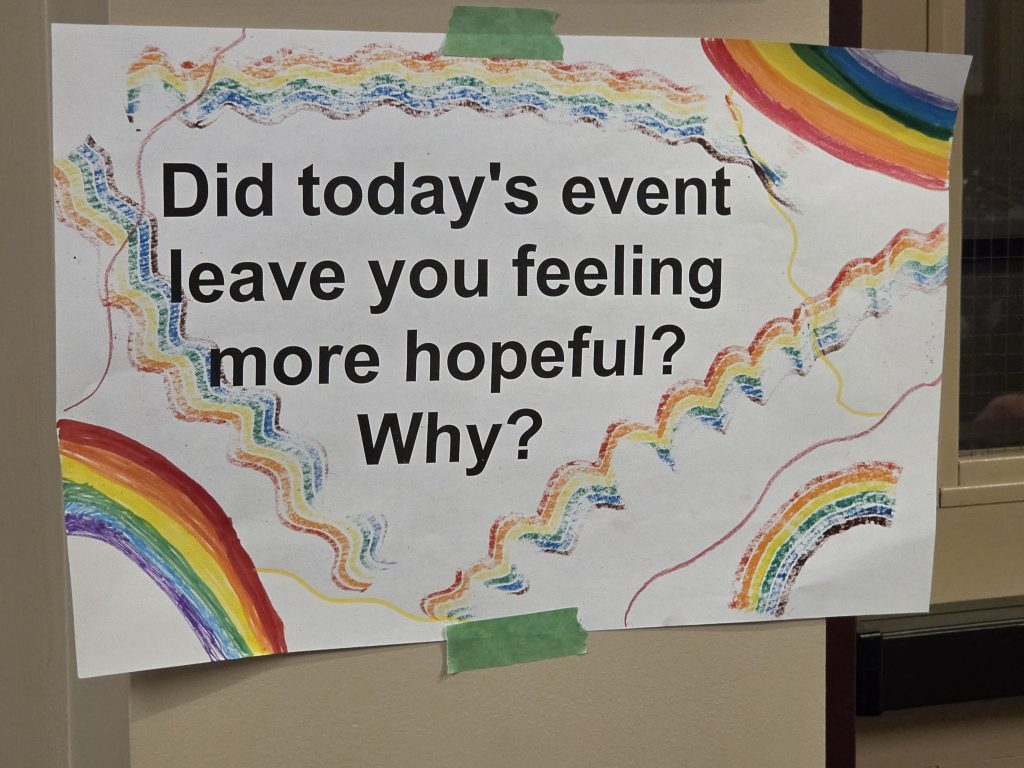
Community can be an important part of addressing the climate crisis. Many participants at the air purifier workshop were keen to do what they can in the face of the climate emergency. Photo: Shannon Waters / The Narwhal
“A lot of the province, particularly to the east of us, is on fire at the moment and certainly in the rest of Canada as well. We are trying to provide practical help for people in the community,” he says.
“People really need a place to come together and just say, ‘Am I crazy?’ No, you’re not. The behaviors of our economy, of our corporations and our government are crazy at the moment.”
The Narwhal’s reporters are telling environment stories you won’t read about anywhere else. Stay in the loop by signing up for our free weekly dose of independent journalism.
From The Narwhal | News on Climate Change, Environmental Issues in Canada via This RSS Feed.