

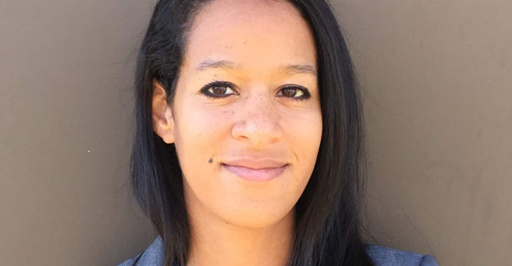
Janine Jackson interviewed the National Police Accountability Project’s Lauren Bonds about murders by ICE agents for the July 17, 2026, episode of CounterSpin*. This is a lightly edited transcript.*
https://media.blubrry.com/counterspin/content.blubrry.com/counterspin/CounterSpin260717Bonds.mp3
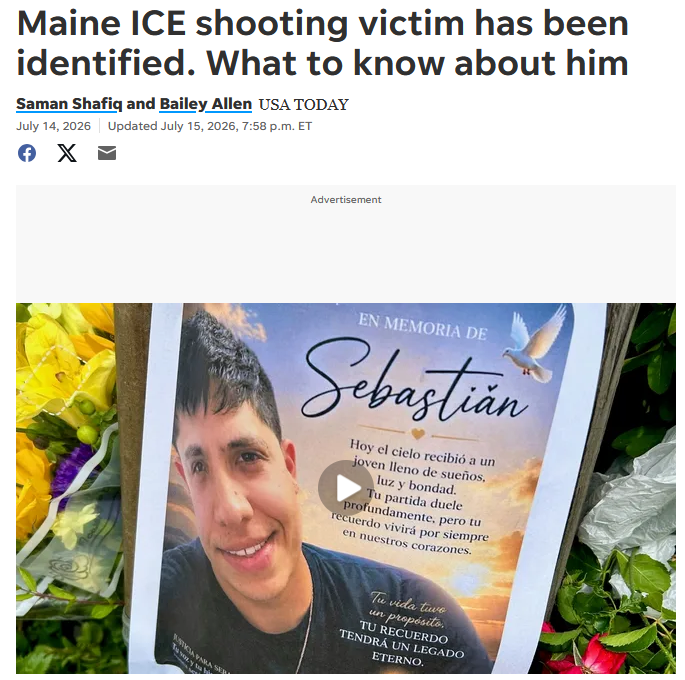
USA Today (7/14/25)
Janine Jackson: “Maine ICE Shooting Victim Has Been Identified: What to Know About Him,” offered USA Today. The first wave of news coverage of the July 13 murder by an ICE agent in Maine saw a lot of stories asking “who was” Joan Sebastián Durán Guerrero, the victim, or stating “what we know” about Joan Sebastián Durán Guerrero–as if there might be some biographical detail that would explain or excuse his killing.
The repeated mention that Durán Guerrero was “not the intended target” of ICE that day is also unsettling, suggesting that this behavior would be acceptable if it were more competent, transmitting without friction the idea that people can be valid “targets” of state violence, as part of what we’re told is about “law enforcement,” and civil laws at that.
And listeners will know that the Department of Homeland Security ordered officers around the country to stop pulling cars over, saying they were going to assess their tactics. And then, a day later, Donald Trump demanded those stops resume, said ICE is doing just what they’re supposed to do.
Joining us now to talk about what we can do, along with being furious, is Lauren Bonds, executive director of the National Police Accountability Project. She joins us now by phone from Kansas City, Kansas. Welcome to CounterSpin, Lauren Bonds.
Lauren Bonds: Thank you so much for having us, Janine.
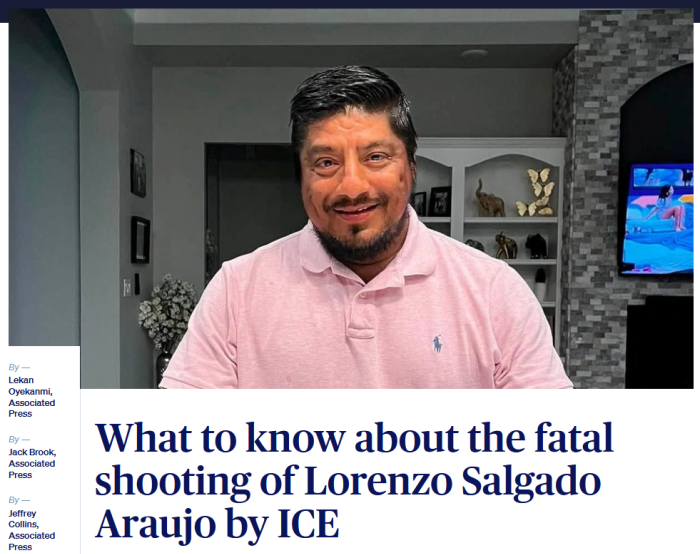
AP (via PBS, 7/10/26)
JJ: In the wake of Joan Sebastián Durán Guerrero’s killing by ICE in Maine, itself in the wake of Lorenzo Salgado Araujo’s killing by ICE in Texas, you put out a statement that did not call vaguely for “reforms” to ICE, as I saw some headlines referring to public outrage. What was the statement you put out actually saying?
LB: Yeah, the statement that we put out was saying that we need ICE out of our streets, that ICE should not be engaging in any removal efforts that they’re currently engaged in. And that entails traffic stops, which were temporarily paused, but that also entails these deportation removal orders, all these warrants that are being served on foot in these different communities, and are also leading to violence and death.
JJ: The statement says, “It’s clear that the only way to prevent ICE from killing us in the streets is to remove ICE from the streets.” That’s a long way stronger than kind of, “We need to know what they’re up to. They need to sometimes testify about things.” This is not that.
LB: Yes, I would agree that we’re taking it a step further than “we need body-worn cameras, and we need more oversight.” Those things are important, too, and they may be more easily attained, potentially, although I think we’re seeing that even those kind of minimum restrictions on ICE’s conduct are being rejected.
So we should ask for what we think is actually going to be the biggest deterrent to ICE violence. And we do think that that is removing them from street operations.
JJ: Let me ask you about this particular thing that you also mentioned, that I think is being lifted up for people: this shooting into cars business. This seems to be a primary way, if you’re making these street stops, that ICE ends up harming or killing people. It’s a weird thing, isn’t it, to be shooting into vehicles?
LB: Absolutely. And I would say that’s not something that’s been accepted even by the most pro-force, ardent members of the law enforcement community for over a decade now. There’s been a consensus in the law enforcement community that shooting into vehicles, fleeing vehicles, charging vehicles, whatever it may be, is just so highly dangerous that there are few, if any, situations that justify it. Not only dangerous to the person who’s driving the vehicle, but bystanders, passengers and law enforcement themselves. And so the universally accepted, or national standard practices, around shooting into vehicles is that there are very few situations where it is justified and where policy should permit it.
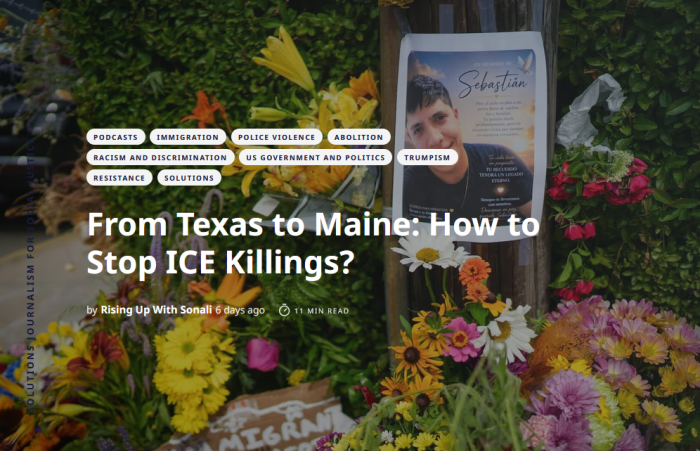
Rising Up With Sonali (7/15/26)
JJ: Most stories that I have seen note, or anyway suggest, that the killing of Durán Guerrero, of Salgado Araujo, while they’re horrific, are not outliers, that they fit in a broader pattern of violence, recklessness and racism from ICE. In your recent conversation with Sonali Kolhatkar on Rising Up, I understood you to suggest that we hold an even bigger picture about policing in this country, and specifically that we not set up a framing that says: ICE bad, regular police good. I know you’re not saying ICE violence isn’t worth the attention it gets, but what are you getting at there?
LB: Yeah. I think that there’s been a real shift. I’m thinking particularly amongst lawmakers who are identified Democrats, who are on the left, who have really spoken up about the importance of curtailing ICE violence right now. And I think that’s obviously incredibly important, but it’s a bit myopic in terms of, they’re not making those same demands for local law enforcement that are carrying out similar types of uses of force, similar types of violence and harm against other communities, against their constituents who are Black Americans, for instance.
In These Times (1/17/23)
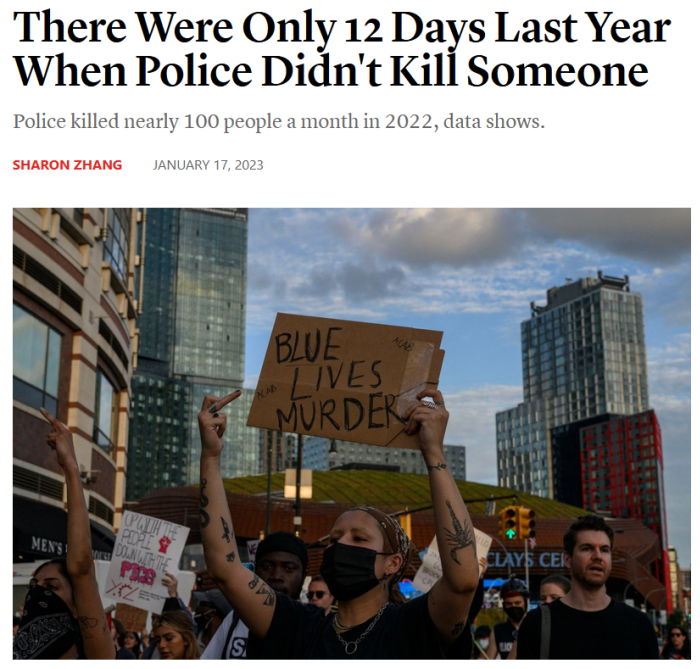
And so I think it needs to be a both/and: This can’t be just a focus on ICE, because ICE, they’re cops. They are doing what cops do, usually against people who are only suspected of breaking civil laws. But there’s a lot of victims, as you know, of local law enforcement violence who have not committed any crimes, or are not even suspected of committing crimes.
And so I think it’s very important that we don’t reframe some of the violence that ICE has undertaken as being exclusive or specific to federal law enforcement agents, because we know three people die as a result of police violence every single day. And those are largely local police officers that are committing those uses of force.
JJ: Right, and it’s just useful, just as we can’t connect everything to Trump, when particular policies predated Trump. And if we think, if there’s no more Trump, all of this is going to disappear, then we’ve got something fundamentally wrong. It’s important to pull out the tactics, the actual behaviors that are problematic, and to disconnect them from a particular agency, even, or a particular politician, certainly, yeah?
LB: Absolutely.
JJ: The Department of Homeland Security said in a statement, and I can’t remember where I saw this, but they said in a statement, “We are always evaluating our procedures to keep our officers safe, and criminals off our streets. We will not disclose or discuss law enforcement tactics.”
And I have to ask, what if we had a press corps that would say, “You won’t disclose or discuss law enforcement tactics? Wait, wait, wait,” everything comes to a halt.
I often balk at transparency as itself a goal. We want to stop actions, not just have a peek at them. But when an agency straight up says, “Oh, we’re not even going to talk about how we make any of these decisions,” that is a clanging warning bell to me.
Lauren Bonds: “We shouldn’t be advocating for transparency for transparency’s sake. But transparency is an essential prerequisite for accountability, for reform.”
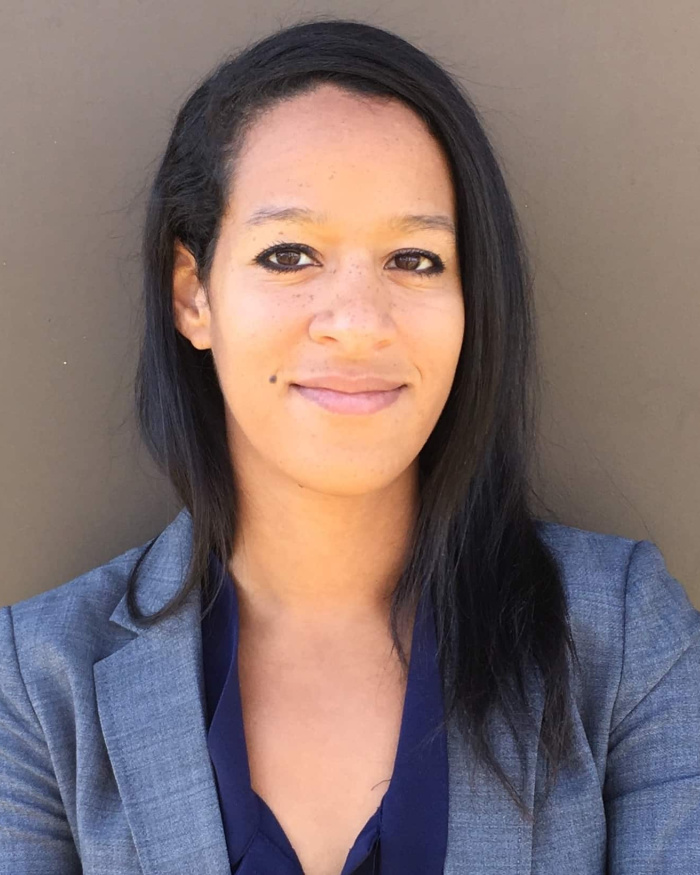
LB: Yes, I would agree. And I think, generally, we’re of the same mind at the National Police Accountability Project that we shouldn’t be advocating for transparency for transparency’s sake. But transparency is an essential prerequisite for accountability, for reform, for even things like abolition. If we don’t understand systems, we really can’t improve them. We can’t know if they were at issue and causing harm. It really is step one for change, whatever you want that change to look like.
And so, at the very least, this is information we should have. And, I just did a long spiel about how ICE are just cops, and this is something that we’re seeing everywhere, but I would say the way that the DHS and the agency is functioning right now is really different from what local law enforcement agencies would even try to get away with, that lack of transparency around policies themselves, around practices. And what is an acceptable practice, and what is an acceptable tactic under what circumstances, is something that you wouldn’t expect a chief of police or a sheriff to not disclose if asked about it.
JJ: Absolutely. The sunshine is necessary, as you say, as a first step. And this kind of follows along, but I do wonder, and I wonder this sincerely, how police at every level can lie and lie and lie. And then bystander video, as is more often the case, says no, their account was absolutely false.
And yet they’re still treated as reliable sources, not just by news media, but by other institutions. It just seems to me, it’s hard to think of other entities that can be caught in lies, again and again and again, and yet each time they come up, there’s an assumption that they’re telling the truth.
LB: Yeah. I think that is something that’s very frustrating in our work at the National Police Accountability Project. Because you’re right, there’s data, there’s anecdotal examples, about the fact that law enforcement officers in the agencies that are often protecting them or supporting them have a history of dishonesty, or that they’re not more honest than any other witness, or not more credible than any other public institution. And so I do think one of the things that is becoming more and more common, post-2020, is that the public, I think, is less willing to accept a police narrative at its face.
And that’s doubly for DHS, and what’s coming out of the Trump administration, about what’s happening in these use-of-force incidents and other things. And so I would say that I think that even though there are some media sources printing the police press release in full detail, and some institutions saying, “Well, this is what the police said,” the public has less and less confidence in police.
And I don’t know the current rates, but I think in 2021, the last time there was a poll, less than 50% of all Americans said that they trusted the police, or felt that police were trustworthy. And so it’d be interesting to see what current data is, and how that data stacks up against a specific look at confidence in federal law enforcement agencies.
National Police Accountability Project
JJ: As you’re making clear, the work of resisting police brutality, racism, impact on community has a lot of levels, a lot of aspects. And I know that the project fits in there in a particular way. I wonder if you could just tell us about some of the elements of resisting, of upending this system that you’re working on. I know, for example, qualified immunity is one issue area, but what are some of the big pieces that the project is focusing on?
LB: Yeah, I think we have a two-track theory of change at the National Police Accountability Project. We are trying to stop police violence at all of its levels from happening in the first instance. That goes back to what our calls were around ICE presence in the streets. I think we have similar policy proposals for local law enforcement, that we get them out of traffic stops, that we get them out of mental health crisis intervention, all these places where we know it is likely for law enforcement actions to escalate to violence. So we are working on the policy front to remove police from situations where we know that they’re likely to commit violence, and that goes for ICE as well. Ending surveillance technologies, ending the technical side of over-policing that often leads to physical violence. So that’s the one track.
National Police Accountability Project
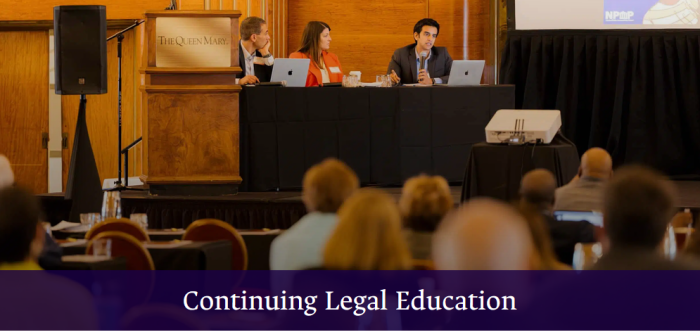
And the other track is to ensure that there’s accountability and consequences when violence does happen. And so that is more where we’re focusing on reforms like ending qualified immunity. That’s where we’re more focused on ensuring that victims of ICE and police violence have an advocate. A big part of our work this year has been focused on training attorneys, civil rights attorneys, plaintiff-side attorneys, and even people who’ve never done a plaintiff’s side case, to bring lawsuits against the federal agencies when this type of ICE violence happens. Because we know that there are so many people who are being impacted by federal law enforcement violence, due to these ICE surges in communities that have never really had to deal with that before. And so that’s really been a lot of our work and a lot of our focus this year.
JJ: And the National Police Accountability Project is a network of attorneys and advocates. So it’s a big group of folks who coordinate their efforts around these issues, as opposed to just one organization. Is that right?
LB: That’s right, yeah. So we have our members who are litigating these cases. We have community partners across the country, grassroots groups, and then we also have partnerships with other national organizations working on criminal legal system issues. And then, yeah, we have our 550 members all across the country. And so we are a big network and a big group, and are doing work at varying levels of policing systems.
JJ: Let me just ask you, finally: There’s a high point of outrage right now, and focus and attention on these ICE killings, as well there should be. But folks have a lot of other things going on, and there’s a lot of distracting bad things happening. And so when there is a flashpoint of attention, folks really want to use it, want to make the most of it. And where folks often wind up is “call your representative, call your senator.”
And I think, while that is crucial, and that kind of political engagement is important, I think it’s frustrating for people to come away from something that feels so visceral, that has made them so angry, that has made them cry, and then to get on the phone and leave a 10-second voicemail on their senator’s line. And I think folks are looking for other ways to plug in, other things to do. Do you have thoughts for people, just regular folks who are trying to do something about this, who are trying to use their anger for something?
KQED (7/7/25)
LB: Yeah. I think it’s so important to go that extra step and attend a protest. I think the protests that we’ve been seeing at Susan Collins’ office in Maine have been really effective in pushing back on the narrative that, “Oh, I got them to stop police stops” and making it be an issue that elected officials can’t just get away with putting out a mild statement, or claiming that they influenced a policy that was immediately reversed, or whatever. Those feet in the street can really make a difference.
And I would also say that it may not feel great, but those calls to your senators, calls to your representatives, they’re making a difference. We have more and more people coming out and saying that they really want to curtail ICE funding, elected officials that would never take that position in the past.
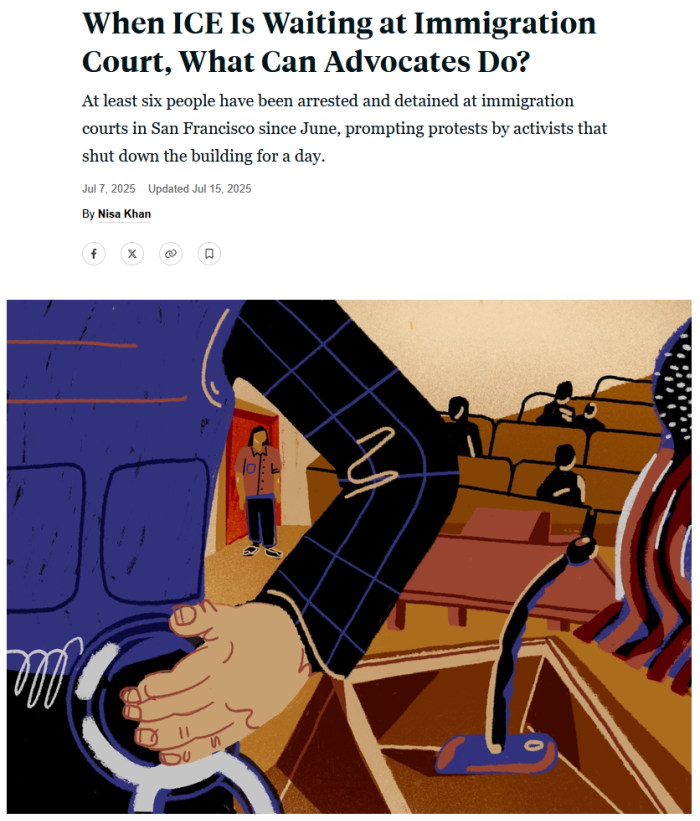
I would also say, though, if you want to be more engaged in—I know people have limited time. There are so many great grassroots groups, some of our grassroots partners across the country that have accompaniment programs. So being able to go with your immigrant neighbors to places where they might be likely to encounter ICE, and just being able to be a presence, an observer, and someone who can maybe give them a little bit more protection and confidence if they have to go to a court hearing or a doctor’s appointment, or all these places that we’re seeing more and more ICE agents popping up.
So I think that there’s a lot of ways to engage, and even a simple Google search would allow you to get plugged into that. And those programs really are based on your availability. It’s a short training, and then it’s driving someone to the pharmacy or something. It is an easy way, if you have even a free hour once a week, to try to be a source of support and a source of resistance for the immigrant community around you.
JJ: All right. Well, thank you very much for that.
We’ve been speaking with Lauren Bonds, executive director of the National Police Accountability Project. You can find them online at NationalPoliceAccountability.org. Lauren Bonds, thank you so much for joining us this week on CounterSpin.
LB: Oh yeah. Thank you so much, Janine, for having us.
From FAIR via This RSS Feed.