

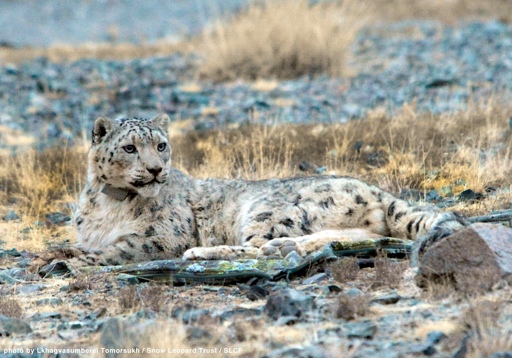
A group of women often climbs steep cliffs to set up camera traps for snow leopards around Kibber in Spiti Valley, India. The senior women know the landscape intimately, like what areas the animals use and where cameras are likely to capture movement. They have walked these mountains all their lives and know how to navigate the most rugged and inaccessible terrain safely, even in snow and ice. This is a kind of access that visiting researchers simply cannot replicate. Back at the village, they gather around two computer screens. The younger women, who are typically more adept at handling technology, organize and sort the photographic data. Together, they identify individual snow leopards from their coat patterns, building scientific monitoring skills over time. Their work contributes directly to regional and global assessment and monitoring of snow leopard populations. Women hold up their camera traps after completing training. Image courtesy of Kibber women/NCF/HPFD. Who are these scientists conducting camera-trap monitoring of snow leopards? They are not trained researchers. They are women from the Indigenous community of Kibber in Spiti Valley. This work is done alongside their other chores: Livestock rearing, farming, household responsibilities, and community work. They do this, because they are interested in knowing how many snow leopards they are helping protect on their community lands; they take pride in learning research techniques; and they see themselves as part of the global effort to study and protect them. Lobzang Yangchen, the coordinator of the Kibber team of 11 women, says,…This article was originally published on Mongabay
From Conservation news via This RSS Feed.