


Self-styled War Secretary Pete Hegseth’s Pentagon has gutted its premier center devoted to preventing civilian casualties in war zones, cutting staff, scrapping a civilian harm records database, and developing an AI assistant to accelerate assessments, according to a new report shared with The Intercept. These revelations come as the Trump administration has renewed attacks on civilian sites in Iran.
The War Department’s Civilian Protection Center of Excellence has reduced its staff from 40 personnel in January 2025 to just nine by the end of the year, according to the report. Two current defense officials confirmed that staffing levels remain the same today. Current and former government officials say the massive cuts have left the Pentagon unable to protect civilians.
The tiny contingent that remains at the Civilian Protection Center of Excellence, the officials said, are also prevented from investigating major civilian casualty incidents like the U.S. attack on the Shajarah Tayyebeh elementary school in Minab, Iran, in February that killed more than 150 people, most of them children.
Wes Bryant, who served as the Center’s chief of civilian harm assessments, was one of the more than 30 people pushed out last year by the War Department. He told The Intercept that the Center was being kept on life support to provide cover for the Pentagon.
“The Hegseth regime held on to a thread of the program mostly in effort to be able to say they are following the law, but the reality is the Center and its efforts have had little to no influence on or oversight or visibility on operations,” Bryant said. “As long as they sit in the seat, they are continuing to try to put out good work, but the reality is, most of it is being thrown into the wind, and neither institutionalized nor operationalized.”
Before civilian harm mitigation and response (CMHR) efforts were sidelined and the staff downsized last year, the Center completed basic civilian harm mitigation training for 212 personnel from military combatant commands like Central Command and Africa Command, the intelligence community, the State Department, and other agencies, according to the report.
Established in 2023, the Civilian Protection Center of Excellence was just “hitting its stride” in late 2024, a defense official told The Intercept. When the center was staffed by 40 civilians, troops, and contractors at the beginning of last year, it was on track “to achieve Full Operational Capability” by the end of 2025, according to the report. That never came to fruition, as the Center saw its staff slashed to seven civilians and two members of the military.
“The COE was cut down shortly after becoming fully operational,” Madison Hunke, the U.S. program manager at Center for Civilians in Conflict, told The Intercept. “They had minimal time to show value, but they were still able to inject critical CHMR expertise to all corners of the U.S. military, even as their staff dwindled down to a handful of people.”
The report also details financial constraints that have crippled the entire civilian harm mitigation and response enterprise across the War Department. “DoW-wide budgets for CHMR in FY26 were cut,” reads the report which notes that staff and programs across the entire Department of War — including at combatant commands like AFRICOM and CENTCOM — “were gradually reorganized, reduced, and/or terminated by the end of FY25.”
The 10-person civilian harm mitigation team at CENTCOM, for example, has been reduced to just one individual, according to Adm. Brad Cooper, the command’s chief. Reporting by The Intercept also found U.S. Southern Command was unable to cope with the volume of civilian casualty reports after the U.S. attacked Venezuela in January. When the U.K.-based watchdog group Airwars attempted to submit documentation of civilian casualties to SOUTHCOM, they learned the command had no mechanism for dealing with such reports. After reaching out to the Pentagon, Airwars was told to submit documentation to the Civilian Protection Center of Excellence.
[
Related
OpenAI on Surveillance and Autonomous Killings: You’re Going to Have to Trust Us](https://theintercept.com/2026/03/08/openai-anthropic-military-contract-ethics-surveillance/)
While the Pentagon slashed the center’s staff, the military has made greater efforts to utilize artificial intelligence for targeting and civilian harm mitigation, according to the report. It specifically references the Maven Smart System, a product of the defense firm Palantir that serves as the War Department’s signature AI-enabled software platform. The Center of Excellence “leveraged the rapid adoption of the AI-enabled Maven Smart System (MSS)” within the military to advance the development of a tool to give field commands a more complete picture of the civilian environment, the report notes. A current defense official said it provided a “better layer of protection” for civilians in war zones.
During an Army training exercise, the AI assistant reportedly shortened the timeline to produce civilian assessments by 97 percent.
The report also details the Center’s development of “an AI Assistant prototype that helps military staff rapidly analyze civilian environment data during operations by equipping AskSage, the Army’s enterprise AI platform,” with the CHMR data. During an Army training exercise, the AI assistant reportedly shortened the timeline to produce civilian assessments by 97 percent. Several additional Army units have requested access to the assistant, according to the report.
The report also references a database used for tracking civilian harm that the Pentagon abandoned last year. It notes that “progress on the development of a standardized CHMR data management process and a repository of civilian harm information stalled due to the cessation of the CHMR Data Management Platform (DMP) project during Department-wide realignment of priorities and resources.”
Without a database like the DMP, the Pentagon is unable to effectively track civilian harm. In May, Cooper, the CENTCOM commander, said the U.S. had no means to corroborate reports of strikes on hospitals and schools and was aware of just “one active civilian casualty investigation from the 13,629 munitions.” Months later, CENTCOM still has no additional information about civilian harm, telling The Intercept: “We have no new updates at this time pertaining to current investigations or munitions that were expended during Operation Epic Fury.” Airwars, by contrast, has chronicled hundreds of civilian casualty incidents in Iran since the start of the conflict.
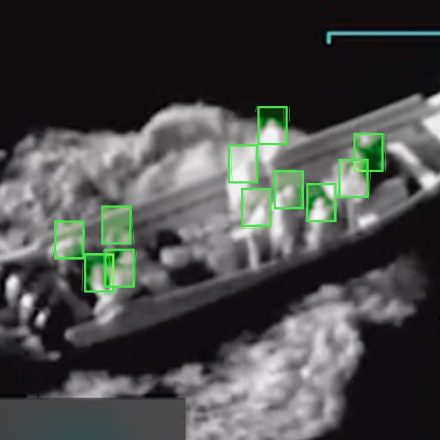
As the Pentagon has starved the CHMR enterprise, the U.S. has killed and wounded thousands of civilians across the world, from Latin America to Africa to the Middle East. The World Health organization put the death toll in Iran at 3,375 people — before the ceasefire fell apart this month. The U.S. military has also conducted more than 220 extrajudicial killings during a campaign of boat strikes targeting civilians in the Caribbean Sea and Pacific Ocean.
Airwars also tracked reports of at least224 civilians in Yemen killed during the Trump administration’s campaign of air and naval strikes — codenamed Operation Rough Rider — against Yemen’s Houthi government in the spring of 2025. This nearly doubled the civilian casualty toll in Yemen from U.S. attacks since 2002, meaning that the U.S. reportedly killed as many civilians in 52 days as in the previous 23 years of airstrikes and commando raids.
The Center of Excellence conducted a “qualitative lessons learned study” on Rough Rider, examining “how the operational environment shaped civilian harm mitigation and assessment to identify lessons for scenarios lacking air and information dominance.” The classified study, according to the report, is supposed to help commanders “safeguard civilians while maintaining operational effectiveness in contested environments.” But Bryant said the COE’s input to the study was “nominal,” and a current defense official said the Center was “boxed out” when it attempted to examine strikes during Rough Rider.
Hegseth’s office did not return a request for comment on the findings of the study.
For months, the Pentagon has failed to reply to requests to interview experts about civilian harm policies at the Civilian Protection Center of Excellence, the Office of the Under Secretary of War for Policy, or the Office of the Secretary of War.
[
Related
Top Pentagon Official Admits Boat Strike May Have Killed Victims of Human Trafficking](https://theintercept.com/2026/06/10/trump-boat-strikes-human-trafficking-victims/)
The “Annual Report on the Civilian Protection Center of Excellence for Fiscal Year 2025” is dated April 4, 2026, and states it will be made “publicly available on an appropriate website of the Department” but has yet to be posted online. On Friday, Hegseth’s office told The Intercept: “We anticipate release of the 2025 CPCoE report in the summer of 2026.”
In a letter sent earlier this month, a group of Democratic lawmakers told Hegseth that his “gutting civilian harm mitigation and response (CHMR) efforts” has left the Pentagon unable to “comply with the law and its congressionally-mandated CHMR responsibilities.” They added, “The Trump administration — potentially in violation of federal law — has defunded and impeded civilian protection efforts.”
The letter, sent by Sen. Elizabeth Warren, D-Mass., and nine other lawmakers, echoed concerns raised by a recent War Department inspector general report that described civilian protection efforts as largely “inactive.” That May report by the Pentagon’s top watchdog says cuts to civilian harm mitigation and response efforts have been so severe under Hegseth that the United States cannot adequately protect civilians in conflict zones or track harm when it occurs.
Hunke said the war with Iran demonstrates the need for a fully-funded and staffed COE. “Given adequate resources, the Center has so much potential to transform how the military thinks about and implements civilian protection,” she said. “This is needed now more than ever as the U.S. engages in ongoing and harmful operations in Iran.” A defense official was less sanguine, stating that Hegseth’s underlings would have sidelined even the efforts of a fully staffed and funded COE.
“This was never meant to succeed — whatever that means,” the official said. But that official and Bryant also praised the remaining COE staff and were strenuous in their support for their work.
Remaining personnel are “supposed to shut up, keep their heads down, and pretend that the civilian harm mitigation and response mission isn’t simply a shell.”
Bryant, who was forced out of his job after blowing the whistle on the Pentagon’s dismantling of its CHMR enterprise, decried the department’s “tyrannical and imperialistic uses of lethal military force internationally.” He told The Intercept that the remaining personnel at the Center of Excellence are “supposed to shut up, keep their heads down, and pretend that the civilian harm mitigation and response mission isn’t simply a shell for legal CYA,” using shorthand for “cover your ass.” Asked to assess Bryant’s comments, a current defense official replied: “Yup. No notes.”
The Intercept has previously reported on Hegseth’s gutting of civilian harm mitigation and response efforts. Last spring, five current and former Defense Department officials described Pentagon efforts to eliminate or downsize offices, programs, and positions focused on preventing civilian casualties. One of the then-current officials said that it could result in “wanton killing and wholesale destruction and disregard for law.” His warnings were prescient.
The post Hegseth’s War Department Slashed Civilian Protection Staff, Brought in AI Assessments appeared first on The Intercept.
From The Intercept via This RSS Feed.
“Hey Grok, can I hit that Iranian school?”
“No, there are civilians inside”
“But they could all be terrorists and bombing them would make me feel better”
“You are correct to question my reasoning. Of course, you could never be certain that they are not terrorists. It is important to listen to your heart and not suppress your desires. Given your input, it may be justified to hit that school.”
