

World Cup 2026 controversies expose migration bans, censorship and opaque technology decisions that overshadow the football in North America’s expanded tournament.
Related: World Cup 2026 Final Lineups: 7 Key Facts in Epic Spain–Argentina Clash
World Cup 2026 controversies overshadow the final hours of the tournament
World Cup 2026 controversies have come to dominate the narrative of this edition just hours before the final is played on 19 July, leaving a legacy that goes far beyond the pitch. Instead of being remembered solely as a festival of football in North America, this World Cup is closing under the shadow of restrictive migration policies, censorship and opaque technology.
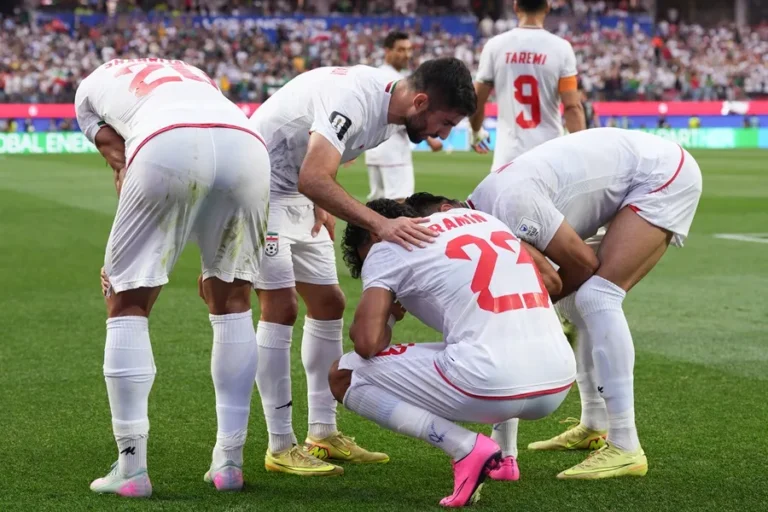
From the start, United States migration policy operated as an exclusionary filter that directly affected participants from the Global South. Somali referee Omar Abdulkadir Artan was deported after being denied a visa, preventing him from taking part in the tournament despite his professional designation. At the same time, the Iranian national team was forced to base its logistics in Mexico because of diplomatic blockades, subjecting players and staff to additional extra‑sport physical and mental strain.
These cases have become emblematic of the World Cup 2026 controversies, highlighting how border controls and foreign policy decisions can shape who gets to take part in a supposedly global event. For critics, such measures contradict the promised “festival of cultural integration”, revealing instead a tournament marked by asymmetries of power and mobility.
To this already tense context was added a case of institutional censorship targeting Haiti’s national team. Authorities ordered the side to remove the Haitian flag from their official kit, citing equipment regulations. Various organizations condemned the move as an act of discrimination against the Caribbean nation, reinforcing perceptions that World Cup 2026 controversies disproportionately affect poorer and politically marginalized countries.
Opacity and perceived bias in VAR and sensor decisions
The World Cup 2026 controversies were not limited to migration and symbolism. The implementation of video assistant refereeing (VAR) and inertial sensors also raised deep structural doubts. One of the clearest examples involved the Iranian national team, eliminated after a highly marginal offside decision generated by the 3D avatars of the semi‑automated offside system.
What made this episode a focal point in the World Cup 2026 controversies was not only the razor‑thin margin, but the lack of transparency: the full data and angles used to reach the verdict were not shown on the official broadcast. For Iranian players and supporters, this absence of clear evidence fed the perception of unequal treatment compared with decisions involving Western teams.
Technology also appeared to ignore physical interference on the field of play. During the match between England and Norway, the officiating crew validated an English goal even though replays strongly suggested that the ball struck the cable of the aerial “spider cam” before crossing the line. Under the laws of the game, such an impact should have led to the play being stopped and the goal disallowed.
The failure to acknowledge this contact and apply the corresponding rule added fuel to the World Cup 2026 controversies, raising questions about how and when technology is used—or ignored—by officials. It fed the argument that state‑of‑the‑art tools do not guarantee fairness if their application remains discretionary and opaque.
General frustration crystallized in the reaction of Egypt’s head coach, who publicly denounced the discretionary and unequal use of technological tools against non‑Western teams in a press conference. Instead of prompting a review of procedures, his statements resulted in severe disciplinary sanctions imposed by FIFA, reinforcing the sense that questioning the system can be punished more harshly than the system’s own errors. This, too, became part of the expanding catalogue of World Cup 2026 controversies.
Political interference, selective sanctions and hate incidents
Another of the most serious World Cup 2026 controversies centers on direct governmental interference in FIFA’s disciplinary decisions. United States forward Folarin Balogun received a straight red card for a violent foul on Bosnian player Tarik Muharemovic, an infraction that normally entails an automatic suspension for the round of 16.
However, according to reports cited in the article, after a direct phone call from U.S. President Donald Trump to FIFA President Gianni Infantino, the disciplinary committee took the unprecedented step of suspending the sanction under a “probability” regime, thereby allowing Balogun to play against Belgium. The move triggered strong protests from UEFA and several European federations, which accused FIFA of violating competition regulations under geopolitical pressure from the host country. For many observers, this incident stands as one of the clearest examples of World Cup 2026 controversies undermining the tournament’s credibility.
The inaction in the face of hate‑related behaviour added yet another layer of concern. During the group stage, VAR assistant Shaun Evans made a gesture described by multiple observers as supremacist. Despite international complaints, FIFA closed the case citing a lack of evidence, opting not to pursue further disciplinary action. This decision deepened perceptions that certain forms of discriminatory conduct are minimized or ignored, especially when they involve officials from powerful football nations.
In parallel, the tournament’s closing phase laid bare key contradictions in FIFA’s sanctioning policy. While the ban on Russia’s national team remained in force, the organization did not apply comparable measures to other countries currently involved in armed conflicts. This selective approach reinforced the view that World Cup 2026 controversies are rooted in a system where international football governance remains subordinated to geopolitical interests, rather than to consistent ethical standards.
Taken together, the Balogun case, the handling of the supremacist gesture and the uneven application of national bans contribute to an image of impunity and institutional double standards. For critics, these World Cup 2026 controversies show that commercial and political considerations still weigh more heavily than regulations, equality and the fight against discrimination.
Geopolitical context of the World Cup 2026 controversies
The World Cup 2026 controversies cannot be understood in isolation from the broader geopolitical landscape in which the tournament has taken place. Co‑hosted in North America, with the United States playing a leading role, this edition has highlighted how border regimes, international sanctions, diplomatic alliances and global power hierarchies shape what is officially framed as a “neutral” sporting event.
The exclusion of referees and the relocation of teams like Iran, forced to base themselves in Mexico due to diplomatic obstacles, illustrate how foreign policy and security doctrines penetrate the supposedly autonomous realm of sport. In this sense, the World Cup 2026 controversies reflect the asymmetrical mobility regime that governs athletes, workers and fans from different parts of the world.
At the same time, the treatment of Haiti’s national symbols, the selective enforcement of disciplinary rules and the maintenance of some national bans while others are ignored speak to a hierarchy of states and conflicts that extends well beyond football. The tournament becomes a stage where global inequalities and political alliances are reproduced, rather than suspended.
From the perspective of many countries in the Global South, the World Cup 2026 controversies confirm long‑standing concerns about Euro‑Atlantic dominance in international sports governance, even when events are hosted outside Europe. They argue that decisions about visas, refereeing, sanctions and technology often reflect strategic interests and cultural biases, more than the principles of fair play and universal inclusion.
For international organizations and civil society groups, these controversies raise the question of what reforms are needed to ensure that future World Cups are more transparent, accountable and genuinely global. Debates about independent oversight of VAR, clear rules against political interference and stronger anti‑discrimination mechanisms are likely to intensify in the aftermath of the World Cup 2026 controversies.
Ultimately, while the football itself may provide moments of brilliance and emotion, the legacy of this edition will also be measured by how the sport confronts—or fails to confront—the structural inequalities and power relations that have become impossible to ignore.
From teleSUR English via This RSS Feed.