

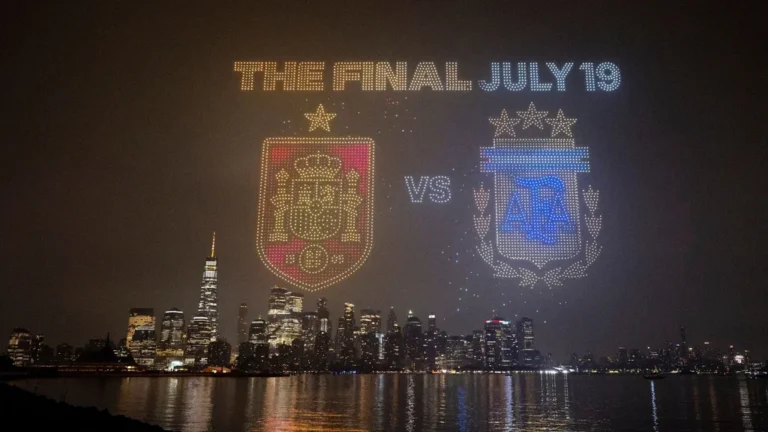
World Cup 2026 final lineups set as Spain and Argentina meet at MetLife Stadium, both unbeaten and chasing glory in an expanded 48‑team tournament.
Related: England vs France Third Place Match: 3 Key Factors in High-Stakes World Cup Clash
World Cup 2026 final lineups headline historic Spain–Argentina showdown
World Cup 2026 final lineups are in the spotlight as Argentina and Spain meet in a historic, first‑ever World Cup final between the two nations at MetLife Stadium in the New York/New Jersey area. This decisive match crowns the first champion of the expanded 48‑team format, adding extra weight to a clash already rich in narrative and football history.
Both sides arrive at the final unbeaten, having successfully navigated their respective knockout paths without defeat. The World Cup 2026 final lineups will take the field for match number 104 of the tournament, in a modern arena inaugurated in 2010 that has become one of the flagship venues of this edition.
The officiating team will be led by Slavko Vincic of Slovenia, who will blow the whistle for kick‑off and command the on‑field crew. He will be assisted on the lines by Tomaz Klancnik and Andraz Kovacic, while German referee Bastian Dankert will oversee the VAR booth, adding another layer of scrutiny to every decisive moment in this World Cup 2026 final lineups battle.
For Argentina, the match is a chance to secure a historic fourth star and achieve back‑to‑back titles after their success in Qatar, consolidating a new golden era. Spain, for its part, seeks to reaffirm its return to the world elite after previous cycles of transition, with a new generation now anchoring the World Cup 2026 final lineups on the European side.
Tactical choices shaping the World Cup 2026 final lineups
On the Argentine bench, head coach Lionel Scaloni faces structural dilemmas as he fine‑tunes the World Cup 2026 final lineups. One key decision lies on the right flank, where he must choose between Nahuel Molina and Gonzalo Montiel, two full‑backs offering different balances between defensive solidity and attacking projection.
In midfield, Scaloni is also assessing variations in the central and wide roles, considering names such as Rodrigo De Paul, Giuliano Simeone and Nicolás González to complement the undisputed attacking leaders Lionel Messi and Julián Álvarez. These choices will define whether Argentina’s World Cup 2026 final lineups lean more towards control, verticality or pressing intensity.
Spain’s manager Luis de la Fuente is expected to maintain the core structure that defeated France in the semi‑finals, betting on continuity and confidence. His offensive setup will once again revolve around young standouts Lamine Yamal, Dani Olmo and Mikel Oyarzabal, who bring creativity, movement between the lines and finishing to the European World Cup 2026 final lineups.
In midfield, figures such as Rodri and Fabián Ruiz are tasked with organizing possession and cutting off Argentina’s passing circuits. Their ability to control tempo, recycle the ball and resist pressure will be essential if Spain is to impose its identity on the World Cup 2026 final lineups duel.
From a tactical perspective, analysts anticipate a strategic confrontation between Spanish possession and Argentine firepower and experience. The World Cup 2026 final lineups will likely evolve during the match, with both coaches prepared to introduce fresh legs and new shapes if the initial plan stalls or if the game heads into extra time.
Performance data of Spain and Argentina on the road to the World Cup 2026 final
Under Luis de la Fuente, Spain arrives at the decisive stage of the tournament as the most solid defense of the competition. Across their knockout fixtures, La Roja have conceded only one goal, an impressive record built while advancing past Austria, Portugal, Belgium and France, with a total of eight goals scored. This blend of defensive stability and measured efficiency underpins the European World Cup 2026 final lineups.
Argentina, coached by Scaloni, reinforces its status as a global powerhouse with an attack that has become the most effective in the tournament. La Albiceleste has accumulated eleven goals on its way to the final, eliminating Cape Verde, Egypt, Switzerland and England. These figures confirm the threat posed by the South American World Cup 2026 final lineups, particularly in transition and in the final third.
Official FIFA statistics show a perfectly balanced historical record between Spain and Argentina, with four wins for each side in past meetings. This symmetry adds psychological intrigue to the World Cup 2026 final lineups, as neither team can claim clear dominance in the long‑term head‑to‑head.
On paper, the strategic duel centers on Spain’s capacity to keep the ball, compress space and control rhythm, against Argentina’s combination of individual talent, clinical finishing and big‑match experience. The World Cup 2026 final lineups will therefore be tested not only technically and physically, but also mentally, in managing momentum shifts and key moments.
Showpiece stage: closing ceremony and unprecedented halftime show
Beyond the strictly footballing side, the match featuring the World Cup 2026 final lineups will unfold within a high‑profile entertainment framework. The build‑up includes a closing ceremony produced by Balich Wonder Studio, known for large‑scale live events, and will showcase global celebrities such as Tom Cruise, Robbie Williams, Laura Pausini and musician Post Malone, headlining the pre‑match entertainment bill.
For the first time in a men’s World Cup, this edition will feature an unprecedented halftime show, with an estimated duration of eleven minutes. The aim is to raise funds for global education initiatives through the organization Global Citizen, adding a social impact dimension to the spectacle that surrounds the World Cup 2026 final lineups on the pitch.
The artistic production of the halftime segment will be directed by Chris Martin, frontman of Coldplay, and will bring together an all‑star line‑up that includes Justin Bieber, Madonna, Shakira, South Korean band BTS and renowned conductor Gustavo Dudamel. This gathering of musical figures underscores how the World Cup 2026 final lineups will be framed by one of the most ambitious shows in tournament history.
The national anthem of the host country will be performed by acclaimed artist Jennifer Hudson, further contributing to the ceremony’s emotional tone. For the players involved in the World Cup 2026 final lineups, this setting adds a layer of pressure and visibility, as millions around the world watch a blend of sport, culture and philanthropy unfold in real time.
¡Un hecho inédito!
Los vigentes campeones de la Eurocopa y de la Copa América, se enfrentarán por primera vez en la historia en la Final de la #CopaMundialFIFA.
— Copa Mundial FIFA
(@fifaworldcup_es) July 17, 2026

Geopolitical and cultural context of the World Cup 2026 final lineups
The stage for the World Cup 2026 final lineups goes beyond sport, touching on geopolitics, cultural influence and global media dynamics. With the tournament co‑hosted across North America, the final at MetLife Stadium reflects the commercial and symbolic weight of football in a region where the sport continues to expand rapidly, connecting Latin American diasporas, European fan bases and a growing local audience.
For Spain and Argentina, this final also carries the weight of football diplomacy and soft power. A victory for Spain would further consolidate European influence in the sport’s recent history, while success for Argentina would reinforce South America’s enduring capacity to produce champions and global icons, anchored by figures like Lionel Messi. In either case, the World Cup 2026 final lineups become a platform for projecting national narratives of excellence and resilience.
At a broader level, the expanded 48‑team format mirrors debates on inclusivity, commercial expansion and tournament logistics, with supporters praising greater representation and critics concerned about calendar congestion and player workload. The outcome and quality of the match featuring the World Cup 2026 final lineups will inevitably feed into evaluations of whether this format enhances or dilutes the World Cup spectacle.
Culturally, the combination of elite football and a star‑studded entertainment program illustrates how mega‑events now operate as global multimedia platforms, weaving together sport, music, activism and branding. For many observers, the way the World Cup 2026 final lineups coexist with charity campaigns and celebrity performances will shape future expectations of what a World Cup final should look and feel like.
In this intricate setting, Spain and Argentina step onto the pitch not only to compete for a trophy, but also to write a chapter in football’s global story, one that will resonate far beyond the ninety minutes and the immediate celebrations.
Final
#Argentina – #España
16.00
Slavko Vinčić
MetLife Stadium
https://t.co/tPuzbfkyvO
¡Todos juntos, un pasito más! pic.twitter.com/WFYEH7i4Kl
—
Selección Argentina
(@Argentina) July 19, 2026


From teleSUR English via This RSS Feed.