

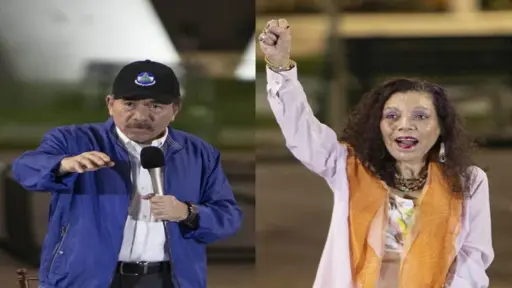
Sandinista Revolution anniversary highlights Nicaragua’s historic resistance, honoring martyrs, social gains and current efforts toward sovereignty and development.
Related: Nicaragua Severs Diplomatic Relations with Italy Over FM Tajani Remarks
Sandinista Revolution anniversary: meaning of 19 July in Nicaragua
The Sandinista Revolution anniversary on 19 July is, for Nicaragua, a date filled with multiple layers of memory and political meaning. It is not only a national holiday, but also a moment that condenses decades of struggle, war and reconstruction, and continues to shape the country’s present.
Each year, the Sandinista Revolution anniversary recalls the popular insurrection that overthrew the Somoza dictatorship in 1979, ending a regime backed for decades by the United States. The commemoration evokes the long revolutionary resistance against Somocista tyranny and its foreign patrons, a resistance that opened the way to new social and political horizons.
For many Nicaraguans, this date is also a space to honor the sacrifices of ordinary people—workers, campesinos, students and community leaders—who risked or lost their lives in the struggle against dictatorship. The Sandinista Revolution anniversary thus functions as a bridge between historical memory and current political identity.
In official discourse, today’s government presents the Sandinista Revolution anniversary as a reminder that the goals of democratization, human development and national prosperity remain ongoing tasks. Authorities argue that these aspirations are now being advanced under the leadership of President Daniel Ortega and Vice President Rosario Murillo, framed as a continuation of the original revolutionary project.
Historical roots remembered on the Sandinista Revolution anniversary
- Historia general sobre Augusto C. Sandino y la lucha contra la ocupación estadounidense:
- Contexto histórico de la intervención de Estados Unidos en Nicaragua
The Sandinista Revolution anniversary also looks back to a much earlier chapter of Nicaraguan history. Official speeches and commemorative acts often highlight the exemplary conduct of Blanca Araúz Pineda, Augusto C. Sandino and the workers and campesinos of his “Army in Defense of National Sovereignty.” Their struggle in the late 1920s and early 1930s forced U.S. troops to leave Nicaragua in 1933, becoming a foundational reference for later generations.
By invoking Sandino and his companions, the Sandinista Revolution anniversary links the 1979 insurrection to a broader anti‑interventionist tradition. It underlines the idea that Nicaragua’s history is marked by resistance to foreign military and political control, and that current policies are part of that long‑term defense of sovereignty.
Commemorations also remember and honor the martyrs and heroes who gave their lives for the insurrection against Somocista rule. For the Sandinista narrative, their sacrifice was aimed at achieving democracy, social justice and inclusive development, goals that the government presents as being pursued today through social programs, infrastructure projects and public services.
In this vision, the Sandinista Revolution anniversary is not a closed page of history. Rather, it is an open process, where the gains and unfinished tasks of the revolution remain active reference points for current economic and social policies.
Sandinista Revolution anniversary and the legacy of the 1980s war
- Informe histórico sobre la “contra” y la política de EE. UU. hacia Nicaragua en los 80
- Análisis sobre la guerra de los 80 y su costo humano
The Sandinista Revolution anniversary also serves as a reminder of the heavy human cost of the conflict that followed the 1979 victory. The official 47/19 commemoration recalls tens of thousands of Nicaraguans, mostly civilians, who were killed during the U.S.-backed war of the 1980s, waged under the administration of President Ronald Reagan.
In this reading, the Sandinista Revolution anniversary pays tribute to those who lost their lives in attacks, ambushes, bombings and paramilitary operations, which the Nicaraguan government describes as a “terrorist war” against the people of Nicaragua. The date underscores that, for many families, the 1980s were marked by displacement, loss and prolonged instability.
The commemoration also emphasizes that the economic and financial blockade imposed on Nicaragua in those years formed a key part of the conflict. The Sandinista Revolution anniversary therefore becomes a firm statement of resistance in the face of financial and commercial pressure, linking past sanctions and embargoes to current debates on economic sovereignty.
Furthermore, 47/19 is presented as a celebration of the people’s resilience during the period from 1990 to 2007, which the Sandinista narrative describes as a class war waged by “puppet neoliberal governments” against the majority of the population. From that perspective, these administrations sought to dismantle the gains of the 1980s revolution and weaken the Sandinista National Liberation Front (FSLN).
The Sandinista Revolution anniversary enumerates these achievements: agrarian reform, free healthcare and education, trade union rights, support for cooperatives and municipal governments, nationalized water and electricity supply, technical and credit assistance to small farmers, gender equity and equal rights for all. The official message argues that many of these advances were rolled back or limited during the neoliberal years, and that their recovery and expansion is now part of the revolution’s ongoing agenda.
In this way, the Sandinista Revolution anniversary is not only a patriotic ceremony; it is also a battleground of memory, where different interpretations of the 1980s, the 1990–2007 period and the present are confronted through speeches, symbols and policy debates.
Geopolitical dimension of the Sandinista Revolution anniversary
The Sandinista Revolution anniversary has a clear geopolitical resonance that goes beyond Nicaragua’s borders. Historically, the Sandinista process became a symbol of Latin American resistance to U.S. dominance, especially during the Cold War, when Managua forged alliances with Cuba, sectors of the Global South and various solidarity movements in Europe and North America.
Today, the date is still used by the government to reaffirm Nicaragua’s foreign policy positions, including its criticism of U.S. sanctions, external interference and what it describes as “imperial” attempts to shape domestic politics. In speeches around the Sandinista Revolution anniversary, authorities highlight their ties with regional organizations and countries that support a multipolar world order.
This positions Nicaragua within a broader Latin American and global debate on sovereignty, development models and human rights. Supporters of the government present the Sandinista Revolution anniversary as proof that Nicaragua has maintained its independence and pursued social programs despite external pressure. Critics, meanwhile, question the internal political and civic space in which these commemorations take place.
Regionally, the symbolism surrounding the Sandinista Revolution anniversary also interacts with current political shifts in Central America and across the continent. As new governments emerge and old alliances are reconfigured, the legacy of the Sandinista experience—its social policies, its confrontations with Washington and its internal transformations—remains a point of reference in ideological and diplomatic discussions.
In that sense, the Sandinista Revolution anniversary is not simply a remembrance of past events. It functions as a marker of Nicaragua’s place in regional dynamics, a platform from which the government seeks to project its narrative of resistance and continuity, and a reminder of the tensions that still exist between national projects and external power structures.
#ENVIDEO | El Gobierno de Nicaragua envió un mensaje oficial al presidente chino, Xi Jinping lamentando las graves pérdidas humanas y materiales que dejaron las tormentas en distintas regiones de China. Managua expresó su respaldo mientras las labores de emergencia continúan… pic.twitter.com/ZnZnydFg93
— teleSUR TV (@teleSURtv) July 12, 2026
From teleSUR English via This RSS Feed.