

This article by Teri Mattson originally appeared in LA Progressive.
Every few minutes, an entire city fell silent.
Excavators stopped digging. Ambulances shut off their engines. Police halted traffic. Rescue workers raised their hands, signaling everyone to stop moving, stop talking, stop making noise.
Then they listened.
Listen to the article here.
Somewhere beneath thousands of tons of shattered concrete, someone might still be alive.
For two or three minutes at a time, silence became the most important tool in Venezuela’s rescue effort.
It is an image that captures both the tragedy and the determination that have defined the weeks since the twin earthquakes of June 24. While much of the world’s attention quickly shifted to casualty statistics, political debates, and social media speculation, those on the ground were engaged in a far more urgent task: finding survivors, caring for the displaced, and rebuilding communities that had been transformed in a matter of seconds.
Among those documenting that effort has been Argentine journalist and teleSUR correspondent Belén De los Santos. Since arriving in Venezuela two days after the earthquakes, she has reported from Caracas and La Guaira, speaking not only with government officials but with rescue brigades, doctors, teachers, neighborhood organizers, and families whose lives were suddenly upended.
Her reporting reveals a dimension of the disaster that has received little international attention: the social infrastructure that enabled an entire society to respond when catastrophe struck.
When the Earth Moved Twice
Natural disasters rarely announce themselves. This one arrived twice.
The two major earthquakes struck only seconds apart, so closely together that many survivors believed they were experiencing one impossibly long quake rather than two separate seismic events. Researchers continue studying this unusual sequence, but for Venezuelans the scientific questions are secondary to the human consequences.
The destruction was unlike anything the country had previously experienced.
Entire sections of La Guaira—the coastal state that serves as both Venezuela’s principal international gateway and one of its most popular seaside communities—were devastated. Apartment towers collapsed. Businesses disappeared. Residential neighborhoods became landscapes of broken concrete and twisted steel.
Walking through the affected areas, De los Santos described seeing block after block of destruction.
One observation challenged a narrative that quickly emerged online.
Within hours of the disaster, commentators outside Venezuela began debating whether particular housing programs or construction methods were responsible for the collapses. Yet rescue workers encountered something far more complicated. Buildings of different ages, different designs, and different ownership all failed under the extraordinary force of the earthquakes.
The scale of destruction spoke less about one type of construction than about the unprecedented violence of the seismic event itself.
A Country Mobilizes
The rescue effort began immediately.
Venezuelan firefighters, civil protection teams, police officers, members of the Bolivarian National Armed Forces, and countless volunteers rushed toward the destruction. Within days, specialized rescue brigades from dozens of countries—including Mexico, Chile, China, and others—joined the effort, bringing equipment and expertise developed through decades of responding to major disasters.
Each team contributed different capabilities. Some specialized in collapsed high-rise buildings. Others brought sophisticated listening equipment, search dogs, or engineering expertise needed to stabilize dangerous structures before rescuers could enter.
The work continued around the clock.
Even after the window in which survivors are most likely to be found had largely passed, rescue operations continued because officials refused to abandon the possibility that someone might still be alive beneath the rubble.
That determination also explains one of the most misunderstood aspects of Venezuela’s response.
Social media quickly filled with claims that authorities were restricting access to affected neighborhoods. To observers far from the disaster zone, checkpoints and controlled entry appeared suspicious.
On the ground, the reality was far more practical.
Successful earthquake rescues depend on silence.
Every few minutes, machinery must stop. Traffic must cease. Engines must be turned off. Hundreds of people must become completely still while rescue specialists listen for tapping, voices, or any other sign that someone remains alive beneath the rubble.
Without that silence, lives can be lost.
Road restrictions served another purpose as well. In the first hours after the earthquakes, thousands of people understandably tried to reach relatives or simply find some way to help. Left unmanaged, that surge of vehicles threatened to block ambulances, heavy rescue equipment, and international brigades attempting to reach the areas where every minute mattered.
For families desperate to find loved ones, those restrictions were painful.
For rescue coordinators, they were unavoidable.
The Infrastructure Few Outside Venezuela Ever See
Perhaps the most remarkable story did not begin after the earthquakes.
It began years earlier.
Outside Venezuela, communal councils and communes are often discussed almost exclusively through ideological debates. Yet during the country’s greatest natural disaster, those institutions became something far more concrete: an emergency response network already embedded in neighborhoods long before the earth began to shake.
Communities did not have to invent relationships.
They already existed.
Neighborhood leaders knew where elderly residents lived. Community doctors already cared for local families. Schools already functioned as gathering places. Volunteers already worked together on neighborhood projects.
When disaster struck, those same relationships simply took on new responsibilities.
Schools became temporary shelters.
Teachers became directors of emergency camps.
Community clinics expanded into relief centers.
Local organizers identified families who had lost everything and coordinated assistance with medical teams and volunteers arriving from across the country.
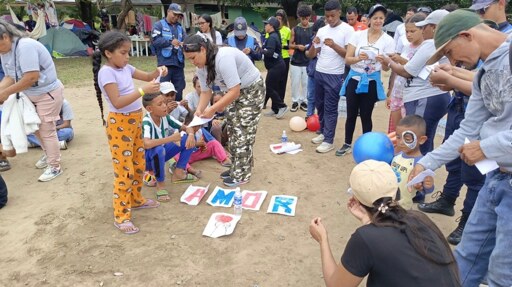
Children traumatized by the earthquakes found themselves surrounded not only by doctors and psychologists but also by artists and volunteers organizing activities to restore some sense of normalcy amid overwhelming loss.
Older residents who could not easily relocate were identified and supported through neighborhood networks that had existed long before the disaster.
One school principal told De los Santos that although her building had become an emergency shelter rather than a school, she viewed her role in exactly the same way: she was still taking care of her community.
That quiet observation captures something essential about Venezuela’s response. The country’s greatest resource was not simply heavy equipment or emergency funding. It was the trust that already existed between neighbors.
Disasters reveal the strength—or weakness—of institutions. But, institutions are ultimately built from relationships. Venezuela’s communal organizations demonstrated that years of neighborhood organizing had created something capable of responding when conventional systems were at capacity.
Rebuilding Under Sanctions
As rescue operations gradually gave way to humanitarian relief, another challenge came into sharper focus.
Finding survivors is only the beginning. Rebuilding homes, schools, hospitals, roads, and public infrastructure may take years.
That process also exposed an uncomfortable reality about international sanctions.
For years, Venezuela has faced restrictions that have complicated international financial transactions and access to imported equipment. In ordinary times, those constraints are often discussed in abstract geopolitical terms. After the earthquakes, they became immediate practical questions.
How do you purchase specialized equipment if financial transactions are restricted?
How do reconstruction projects move forward if payments cannot easily be processed?
De los Santos noted that humanitarian assistance itself required temporary adjustments to financial restrictions so aid could be delivered.
That raises a broader question extending well beyond Venezuela.
What does recovery look like when a country attempting to rebuild after a catastrophic natural disaster must also navigate years of financial and economic constraints?
It is clear, disasters expose the human dimensions of sanctions in ways that political debates often ignore.
What Survives After the Buildings Fall
Long after rescue crews leave and cameras move on, societies continue rebuilding.
Concrete can be replaced. Roads can be reconstructed. Homes can eventually rise again.
The more difficult task is restoring the lives interrupted by catastrophe.
Walking through temporary shelters, De los Santos encountered teachers who had become humanitarian coordinators, doctors treating displaced families around the clock, volunteers who had traveled from distant states simply because they believed they were needed, and neighbors sharing food, clothing, and shelter with people they had never met.
International assistance mattered. Professional rescue teams mattered. Government coordination mattered.
But what held communities together in those first chaotic days was something less visible and far more enduring: it was the social fabric that already existed.
For readers outside Venezuela, that may be the most important lesson of this tragedy.
Natural disasters do not test only the strength of buildings. They test the strength of communities.
When institutions are rooted in neighborhoods rather than existing only on paper, they become more than administrative structures. They become living networks of mutual care, capable of adapting when the unimaginable happens.
In the weeks following Venezuela’s twin earthquakes, the world saw collapsed buildings and heartbreaking loss.
Those who stood among the rubble witnessed something else as well.
They witnessed communities refusing to let one another face catastrophe alone.
And, perhaps, that is the story that deserves to endure long after the aftershocks have faded.
-
The Communities That Held Venezuela Together
July 18, 2026July 18, 2026
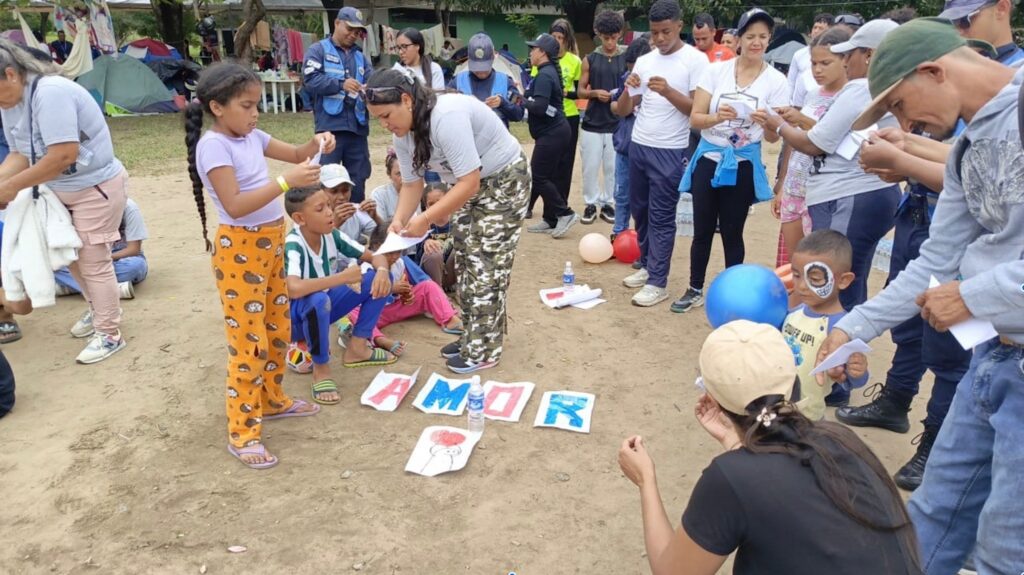
After the June 24 earthquakes flattened La Guaira, the communal councils Venezuela built years earlier became the relief network sanctions couldn’t stop.
-
US Returns Letter in Which Mexico Asks to Review ICE
July 18, 2026July 18, 2026
The US returned Mexico’s letter over four Adelanto deaths, telling it to use ‘diplomatic channels’, even as 18 have died in ICE custody under Trump II.
-
Sheinbaum to Attend World Cup Final; Trump Made the Invitation
July 17, 2026July 17, 2026
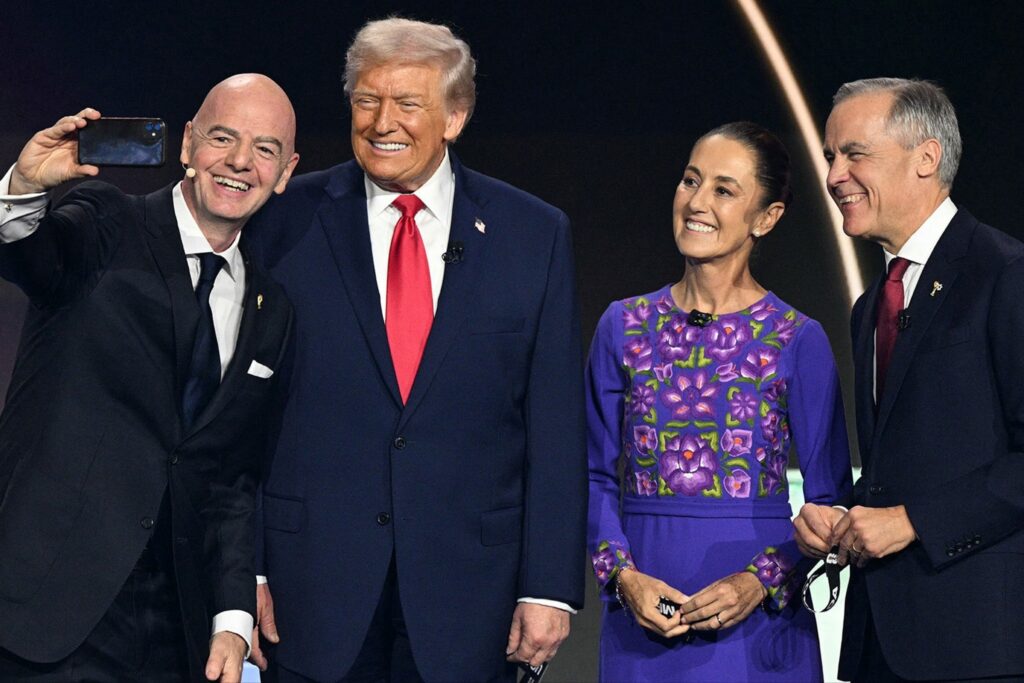
Sheinbaum is expected to fly commercial to Sunday’s World Cup final in New York alongside Canada’s Mark Carney, returning to Mexico on Monday.
The post The Communities That Held Venezuela Together appeared first on Mexico Solidarity Media.
From Mexico Solidarity Media via This RSS Feed.