

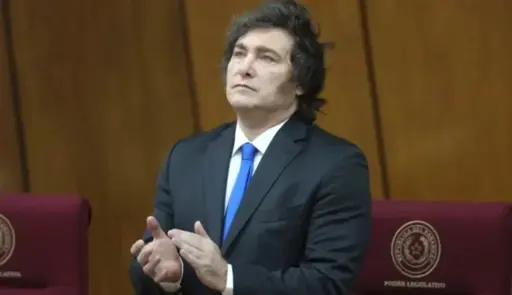
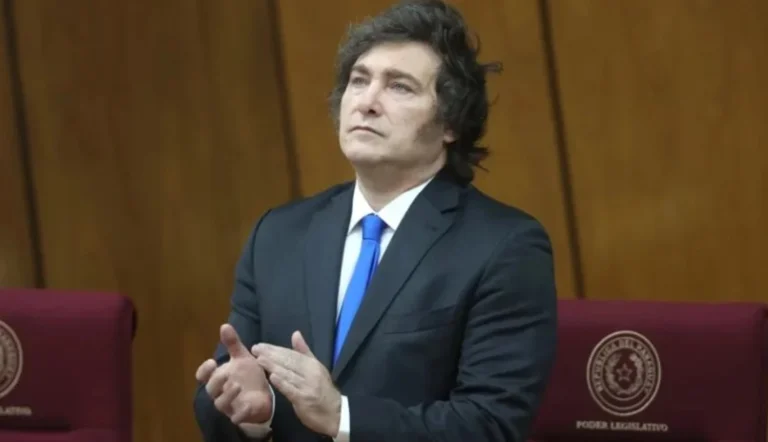
Brazil Supreme Court Milei ban blocks the Argentine president from visiting Jair Bolsonaro, tightening house arrest rules amid rising electoral tensions.
Related: Brazil’s Lula Asks Trump to Justify New Batch of Tariffs
Brazil Supreme Court Milei ban blocks visit to Bolsonaro under strict house arrest
Brazil Supreme Court Milei ban is the phrase that now encapsulates the latest judicial decision tightening restrictions on former Brazilian President Jair Bolsonaro and limiting his political contact with foreign allies. On Saturday, Brazil’s Supreme Court rejected a formal request submitted by Bolsonaro’s legal team seeking authorization for Argentine President Javier Milei to visit the ex-leader at his residence in Brasília, where he is serving a sentence under house arrest.
The ruling was issued by Justice Alexandre de Moraes, the magistrate in charge of enforcing the 27‑year prison sentence handed down against Bolsonaro after he was found guilty of “leading” a coup plot against current President Luiz Inácio Lula da Silva following the 2022 election. By denying the visit, the court reaffirmed its intention to strictly limit political activity and influence emanating from Bolsonaro’s confinement.
The defense had argued that Milei’s visit would fit within the Argentine president’s international agenda in Brazil and requested a specific exception to allow a private meeting. However, the Brazil Supreme Court Milei ban confirms that no such exception will be granted, at least in the immediate term, and that Bolsonaro’s communication with political actors remains heavily restricted.
According to the plan disclosed publicly by Milei himself, the Argentine president intended to travel to Brazil on 25 July, stopping in São Paulo to attend the official launch of the presidential candidacy of Senator Flávio Bolsonaro, Jair Bolsonaro’s eldest son, and then making a brief stop in Brasília to greet the former president. That itinerary has now been disrupted by the court’s decision.
Why the Brazil Supreme Court Milei ban follows stricter conditions on Bolsonaro
The Brazil Supreme Court Milei ban is directly linked to a broader move by Justice De Moraes to sharply toughen Bolsonaro’s house arrest regime. In a ruling issued the day before, the judge modified the conditions of the former president’s confinement, citing recent violations of communication restrictions.
Under the new terms, Bolsonaro, who governed from 2019 to 2022, is barred from receiving social visits for 30 days. The only exceptions allowed are medical professionals, physiotherapists and his legal representatives. These measures are justified by the court as necessary to enforce the original sentence and prevent indirect political activity from his residence.
Beyond the initial 30‑day social isolation, the Supreme Federal Court (STF) also explicitly prohibited Bolsonaro from receiving any visitors for political or electoral purposes until the conclusion of Brazil’s upcoming presidential, regional and legislative elections, scheduled for October. This extended restriction is central to the Brazil Supreme Court Milei ban, as Milei’s visit was framed as a highly symbolic political gesture.
The tightening of measures comes in response to an incident that the court considers a serious breach of prior precautions. Recently, Senator Flávio Bolsonaro read aloud, and disseminated on his social networks, a handwritten letter by his father. In that message, Jair Bolsonaro formally endorsed his son’s candidacy and called for family unity around his political project.
For Justice De Moraes, this episode amounted to a clear violation of the ban imposed on Bolsonaro from using social media directly or indirectly through third parties. In his view, allowing such actions would effectively enable the former president to continue exerting political influence and participating in the campaign, despite his sentence and restrictions.
As an immediate consequence, the judge initially suspended Flávio Bolsonaro’s visits to his father for 90 days, preventing any contact at least until after the first round of the elections, set for 4 October. Later, this restriction, which started as a targeted measure, was expanded to cover other political actors, thus encompassing the Brazil Supreme Court Milei ban.
Accusations of interference and impact on the far‑right bloc
The Brazil Supreme Court Milei ban has fueled an already intense political climate ahead of the elections. From the perspective of Bolsonaro’s camp, the decision not only affects a symbolic show of support from a foreign ally like Javier Milei, but also deepens the isolation of the former president at a time when the Brazilian far right seeks to consolidate its electoral base.
In public statements, Senator Flávio Bolsonaro reacted harshly against Justice De Moraes, accusing him of exercising direct political interference in the electoral dispute. For the senator, blocking his own visits, restricting the broader political circle around his father and preventing Milei’s appearance in Brasília during the campaign tilts the playing field in favor of their opponents.
Surveys cited by Bolsonaro’s allies show Flávio Bolsonaro polling in second place in voting intention, behind President Lula da Silva. In this context, any judicial decision that affects his visibility, his association with his father’s figure or support from international allies is framed by the far right as part of a wider institutional operation against their project.
For the Supreme Court and its supporters, however, the Brazil Supreme Court Milei ban and the expanded restrictions are presented as a legal and proportional response to repeated violations by Bolsonaro of the conditions attached to his house arrest. They argue that allowing a stream of political visitors—especially high‑profile figures like Milei—would effectively turn the former president’s residence into an informal campaign headquarters, undermining the sentence.
The measure also reverberates beyond Brazil’s borders, as Milei and Bolsonaro have become emblematic figures of the contemporary far right in Latin America, frequently expressing mutual admiration and coordinating political messaging. The impossibility of a publicized meeting between them in Brasília, at least in the short term, represents a setback for efforts to visibly project a regional ultra‑right alliance.
El 51 % de los brasileños culpa a Flávio Bolsonaro del arancel del 25 % de EE.UU., según sondeo Genial/Quaest. Solo el 30 % respalda su versión. El 63 % teme perjuicios para su familia y el 42 % dice que la medida de Trump refuerza su voto por Lula en octubre. #Brasil… pic.twitter.com/wRgEoXG8BC
— teleSUR TV (@teleSURtv) July 17, 2026
Geopolitical context: regional alliances and judicial limits on far‑right networks
The Brazil Supreme Court Milei ban must also be read within a broader geopolitical and regional context, where transnational far‑right networks have sought to coordinate narratives, campaigns and public events across borders. The planned appearance of Javier Milei alongside Flávio and Jair Bolsonaro in Brazil would have sent a strong symbolic signal of alignment between the Argentine and Brazilian ultra‑right currents.
By preventing this encounter, Brazil’s judiciary indirectly influences the regional political landscape, limiting the capacity of far‑right leaders to stage high‑profile joint events that could boost their momentum in multiple countries simultaneously. This judicial stance contrasts with earlier periods in which personal alliances between presidents and ex‑presidents across the region could unfold with fewer institutional constraints.
At the same time, the decision underscores Brazil’s internal debate on the role of courts in defending democratic institutions after the attempted coup scenario linked to Bolsonaro’s circle. For sectors supportive of the STF, measures like the Brazil Supreme Court Milei ban are part of a broader effort to draw a firm line between legitimate political activity and attempts to undermine electoral outcomes.
In this sense, the case could influence how other countries in the region think about regulating the political activities of convicted leaders, especially when their influence remains strong and they maintain ties with foreign heads of state. The balance between civil rights, political freedom and the protection of democratic order is likely to remain a contentious issue, not only in Brazil but across Latin America.
Whether the Brazil Supreme Court Milei ban ultimately strengthens or weakens institutional credibility will depend on how consistently the law is applied, how transparent the process remains, and how Brazilian society and regional public opinion interpret the court’s role in the months leading up to October’s elections.
International Crisis Group – Latin America & Caribbean
From teleSUR English via This RSS Feed.