

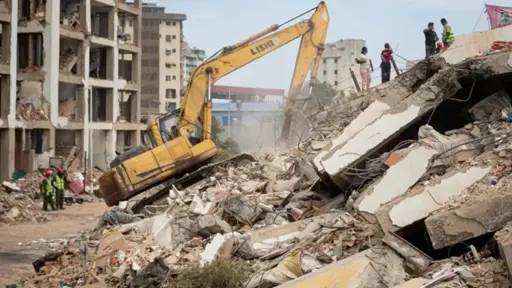
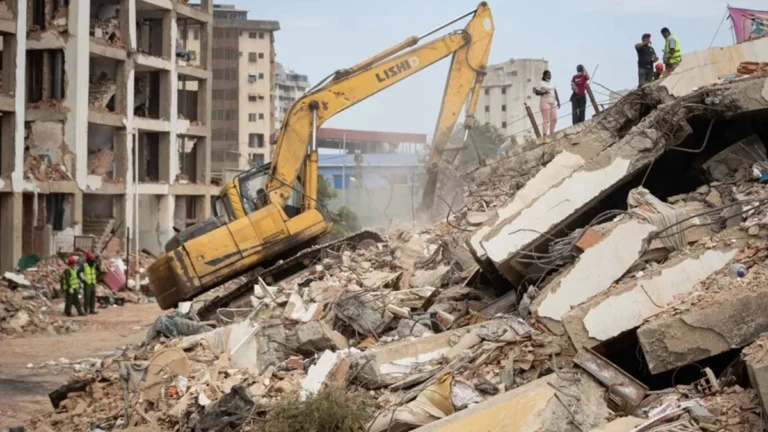
Authorities estimate more than 2 million tons of debris as cleanup, mapping and recycling operations advance.
The Venezuelan government has activated 11 temporary debris disposal centers in La Guaira under its Dignified and Safe Clearance Plan to address damage caused by the twin earthquakes of June 24. The operation combines debris removal, technical waste management and aerial surveying to support reconstruction while strengthening environmental oversight and social assistance.
RELATED: Venezuela Unlocks $346 Million in IMF Reserves After Deadly Earthquake
Environmental inspections estimate that more than 2 million tons of debris remain across the affected areas. The total includes 577,000 tons of personal belongings and 1.529 million tons of construction materials.
Temporary disposal and recycling operations
Minister for Ecosocialism Nelson Rodríguez said the government designated 11 sites across La Guaira as Temporary Disposal Centers (CDTs) after technical assessments conducted jointly with the United Nations Development Programme (UNDP).
Explaining the purpose of the facilities, Rodríguez said: “This is done so the debris can later be sorted, separated and taken to the appropriate destinations.”
#NotiMippCI
| Activan 11 Centros de Disposición Temporal para escombros en La Guaira
Lea más
https://t.co/aZzK1q8sIv pic.twitter.com/lOjuWY5URG
— Ministerio de Comunicación e Información (@mippci_ven) July 18, 2026

Text Reads: 11 Temporary Debris Disposal Centers Activated in La Guaira
Rescue agencies authorize the removal of debris from affected areas, while motorcycle escorts direct trucks to the temporary disposal centers. Authorities have also invited private companies to participate in the operation. Waste management firms Fospuca and Protecnia have already joined the effort.
According to Rodríguez, cleanup crews collected more than 700 tons of debris per day during the first three days after the earthquakes. Daily collection has since declined to about 300 tons, bringing the total removed so far to 8,784 tons. The operation currently deploys 106 vehicles and 697 personnel.
“We have joined a task force that is keeping La Guaira state clean,” Rodríguez said.
The collected debris is transferred to the Santa Eduvigis sanitary landfill, where it is processed using mechanical crushing equipment. The resulting material is distributed in a controlled manner across two prepared terraces measuring five and six hectares.
Authorities said the crushed material will be reused to produce construction aggregate for the state’s national housing program. The Ministry for Ecosocialism and the La Guaira state government are also monitoring operations to prevent unauthorized dumping along the coastline and protect coastal ecosystems.
Following complaints circulated on social media, the ministry activated its environmental enforcement service to inspect disposal practices.
“We carried out a special operation in response to reports shared through social media, conducting inspections with a focus on raising awareness,” Rodríguez said.
Aerial mapping to guide reconstruction
The government has also begun a photogrammetric survey using unmanned aircraft over the parish of Naiguatá to support recovery efforts.
Sectoral Vice President for Planning Ricardo Menéndez said the survey will generate cartographic data to guide reconstruction by measuring debris volumes and identifying the precise location of damaged structures. The operation combines information from two technical systems to improve accuracy for planning and decision-making.
Authorities said the scientific survey, carried out with the participation of several institutions, will also strengthen preparedness for future natural hazards by providing updated information on terrain conditions after the earthquakes.
The mapping process will produce cartography at a 1:2500 scale, the level of detail required for engineering projects and road infrastructure works planned for La Guaira.
Social assistance measures
Following the earthquakes, Acting President Delcy Rodríguez instructed authorities to open several public parks as immediate safety areas for affected residents. The designated sites include Itagua Park, Alí Primera West Park, Generalísimo Francisco de Miranda Park and Rómulo Gallegos Park.
Environmental education workshops are also being held in temporary government camps established for displaced residents.
“Venezuela has a long-standing culture of environmental protection,” Rodríguez said.
The Ministry for Ecosocialism continues to deploy 340 personnel as part of the emergency response, including 214 park rangers, 53 forest firefighters and 14 volunteers.
From teleSUR English via This RSS Feed.