

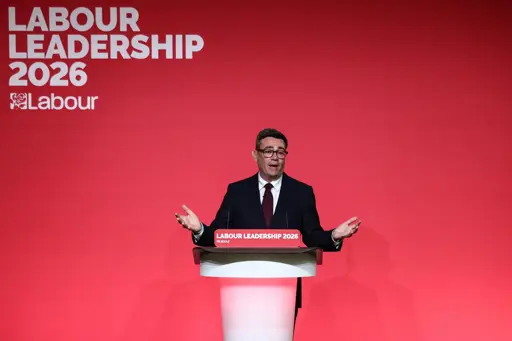
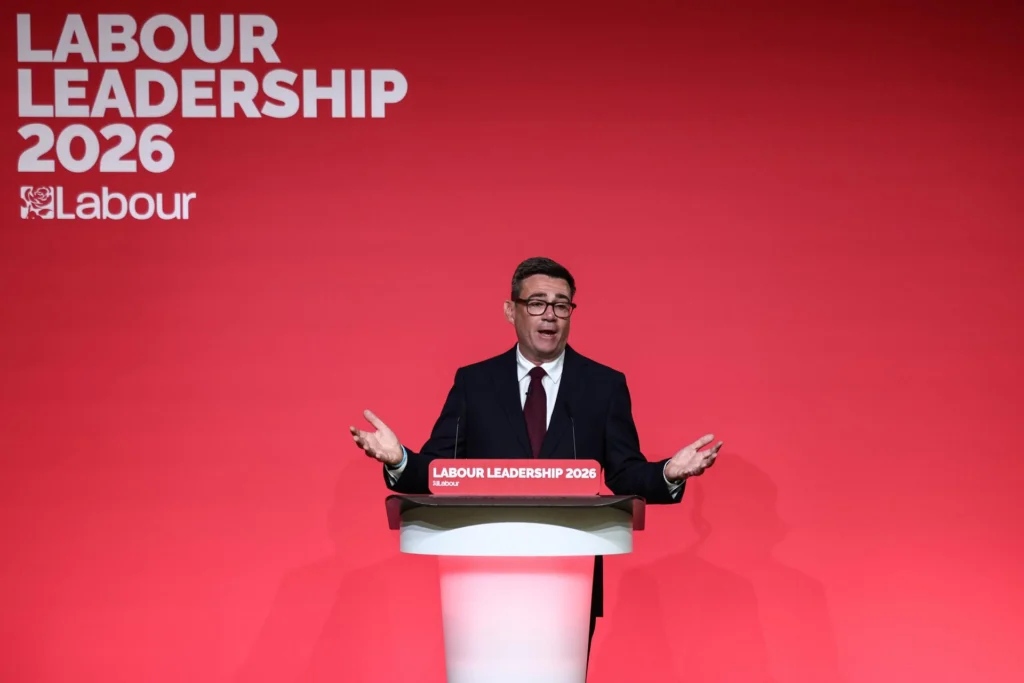
Former Manchester Mayor Andy Burnham became the new leader of the Labour Party this Friday Jul and will succeed Keir Starmer as United Kingdom’s Prime Minister on Monday.
Andy Burnham secured the backing of 379 out of 403 Members of Parliament who form the Labour parliamentary group in the House of Commons. He also won the endorsement of eight out of 11 affiliated trade unions of the governing party.
The core of his political project focuses on the decentralization of the state and a government based on traditional Labour values.
RELATED: EU-UK Gibraltar Agreement Removes Border Fence
The newly elected leader affirmed that his administration will be unequivocally Labour in its priorities and decisions. He promised to place people and territories at the center of all government actions to reverse decades of regional inequality.
“We will be unequivocally Labour-oriented in our priorities and decisions, putting people and territories at the center of everything we do,” said new Labour leader.
BREAKING: Andy Burnham officially confirmed as the new leader of the Labour Party
Follow our live updates: https://t.co/1NhltuqOPo
Sky 501, Virgin 602, Freeview 233 and YouTube pic.twitter.com/PbmeBtXbgo
— Sky News (@SkyNews) July 17, 2026
Decentralizing the British State
The new leader of the Labour Party argued that the United Kingdom took a series of wrong decisions during the 1980s. During that decade, political power was centralized in London and economic power was privatized. Andy Burnham defended the necessity of opening a new path after four decades under this socioeconomic model.
This declaration marks a clear break with the Thatcherite legacy. According to Burnham, that neoliberal model concentrated wealth and power at the expense of regional development. His objective is to boost economic growth in all regions of the country and return control to local communities.
This proposal is inspired by “Manchesterism“, the territorial development model that Burnham promoted during his tenure as Mayor of Greater Manchester. The strategy seeks to balance the historic dominance of London and redistribute economic opportunities toward the north of England.
Burnham also advocated for a more united Labour Party focused on its mission of public service. He committed to govern for the north and the south, for Scotland, Wales, Northern Ireland, and every town and city. This declaration aims to unite the party base, which has experienced internal tensions following the mandate of Keir Starmer.
It’s the honour of my life to be Leader of the Labour Party.
I will be a leader for every region and nation in this great country, and this Party will be unashamedly Labour in our priorities and in the decisions we take.
Together, we will set Britain on a new path. https://t.co/7SYlOp9qO6
— Andy Burnham (@andyburnham) July 17, 2026
National Unity and Recovery
Burnham paid tribute to Starmer for returning the Labour Party to power with an absolute majority in 2024. The new leader inherits this legislative majority and assured the public that he is fully prepared to lead the nation through its current challenges.
On Monday, Burnham will officially assume the office of Prime Minister. Following British constitutional protocol, Starmer will present his resignation to King Charles III at Buckingham Palace.
The monarch will then invite the new Labour leader to form a government, officially sealing the leadership transition. This change of leadership represents a major shift in the political direction of the United Kingdom toward a more regionalized and socially focused administration.
The transition comes at a critical time for the British economy. Local governments across the nation face severe financial constraints after years of centralized austerity. Burnham’s focus on decentralization aims to empower these struggling local authorities with direct decision-making power and financial autonomy.
Furthermore, his strong ties to trade unions suggest a collaborative approach to labor rights and public sector wages. By securing the support of eight major unions, Burnham enters office with a strong mandate from the organized working class. This support will be crucial as he seeks to implement his progressive policy agenda.
The next Prime Minister faces the immediate challenge of translating the “Manchesterism” model to a national scale. While local devolution worked successfully in Greater Manchester, applying these policies to diverse regions like Scotland and Wales will require complex legislative negotiations in the House of Commons.
From teleSUR English via This RSS Feed.