

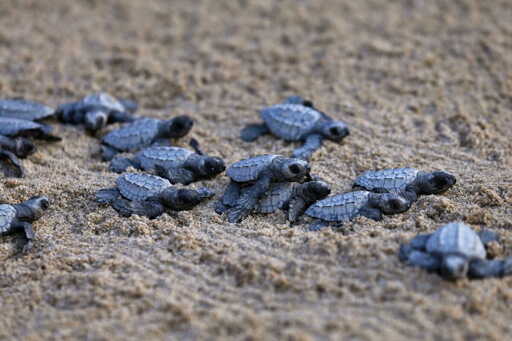
When Jerald Mahusay was a kid, he and his friends saw turtle eggs so often, they treated them like toys. “We were always playing with the eggs,” Mahusay recalled of his childhood in Santo Niño, a village in the Philippines’ Palawan province. “We didn’t know why they are important.” Mahusay’s relationship with turtles has changed. In 2023, he started working as a patroller for the Large Marine Vertebrates Research Institute Philippines (LAMAVE), an NGO that conducts marine research around the country, including a turtle monitoring project in Palawan. This year, Mahusay was promoted to head of the local patrol unit and research assistant for LAMAVE’s turtle project. Santo Niño is located in San Vicente, an agriculture and fishing municipality that is a vital nesting ground for olive ridley sea turtles (Lepidochelys olivacea), classified as vulnerable on the IUCN Red List. However, nesting turtles here face a myriad of challenges. The most prevalent is a largely unchecked stray dog population, but higher tides and more frequent storms caused by climate change loom large, as do plans to develop the area for mass tourism. LAMAVE patrollers find a predated nest in Santo Niño, San Vicente, Palawan, April 2026. Image by Rachel Duckett for Mongabay. On patrol During peak nesting season, volunteers and local patrollers walk more than 8 kilometers (about 5 miles) in five shifts each night and early morning. When they find a turtle, they’ll wait for her to finish nesting, shooing away dogs when necessary. Before she re-enters the water,…This article was originally published on Mongabay
From Conservation news via This RSS Feed.