

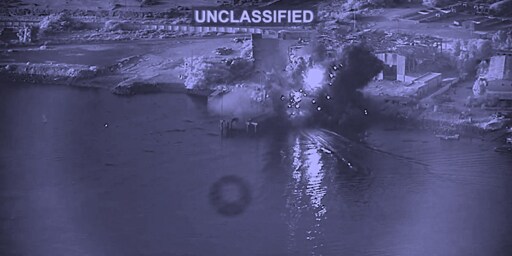
President Donald Trump blew up the temporary ceasefire after the U.S. launched a series of airstrikes against Iran over the weekend. The two nations have continued to exchange strikes throughout the week, with Iran targeting U.S. allies in the Middle East, as Congress debates further entangling the United States military with Israel — a proposal that would give Israel enormous leverage over U.S. defense policy.
“This is a formula for a forever war,” national security reporter Spencer Ackerman tells The Intercept Briefing. A major champion of such forever wars was Sen. Lindsey Graham, who passed away over the weekend. “Lindsey Graham never met a war he didn’t like, never met a war he didn’t want to send other people’s children to wage,” says Ackerman, who writes the Substack Forever Wars. “The white whale for Lindsey Graham and many others in the bridge between neoconservatism and MAGA was Iran — assaulting Iran not only at home, but rolling back its regional challenge to U.S. and Israeli power in the Middle East.”
“Whatever else MAGA says about wars,” says Ackerman, “what it wants is domination. It wants domination not only at home, but abroad. That’s where Graham recognized — that instead of being someone like John McCain, who sought to occasionally butt against, fight against Donald Trump — that Graham could help maneuver Trump into being a vehicle for their shared project. And he did that with really tremendous success.”
“It occasionally cost Graham dignity, but … he saw that as an easy trade-off if it meant maneuvering Trump into a kind of position that Graham, had he been president, had he been secretary of state, had he been secretary of defense, would’ve wanted to pursue.”
Politics reporter Akela Lacy also drops in to discuss how the turmoil at home and abroad is impacting the midterms. After Democratic Senate candidate Graham Platner dropped out of the race, Lacy says, “Maine Democrats are in a situation where they’re all trying to become the nominee that the party picks to replace Platner on the ballot to go against Collins in November. Many of those candidates have now come out and called to abolish ICE outright after the shooting in Maine.”
For more, listen to the full conversation of The Intercept Briefing on Apple Podcasts, Spotify, YouTube, or wherever you listen.
Transcript
Akela Lacy: Welcome to The Intercept Briefing, I’m Akela Lacy, senior politics reporter at The Intercept.
Jessica Washington: And I’m Jessica Washington, politics reporter at The Intercept.
AL: Jessie, we were anticipating having a slow July, but the news has not slowed down. Trump reignited the U.S. war with Iran, resuming airstrikes on the country, and said we’re taking over the Strait of Hormuz.
Meanwhile, Congress is trying to pass the National Defense Authorization Act after several weeks of gridlock, asking for a record $1.15 trillion in funding. On Tuesday, Senate Democrats blocked the bill in protest of the Iran war and over a provision that would more closely integrate the U.S. and Israeli military. On Wednesday, more than half of House Democrats voted to strip $3.3 billion in aid to Israel from the measure, though the effort failed in the broader House.
And within the last week, there have been four ICE-related deaths. Federal immigration agents shot and killed two fathers: Lorenzo Salgado Araujo in Texas and Johan Sebastián [Durán] Guerrero in Maine. That brings the total number of people fatally shot by immigration agents in Trump’s second term to 11. On Tuesday, a third man was struck by a truck fleeing agents in Florida. And a Venezuelan man died in custody in Georgia after being denied medicine, reported by our former colleague Jose Olivares at The Guardian.
At least 52 people have died in ICE custody during Trump’s second term. It’s the highest level in a decade according to a new report from Physicians for Human Rights [and Human Rights Watch].
Jessie, this week you covered how lawmakers are responding, or not, to Trump’s deadly immigration agenda. What did you find out?
JW: When I was looking into it, I was wondering where is this momentum that we saw in January and February around immigration, around at least saying, ICE is wrong, the actions that ICE is taking are immoral, are against the code of our nation. Those were the kinds of things you were hearing in January and February.
That was in response, obviously, to the killings of Renee Good and Alex Pretti in Minnesota that elicited a huge response — not just from Congress, but also you saw a massive response in the streets, people coming out in droves to support their community to say this isn’t right, to say that you can’t just rob us of vital members of our community.
We’re really not seeing that same intensity either in policies that were put out, even policies that were going to go nowhere. Obviously, Democrats caved on DHS spending in April. We just really haven’t seen the same moment that we did in January and February.
I had a long conversation with Congresswoman Delia Ramirez, who introduced the “Melt ICE” Act in January. That bill would end the Department of Homeland Security’s funding to detain and monitor immigrants. She’s characterized it as a first step, but really when she’s had conversations with her colleagues in the wake of these two really horrific shootings, she’s found that there just isn’t that same intensity, there isn’t that same momentum for action.
There’s two things happening from her perspective, from what she told me. One of them is racism and the fact that the people who were killed most recently were not U.S. citizens. Alex Pretti and Renee Good were, and they were also white, and that obviously changes the tenor, at least for the media and the public.
Then there’s the fact that without the large national outpouring, without voters really pushing politicians, they aren’t motivated because their donor class is not motivated. They benefit from a broken immigration system where people are forced to take these low-wage jobs. So in an absence of kind of a massive public outcry of people pushing their politicians, you just aren’t going to see that action, and that’s really coming from my conversation with her.
But I think you can see that in the way that Democratic politicians have not risen in this moment — and I would argue they didn’t rise in January and February — but certainly we saw more energy.
The other big news of the week was as the world closely watched for updates on Sen. Mitch McConnell’s health, Sen. Lindsey Graham died from a heart condition. This of course happened in the backdrop of the looming midterms where Republicans currently hold a slim majority in the senate.
Maine Sen. Susan Collins who is running in a chaotic Senate race, is facing protests for voting to give DHS $70 billion for immigration enforcement after ICE agents fatally shot Guerrero in Maine. Akela, there is so much to unpack here. Can you talk about the political implications unfolding here and what you’re watching for in the midterms?
AL: This is really shaping what was already a tumultuous situation in the Maine Senate race, where obviously, Graham Platner dropped out last week over an allegation of rape. Now Maine Democrats are in a situation where they’re all trying to become the nominee that the party picks to replace Platner on the ballot to go against Collins in November.
Many of those candidates have now come out and called to abolish ICE outright after the shooting in Maine. That was something that Platner had campaigned on, obviously, prior to the shooting. Our colleague Noah Hurowitz is actually working on a story about this that you can read at The Intercept.
[
Related
Would-Be Platner Replacements in Maine Rally Around “Abolish ICE” (or Something Close)](https://theintercept.com/2026/07/16/maine-platner-replacement-abolish-ice-shootings/)
We see candidates adopting this sense of urgency around ICE that is shaping the campaigns of insurgent candidates and frustration among voters right now. Jessie, you’re talking about feeling like the momentum on the ground against ICE is not being matched in Congress, something that’s animating the midterms and emphasizing this sort of split-screen where people don’t feel like Democratic leadership or longtime incumbents are meeting the moment. We’re seeing that shape now not just this race in Maine, but we’ve seen that be a rallying call for many of the candidates who have won their races already this primary cycle.
One thing that I thought was interesting about how this is unfolding in Maine is that one of the candidates, Dr. Nirav Shah, who I spoke to actually before Platner dropped out of the race — he had stopped short of calling to abolish ICE outright. He said it can’t exist in its current form, whether we reform it or dismantle it or transfer its duties to another body, it has to go.
But earlier this week, he came out and said “Abolish ICE” outright, after the shooting. So we are seeing this have a real effect on how candidates are running their races. Even people who might have thought saying “Abolish ICE” a week ago — wasn’t the right strategy.
JW: That’s one thing in my conversation with Congresswoman Ramirez that came up, is that people are not feeling as if Congress is meeting this moment or meeting them where they’re at.
They’re saying, we’re in the streets. We’re risking our lives, our freedom, in some cases. Obviously, we’ve seen the prosecutions that came out of Prairieland, those protests. So people are saying, “We’re risking our lives, we’re risking our freedom, and you’re going to lunches and meetings on the Hill like everything is normal.”
I do think that’s going to be a motivating force in these midterms, and we’ll see if candidates meet that moment. Or if they end up on the side of most of Congress, which seems to be doing not much of anything on this really horrific issue.
AL: You mentioned that there’s been protests against Collins in Maine after the ICE shooting, pointing to the fact that she voted for ICE funding without any conditions. I’m interested to see if the most recent killings and deaths related to ICE have any effect on what appeared — even in the week where the last Platner scandal broke — she was still leading him in polling. I’m curious to see if this will affect that in the coming months.
JW: That’s definitely something to look out for. The way that it’s worked has been very regionally specific. I think we’ve seen Minnesota really come together and come out on this issue. Now we’re seeing it in Maine, and perhaps in Texas as well.
There’s obviously so much to get into. The Iran war, the proposed U.S.–Israel partnership, Lindsey Graham’s death and his foreign policy legacy. We’re going to talk about all of this with national security reporter Spencer Ackerman, who’s reported on the war on terror since 2002.
His most recent piece reflects on Graham’s legacy of warmongering and preserving Guantánamo Bay, or as Ackerman describes it, “an extrajudicial cage that is still swallowing people.”
Ackerman is the author of “Reign of Terror: How the 9/11 Era Destabilized America and Produced Trump,” which traces the political, legal, and cultural evolution of the last 25 years and how the boomerang has come back home.
Ackerman has reported from Iraq, Afghanistan, Guantánamo Bay, and many U.S. bases. He’s won a Pulitzer Prize and National Magazine Award, and currently writes for Zeteo and Forever Wars, where you can sign up for his newsletter.
[Break]
JW: Spencer Ackerman, welcome back to The Intercept Briefing.
Spencer Ackerman: Thank you for having me back, Jessica.
JW: There’s a lot that we have to discuss with you, but first, we’re going to start with the broken temporary ceasefire deal between the United States and Iran. The United States launched a wave of airstrikes over the weekend against Iran; the two countries have exchanged strikes throughout the week.
On Monday, President Donald Trump announced the U.S. military would reinstate its blockade of the Strait of Hormuz and implement a 20 percent cargo charge. The latter, he has since scrapped.
Spencer, what is known at this point about why we’re at war again with Iran, and why the U.S.–Iran memorandum of understanding to bring a permanent end to the war failed?
SA: The simple answer is the fifth paragraph in the memorandum of understanding, which despite what I think fairly counts as a clear concession by the United States that Iran henceforth will be able to control and hence impose some manner of cost on shipping transiting the Strait of Hormuz, the United States rejects that interpretation and rejects that outcome.
Most importantly, that paragraph in the memorandum of understanding indicates just how deeply Iran has triumphed in this conflict that the United States and Israel brought to it. Before February 28, there were no costs, no fees on transits across one of the world’s most economically important waterways. That was the result of Iranian decision-making up to this point, a lot of which we don’t have a great deal of fidelity on, but basically represented a step that Iranians, even under the decades-long enmity with the United States and Israel, never felt that it had reason to impose.
[
Related
Putting Fuel on a Ceasefire: Israel Tries to Kill U.S.–Iran Talks](https://theintercept.com/2026/04/10/iran-ceasefire-israel/)
It is a really historical shift. It is a pivot away from what has been an absolutely central aspect of not just U.S., but Western economic hegemony going back centuries. Which is to say what we in the West like to call free trade, freedom of navigation — that is a major thing for the United States to lose, and the Trump administration knows that. The shipping industry knows that.
The Trump administration, when it reached the memorandum of understanding, appears to have operated in such a way that it would agree, as negotiated by Trump’s envoys — his son-in-law, Jared Kushner, and his buddy Steve Witkoff — to do whatever necessary once the markets reacted with such shock to this war to get Iran to stop firing and to make it appear for those markets like there was going to be a resolution of the conflict.
The memorandum of understanding represents the pathway to that resolution, and so the Trump administration had been hailing it as a way back to normalcy and a way out of dire economic straits. So the U.S. needed that memorandum of understanding for the shooting to stop, but it would not accept the state that it had agreed to under the memorandum of understanding, which basically saw Iran agree to waive fees during the 60-day period authorized under the memorandum of understanding to achieve a lasting peace deal, some form of resolution over the nuclear file, and also explicitly authorized Iran and its neighbor Oman — which also has significant territorial waters in that strait — to come up with essentially a lasting mechanism to provide for continued access in transit, a new way of doing business for global shipping.
Once the United States started seeing Iran basically keep control over those shipping routes, it started attacking Iran. Iran replied not just by harassing shipping, but also by resuming its missiles and drone strikes at U.S. facilities in Gulf countries that host them — and that basically broke down the ceasefire.
I think the question going forward now is what new or expanded capacity the United States has not only to open the strait but keep it open. I think that we saw during the month of shooting that preceded the ceasefire that led to the memorandum of understanding, that the United States lacks that.
This is not either a military or an economic calculation that favors U.S. power, that the Iranians have leveraged this rather intelligently in order to hold something very, very desired by the United States and indeed the global economy at risk. That’s where this stands.
“Once the United States started seeing Iran basically keep control over those shipping routes, it started attacking Iran.”
JW: It’s hard to imagine under these circumstances an end to the war in a real sense. And even Trump, when asked by CNN reporter Kaitlan Collins if bombing Iran was the new normal, said, “We were in Vietnam for 19 years.”
Kaitlan Collins: Mr. President, you noted the United States is bombing Iran again. You’ve been bombing Iran for months now. Is this just the new normal for the American people?
Donald Trump: No. We were in Vietnam for 19 years. We’re here for four months. I think we’ve done a lot. We’ve knocked out their navy in a period of one month.
JW: At this point, where do you see this heading? Trump hasn’t ruled out sending ground troops to Iran, but he also hasn’t done it yet. Do you think there’s a possibility or are there signals that there could be an off-ramp? Or is this a forever war that’s about to happen?
SA: It’s absolutely a forever war. I think that the future looks a lot like the present here, where you have essentially an unresolved situation where the United States does not accept Iranian control over the strait, regardless of the fact that it conceded as much in the memorandum of understanding.
The Iranians will not relinquish this concession over the strait now that it achieved it in this memorandum of understanding, however much a dead letter it might formally be. That deadlock is going to persist. There’s also the dire math of the U.S. missile interceptor magazine, which is to say that a whole lot of very expensive missile interceptors that the United States possesses will have to, over now an extended period, be placed in the Middle East, in the Gulf countries that host the U.S. presence up against far, far, far cheaper Iranian missiles and drones.
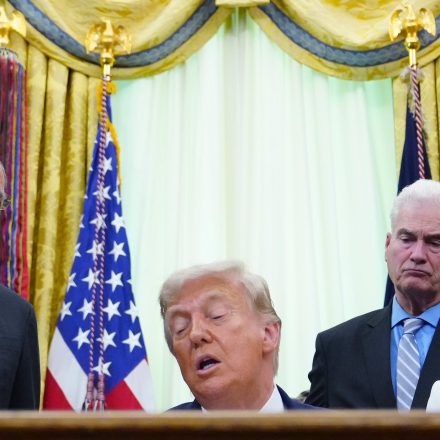
[
Related
A Point-by-Point Breakdown of Trump’s Failed Iran War Objectives](https://theintercept.com/2026/06/11/trump-iran-war-claims-failures/)
You heard the president say that the Iranian navy has been knocked out. Well, if the Iranian navy can swarm around, as we’ve seen them able to do even during the so-called ceasefire, shipping in the Gulf, then that kind of raises a question of how, even with whatever higher-end capacities the U.S. military has knocked out, whether that represents an actual defeat of the Iranian navy or whether Iranian naval capabilities remain sufficient to keep this kind of harassment going.
When we hear the president compare this war to Vietnam, that’s a five-alarm fire. Yes, the Vietnam War lasted a very, very long time. That’s what now we’re looking at even in month four of this war, I guess more like month five at this point. This was a war that both Marco Rubio and Pete Hegseth said was over.
Marco Rubio: Operation Epic Fury is concluded. We achieved the objectives of that operation.
Pete Hegseth: Operation Epic Fury was a historic and overwhelming victory on the battlefield.
SA: And clearly it’s not over. We are in just a shape change of this. There will be periods, I would imagine, of continued diplomacy. But until the United States is able to either, A, deliver some sort of finishing blow against the Iranians that they find intolerable, which I don’t really see much indication of them doing, or the Iranians decide through whatever coercive measures that they will give up control of the strait — this situation will persist.
All of the drivers of this conflict, and we haven’t even gotten to Israel here, which would prefer to both destroy the regime and collapse the Iranian state. This is a formula for a forever war. This is a formula for — if not necessarily every single day seeing exchanges of U.S., Iranian, and even potentially Israeli fire — a situation where, like the questioner said, this is a new normal. This is what the Middle East risks looking like. The coercive ability of the United States to break this logjam, the diplomatic will necessary, has simply not been in evidence.
JW: So Congress obviously has a role here. We’re speaking on Wednesday, July 15, and things may have changed by the time people are hearing this.
But as of Wednesday, the National Defense Authorization Act, which authorizes Pentagon spending, is stalling in the Senate. Democrats are refusing to take up the NDAA, arguing that it’s a “permission slip” for the Trump administration as they wage war on Iran.” Others balked at the fact that the proposal would increase authorized defense spending by $80 billion. And the NDAA includes the United States–Israel Defense Technology Cooperation Initiative, which would facilitate between the two countries technology sharing from weapons development to artificial intelligence.
Here is Israeli Prime Minister Benjamin Netanyahu on Fox trying to sell it.
Benjamin Netanyahu: I’m calling it from aid to partnership. So we take away the money that is given to Israel, which is one part. But the other part is we invest, co-invest in equal measures in the new technologies that are needed to give our military and your military the advantage. So we want — there are some unbelievable projects.
JW: Spencer, what’s at stake in this National Defense Authorization Act fight?
SA: The U.S. has co-production deals for military hardware and technological development with a number of countries that’s part of the AUKUS partnership with the U.K. and Australia that the Biden administration spearheaded. It also has co-production deals with Israel for things like the Iron Dome missile defense system.
“There’s just nothing like this that exists outside of this proposal.”
It is nevertheless completely unlike any other bi- or multilateral defense technological production agreement, ever. This will enmesh the U.S. and Israeli defense technological, both research and manufacturing capabilities like never before, like nothing that the United States has.
It puts Israeli firms that are nominally competing, in some cases with American firms across various aspects of the defense technological enterprises, into licensing agreements that give them intellectual property stakes over their American competitors and their nominal competitors. Perhaps most importantly, it puts Israeli firms, academic institutions, and so forth, into the supply chains of the U.S. military’s technological enterprise and production capabilities.
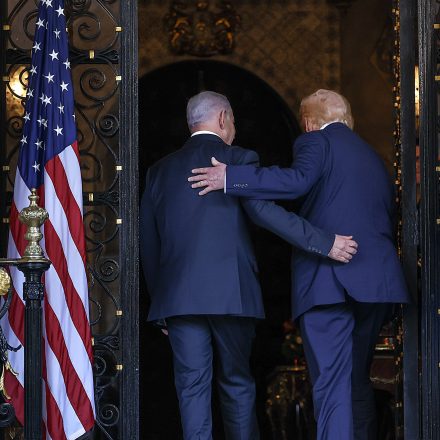
[
Related
Congress Is Trying to Permanently Integrate U.S. and Israeli Defense Tech](https://theintercept.com/2026/06/08/us-israel-224-ai-defense-budget/)
That gives Israel enormous leverage over U.S. defense policy, U.S. defense decision-making. And as well, unlike any other co-production deal that the U.S. military has with any of its partners, it creates an executive agent within the Pentagon who is empowered to override existing bureaucratic processes, procurement issues, and decision-making to basically be, essentially, an Israeli commissar in the Pentagon advocating for greater and greater production and technological integration.
There’s just nothing like this that exists outside of this proposal. There isn’t, as best I can tell, much of a precedent for it. And think of the implications of that. By the time this is out,I’ll have a piece on my newsletter, Forever Wars, about this. You’re already seeing real questions during the Iran war and Iran’s ability to hit U.S. infrastructure hosted in the Gulf about the viability of keeping the network of about 18 or so U.S. bases that span the Gulf from Kuwait to Bahrain.
You could see that bivouacking for reasons of both defensibility and certainly ease of integration into Israel. You’re already seeing a U.S. general placed in charge of the force that’s supposed to be essentially occupying Gaza under Trump’s imperial Board of Peace proposal.
The amount of missile strikes from Iran and drone strikes that Israel had to absorb during this war of aggression that it and the United States launched — if those Israeli firms, academic institutions, and so on are part of the U.S. military supply chain, and they’re vulnerable to Iranian missiles, then the United States has a direct interest in protecting those firms, installations, and so forth.
“This is an epochal, I would argue, tectonic shift in the U.S.–Israeli military relationship.”
So now U.S. defense of Israel will be a matter of U.S. defense necessity. So this is an epochal, I would argue, tectonic shift in the U.S.–Israeli military relationship. It needs to be said that right now Israel is committing a genocide in Gaza, it’s committing an ethnic cleansing in the West Bank, and it’s undergoing a process of territorial conquest in Lebanon and Syria.
This is what the United States would be far deeper yoked to than ever before, and all of this is occurring precisely as you heard the Israeli Prime Minister Benjamin Netanyahu say, to make U.S.–Israeli economic integration, particularly over defense, seamless, invisible, and far less susceptible to the rising political challenge that’s happening in the United States as the result of Israel’s genocide.
JW: The irony to what you’re saying, of course, is that on the campaign trail, Donald Trump effectively sold himself as a non-interventionist, promising no new forever wars, declaring himself a peace president. Many pundits, podcasters, journalists, others backed up that claim, despite the fact that during his first term, he assassinated an Iranian general, escalated conflicts in Iraq and Syria, and loosened the military’s rules of engagement.
One of his biggest cheerleaders on this foreign policy front was the now late Sen. Lindsey Graham, who passed away suddenly on Saturday as a result of a tear in his heart, while the world was actually awaiting news of his longtime friend Sen. Mitch McConnell’s health. Recently, you wrote, “It’s darkly poetic that Senator Lindsey Graham left this world the same weekend that the Iran ceasefire collapsed. Graham had wanted this war for a very long time. While it would be nice to think that its rapid emergence as a fiasco would have redounded to Graham’s political detriment, absolutely nothing in his political biography as one of Capitol Hill’s premier warmongers suggests that would have happened.” Talk about Graham’s foreign policy legacy.
SA: Lindsey Graham never met a war he didn’t like, never met a war he didn’t want to send other people’s children to wage. He treated war as a game, and a game that the United States and Israel, and also Ukraine — he was a very big proponent of Ukraine’s defense against the Russian invasion — that really animated Graham as much as criminalizing abortion and limiting the bodily autonomy of pregnant people animated his domestic vision.
The litany is great. An advocate of all aspects of the war on terror, from the Afghanistan War, to especially the Iraq War, to the global drone campaigns, to keeping Guantanamo Bay open, establishing, he didn’t succeed in this, but attempting to establish a globally applicable system of U.S. wartime detention that was non-judicial, that would basically be a major, major entrenchment and expansion of what we see at Guantanamo Bay.
The Libya war, attacking Bashar al-Assad in Syria, on and on it goes. But especially the white whale for Lindsey Graham and many others in the bridge between neoconservatism and MAGA was Iran — assaulting Iran not only at home, but rolling back its regional challenge to U.S. and Israeli power in the Middle East.
As you saw from the true media saturation ahead of the February 28 kickoff for the war, there was Lindsey Graham constantly advocating for it, talking with Trump, liaising behind the scenes between the White House and Benjamin Netanyahu, serving as one of the greatest advocates for launching this new forever war, and also attempting to conceal what an epochal both commitment of military power and, naturally following this would be.
“There was never any political consequence that he experienced.”
I wrote that to indicate that the main reason why Graham was able to operate this way is that there was never any political consequence that he experienced despite various changes in national mood, especially like elite political mood toward the war on terror, Graham never felt that personally. He never felt that as a real genuine challenge to his political career.
Then when there’s no consequences, there’s no accountability for that, there’s no reason for Graham to have changed, and he never did. In fairness, by all indications, he did this not just because of the campaign contributions, not just because of rise in popularity for such bellicose policies, but for the love of the game. This man was by all measures a committed militarist, someone who believed deeply in the American imperial project and was always a committed advocate of it, even when he saw that it inhibited the political careers even of his allies, John McCain, Joe Lieberman being important examples of that.
JW: Graham seems to have viewed Trump as a vehicle for his warmongering ambitions. What do you think Graham understood about Trump that the people who thought he would be a peacetime president missed?
SA: First I think anyone who wrote that Trump would be a peacetime president or an anti-war president committed a great disservice to the public discourse.
You can read my book, “Reign of Terror,” about why this would never, ever be actually the case. It is not an accident that Trump escalated the wars that he inherited and launched new and epochal ones, especially, Venezuela we didn’t even mention which the U.S. now has imperial control over.
[
Related
Lindsey Graham Is the Most Shameless Man in American Politics](https://theintercept.com/2020/01/24/lindsey-graham-trump/)
Graham understood that Donald Trump is a malleable, impressionable figure, that he is protean, that there are certain things that Trump responds to as someone who formed his political self-understanding primarily in the Reagan era and before, and that’s a healthy receptivity, to put it mildly, to U.S. militarism, that whatever else MAGA says about wars, what it wants is domination. It wants domination not only at home, but abroad.
That’s where Graham recognized that instead of being someone like John McCain, who sought to occasionally butt against, fight against Donald Trump, that Graham could help maneuver Trump into being a vehicle for their shared project. And he did that with really tremendous success.
It occasionally cost Graham dignity, but Graham, throughout his career, has never been someone who placed a great deal of shall we say, emphasis on having political dignity as long as it meant having political success. So he saw that as an easy trade-off if it meant maneuvering Trump into a kind of position that Graham, had he been president, had he been secretary of state, had he been secretary of defense, would’ve wanted to pursue.
JW: One thing that I’ve been thinking about is, does someone else come in to fill his place as a champion for endless war in the Senate? Or, at this point, does there not even need to be a congressional champion for war to continue at this point?
SA: It’s a good question. Lindsey Graham’s probably a singular figure in Republican politics at the moment, but that’s not to say that someone similar, though not identical could fill the same void as material conditions, it’s fair to say, probably produced Graham, and so they’ll produce, as long as they persist, another figure like Graham to take political advantage.
I think probably the figure in Republican politics, certainly in the Senate, that best fits a Graham-type profile is Tom Cotton the Republican senator from Arkansas. Like Graham, also a lawyer. Like Graham, an Iraq veteran, although Graham was in the reserves in the Air Force, Cotton was in the Army.
Similarly bellicose, and bellicose in many of the same ways on the same footings. Both were fierce advocates of U.S. support for Ukraine after the Russian invasion. Similarly, never met aspects of the war on terror they disliked, and seek the aggression against Iran, fervent support for Israel. Characterologically similar in the sense that you could often see aggrieved-lawyer come out in them. So I would say probably Tom Cotton.
JW: On a holistic sense, we are now well into Trump’s second term. The U.S. is at war with Iran. The administration has conducted an undeclared war in the Caribbean Sea and Pacific Ocean, killing scores of civilians by deploying drone strikes on boats they allege are carrying drugs. Marco Rubio is effectively running Venezuela from afar after the U.S. kidnapped the country’s president and his wife.
How would you characterize the Trump administration’s foreign policy at this point?
SA: Purely imperial. The dream of the Teddy Roosevelt administration is alive within the Trump one. I’ll never be able to forget the interview that Stephen Miller gave to Jake Tapper right after the Maduro kidnapping.
This is worth watching. Reading the transcript doesn’t really do it justice because you’ve really gotta see the way Miller performs in this interview. But it’s this expression of what the French used to call hyperpuissance, invincibility applied to an imperial level. A sense that the United States was capable militarily of imposing its will — militarily, economically — over the entire world in a way that the war on terror represented a drain of resources and capabilities from this was despite those material realities persisting, represented a declaration that Trump was going to make the American empire both more ambitious and recrafted in his image.
It is very explicitly rent-seeking. It seeks to make the countries in its orbit, whether traditional allies or new conquests like Venezuela, truly into vassals. Vassals that pay tribute. Tribute that provides the United States, which looks to be in pretty substantial economic decline, with new sources of revenue that stave off what will probably be politically unacceptable shocks economically to the system.
Every empire throughout history has sought to bring in resources from the periphery into the metropole. That’s absolutely what’s happening here. That Miller interview with Jake Tapper from January was the same one where Miller sounds like he’s cutting a wrestling promo threatening Denmark over Greenland, which now during the NATO summit, Trump brings back up. You are seeing a more rent-seeking U.S. empire than ever before as a characteristic, a defining characteristic, I would say, of the Trump-era empire.
I will leave it to listeners, viewers, historians to figure out where we are historically on the long trajectory of American decline. But this is the sort of thing that an empire in decline does. Rather than figuring out new strategies to growth, it redistributes wealth from its own people, to its driving oligarchic sectors.
This is [the] civilizing mission that you see in Silicon Valley now from companies like Palantir that talks about the need for, essentially, they don’t say it exactly like this, but for, the need for U.S. public subsidies to keep the AI booming, going in order to make sure that the West doesn’t, in some sense, fall behind, whatever that means, or doesn’t become vulnerable to Chinese power.
We haven’t even talked about Somalia, which is now essentially been subject to 200 drone strikes in the course of just 18 months which makes a completely invisible war that the United States has conducted for 20 years in an East African nation.
So this is a very erratic moment in American imperial history, but it absolutely has to be understood as a moment of American imperial assertion.
JW: Yeah. No, I’m getting thoughts of the Romans when they stopped making their own food and just expanded their empire out too fast. It’s giving a lot of those history flashbacks.
SA: Those Egyptian grain imports, right?
JW: Yeah. [Laughs] And we have so much that we could get into, but we’re going to have to leave it there for time. Spencer, thank you so much for joining us again on The Intercept Briefing.
SA: Once again, I mentioned Eastern Roman history and killed a podcast. Thank you very much, Jessica. [Laughter]
JW: For more from Spencer Ackerman, visit Forever Wars, where you can subscribe to his newsletter. We’ll add a link in the show notes.
We want to hear from you. Tell us what you’re following or want to see more coverage of. Email us at podcasts@theintercept.com or leave us a voicemail at 530-PODCAST. That’s 530-763-2278.
That does it for this episode.
This episode was produced by Laura Flynn. Ben Muessig is our editor-in-chief. Maia Hibbett is our Managing Editor.
Fei Liu is our product and design manager. Nara Shin is our copy editor. William Stanton mixed our show. Legal review by David Bralow.
Slip Stream provided our theme music.
This show and our reporting at The Intercept does not exist without you. Your donation, no matter the amount, makes a real difference. Keep our investigations free and fearless at theintercept.com/join.
And if you haven’t already, please subscribe to The Intercept Briefing wherever you listen to podcasts. Do leave us a rating or a review, it helps other listeners to find us.
Let us know what you think of this episode, or If you want to send us a general message, email us at podcasts@theintercept.com.
Until next time, I’m Jessica Washington.
The post Trump’s Formula for Forever Wars appeared first on The Intercept.
From The Intercept via This RSS Feed.