

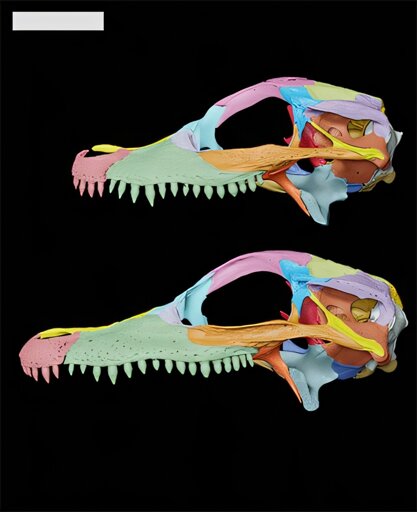
Fossil finds are exciting moments that sometimes introduce the world to an ancient mammal or dinosaur that existed millions of years ago. But a longstanding problem in paleontology is that fossils are often incomplete, and subtle differences between certain species, along with major changes that can occur as an animal grows, complicate species identification. A paper published this month in Paleobiology lays the groundwork for a new approach to correctly identifying ancient animal fossils, with significant implications for vertebrate paleontology.
From Biology News - Evolution, Cell theory, Gene theory, Microbiology, Biotechnology via This RSS Feed.
I’ve often wondered how many ‘new species’ of fossils are actually just a juvenile example of a known species, sexual dimorphism of a known species, or just a variant of a known species that we wouldn’t call an entirely separate species if we were classifying the living animal…
Like … if you’d never discovered tadpoles before, you might easily think that they’re an entirely different species than frogs.
Or if you’d never seen a male deer before, you might think the antlers mean it’s an entirely different species from the female deer you’ve seen before.