

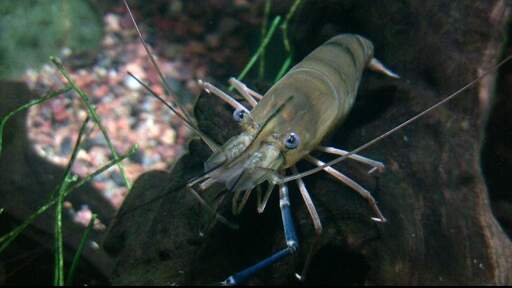
The stealthy and increasingly persistent presence of an exotic species — the giant river prawn— in Brazil’s coastal ecosystems has been raising numerous alarms among scientists, fishers and environmental managers. Introduced in the country in the late 20th century to supply the growing aquaculture industry, the prawn (Macrobrachium rosenbergii) is no longer limited to captive breeding. The species has established itself in extremely sensitive natural environments, including protected areas. A study conducted by researchers from Brazil and Uruguay was published in February, revealing the extent of the problem and detailing the ecological and environmental risks associated with the giant prawn “invasion” — negative aspects that, according to experts, may intensify in the coming years. Led by oceanographer Edison Barbieri, director of the São Paulo Fisheries Institute’s Southern Coast Regional Research Center, the work was driven by the scientific community’s growing concern regarding biological invasions in estuarine ecosystems. These systems, which also include mangroves, are located in areas of transition between rivers and the ocean and are widely recognized for their biodiversity. Estuarine zones serve as nurseries for numerous aquatic species, including fish and crustaceans of ecological importance and economic potential. At the same time, these delicate transitional environments are susceptible to the introduction of exotic species, which then compete with native fauna for different vital resources. According to Barbieri, the study — conducted between 2015 and 2025 — started from an observation: While the intrusive prawn had been seen in different regions of Brazil, there was no systematic monitoring in…This article was originally published on Mongabay
From Conservation news via This RSS Feed.