

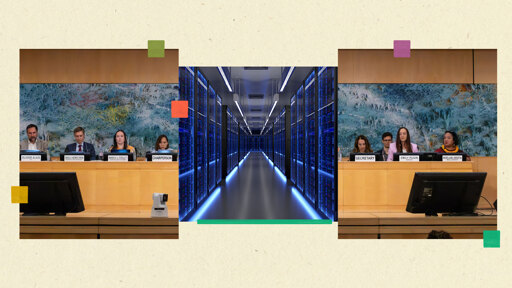
Artificial intelligence is said to be the transformative technology of our time, with the potential to reshape our world on a global scale, according to research. Yet AI’s potential is underpinned by the need for hyperscale data centers, the large, energy-intensive sites that house servers and IT equipment. As tech companies and governments continue to develop this infrastructure at scale, Indigenous peoples from Brazil to Canada affected by the projects have responded in different ways. Some have raised concerns about pressure on water resources and inadequate consultation, while others have embraced the projects for their economic benefits. In July 2026, at a meeting of the U.N. Expert Mechanism on the Rights of Indigenous Peoples (EMRIP), Indigenous leaders, government representatives and experts called for data center projects to comply with the principles of free, prior and informed consent, or FPIC. They also explored whether growing AI infrastructure can be developed in ways that advance Indigenous priorities and rights. During a panel discussion on the second day of the EMRIP meeting, Indigenous delegates said that policies to ensure that AI does not harvest Indigenous knowledge without consent are of equal importance to protections for Indigenous lands and waters. “AI is resource-intensive and requires vast amounts of energy,” said Maren Storslett, a member of the Sámi Parliament in Norway at the meeting. “In Sápmi, we already see how large data centers put [immense] pressure on our territories. This forces a conversation about priorities and limits and we need to be at the table…This article was originally published on Mongabay
From Conservation news via This RSS Feed.