

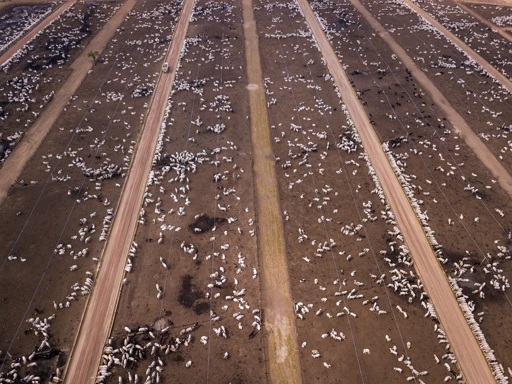
The world’s largest meatpacking company, JBS, has scrapped two of its key environmental goals in its latest annual sustainability report. JBS’s “Net Zero by 2040,” which aimed to reduce greenhouse gas emissions throughout its supply chain, and zero deforestation targets were substantially rolled back compared to previous years, according to its 2025 Sustainability report, published July 8. Instead, the company redesigned its targets with a focus solely on its most direct emissions, called Scope 1 and Scope 2. Those include direct emissions from JBS factories, vehicles, and electricity provided to its facilities. Indirect emissions, called Scope 3, make up the vast majority of the company’s emissions and were dropped. Those include methane from cows, and transportation and deforestation emissions from supplier farms. “Backtracking on measurable targets doesn’t diminish the scrutiny JBS will face for its climate and nature-wrecking record of pollution, deforestation, land grabbing, human rights abuses and corruption,” Gemma Hoskins, global climate lead at U.S.-based environmental nonprofit Mighty Earth, wrote in a statement. Until 2025, JBS touted a commitment to “zero illegal deforestation in all Brazilian biomes by the end of 2025 for direct and indirect cattle suppliers,” Mongabay previously reported. JBS justified the change by saying it’s difficult to control indirect emissions. “Bold ambition is fine, but you now need to actually have really good, measurable, accountable goals. And that’s what we’re doing — we’re now setting goals that we believe where we have operational control,” Jason Weller, JBS’s chief sustainability officer, told the Financial Times. JBS operates more than 250 meat production facilities, mostly in Brazil and the U.S. It…This article was originally published on Mongabay
From Conservation news via This RSS Feed.