

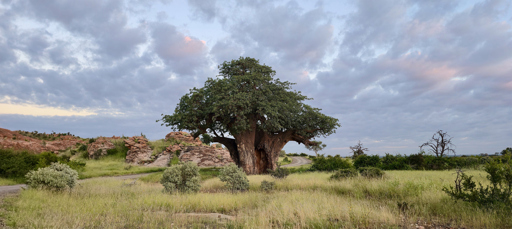
In Limpopo province, in the far north of South Africa, where much of the population lives in rural areas, environmental conservation is often not considered very often. Instead, the residents spend much of their time trying to make a living either from the forestry around them or from fishing in the Mutale and Limpopo rivers. But for Mutale resident Tshilidzi Mulugana, degradation of the local environment is a concern, as it will affect the community and endanger biodiversity. Mulugana is the founder of the Niani Youth Development organization whose mission is to educate local youth. He wants to make a change in the community, to help residents conserve the environment. Mulugana is afraid the next generation may not live to know indigenous tree species — yet these trees serve as traditional medicine. He noted several threats to indigenous species such as baobab (Adansonia genus), leadwood (Combretum imberbe), mopani (Colophospermum mopane) and marula (Sclerocarya birrea): recurring floods, the movement of elephant herds from neighboring Zimbabwe or Mozambique through the area, and traders who cut the trees to sell as firewood. In 2019, Mulugana began a grassroots conservation initiative focused on planting indigenous trees. One day, an official from Kruger National Park (KNP) — a walkable distance from where he lives — came across Mulugana, attracted to his project. The official later invited a representative from the forestry and fisheries department, and in 2024, the two groups funded the project. Mulugana also hoped to recruit community members to help with the work,…This article was originally published on Mongabay
From Conservation news via This RSS Feed.