

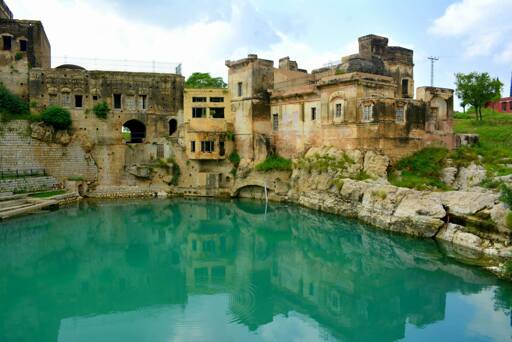
For generations, the Kahoon Valley in Pakistan’s Chakwal district in northwestern Punjab has thrived as a rich ecological haven. Its fertile soil has yielded lush, historical loquat orchards, while the surrounding scrub forests have provided vital refuge to diverse wildlife, including local peacock populations and rare mountain deer species. At the center of this landscape sit the Katas Raj Temples, an ancient Hindu pilgrimage site anchoring the region’s profound spiritual heritage. However, the unchecked expansion of mega cement factories in the early 2000s transformed this natural sanctuary into a toxic industrial zone. Relentless industrial pumping reportedly caused the water table to crash from 36 meters (120 feet) to 122 m (402 ft). This extreme depletion withered the famous loquat trees and displaced native birds, also draining the sacred Katas Raj pond. Determined to save his homeland from erasure, Raja Waseem Ahmed, an environmental activist, brought together residents from neighboring villages to establish the Kahoon Protection Committee to defend the Kahoon Valley against the extreme ecological and social damages caused by heavy industrialization. Waseem utilized environmental legislation and led a forensic legal campaign that exposed the manipulated environmental approval documents eventually driving the Supreme Court of Pakistan to intervene on its own accord, resulting in a historic verdict that banned factories from draining local groundwater and slapped the industry with huge fines. In retaliation for his activism, Waseem was struck by unjustified anti-terrorism lawsuits, temporarily exiled from his native district by local authorities, and subjected to stress so harsh that it…This article was originally published on Mongabay
From Conservation news via This RSS Feed.