

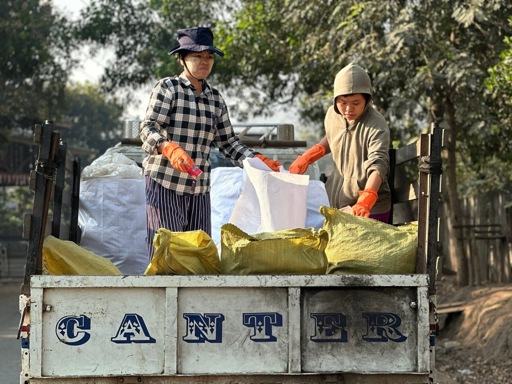
Myanmar experienced a military coup in February 2021. In the aftermath, widespread repression by the military regime fueled the emergence of armed resistance movements across the country, pushing an ongoing conflict to its most intense level in decades. Starting from 2024, the military’s conscription law has further threatened the lives and futures of young people, forcing thousands to leave the country. Meanwhile, environmental degradation continues to worsen. People are facing multiple crises, including environmental destruction caused by the overexploitation of natural resources, natural disasters, armed conflict, and human rights violations by the military regime. The democratic freedoms that used to exist during the five years of semi-civilian government before the coup have disappeared. Within this context, environmental activism and conservation efforts have widely faded. Yet, against this backdrop, the environmental group Clean Mountains was established in 2024 and is based in the conflict-affected states of Karenni (Kayah) and Karen (Kayin), areas controlled by resistance forces. The organization — funded through grants and donations — is a small, women-led team of four members between the ages of 22 and 28. The group’s founder, Ou Ou, 27, leads Clean Mountains in implementing community-based conservation in conflict-affected mountainous regions, focusing on waste management, water conservation, sustainable agriculture and forest conservation. Ou Ou, founder of Clean Mountains, attends an awareness session on waste management in Bago region, 2025. Image courtesy of Clean Mountains. Through both her previous organization and Clean Mountains, waste management systems have been established in more than 130 villages, including 15…This article was originally published on Mongabay
From Conservation news via This RSS Feed.