

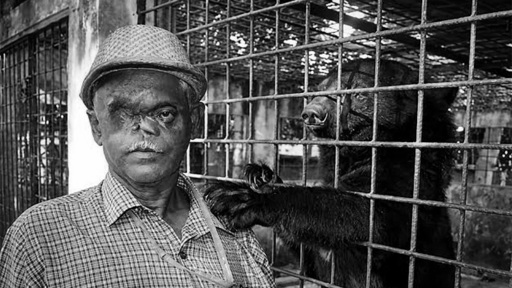
The bear came out of the forest with enough force to kill him. It mauled the hunter badly and cost him an eye. He spent three months in a hospital recovering. There, he began asking himself questions that had not troubled him much before. Why was he hunting? Why was he killing? Hunting had come to him through his family. His father and grandfather were known around Sreemangal, in northeastern Bangladesh, for killing leopards, wild boars, and other animals that threatened people or crops. As a boy, he accompanied his father into the forest. After his father died, he continued hunting. He became a gunsmith and a guide, familiar with animal tracks, forest paths, and the habits of creatures that most people encountered only by accident. Sitesh Ranjon Deb holds a pair of jungle cats in his house in Sreemangol, Bangladesh. Image via Agence France-Presse (AFP) After the bear attack, Sitesh Ranjan Deb, who died on July 14th, gave up hunting. He began capturing injured animals, removing snakes from houses, treating wildlife recovered from traffickers, and returning animals to the forest. The grounds of his home became a treatment center. It eventually developed into the Bangladesh Wildlife Service Foundation, one of the country’s best-known privately established wildlife-rescue institutions. The center remained closely tied to his household. Its patients occupied bedrooms, courtyards, cages, and improvised treatment spaces. Jungle-cat cubs, pythons, slow lorises, monkeys, birds, and other animals passed through. Those requiring constant attention stayed close to the family. Deb kept photographs…This article was originally published on Mongabay
From Conservation news via This RSS Feed.