

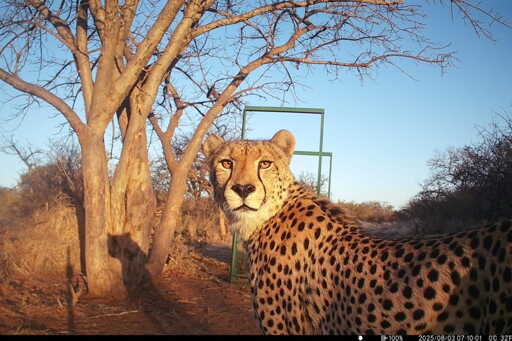
South Africa’s free-roaming cheetah population is much smaller than previously thought, according to the first coordinated national census of the species living outside protected areas. Over three and a half years, between 2022 and 2026, researchers from Ashia Cheetah Conservation, the Cheetah Outreach Trust (COT) and the University of Groningen in the Netherlands surveyed almost 100,000 square kilometers (38,610 square miles) of habitat across South Africa’s northern border. Wild cheetahs that inhabit the unprotected areas of South Africa are considered “free roaming.” Using camera traps, GPS collars, landowner surveys, genetic analyses, scat sampling and public sighting records, they compiled the Free-Roaming Cheetah Census (FRCC), which they described as the most comprehensive assessment yet of South Africa’s free-roaming cheetahs. During this time, they recorded only 83 mature adults, and 119 individual animals in total, which is 70% less than previous, smaller-scale studies suggested using model-based estimates. A young cheetah investigates a monitoring site in North West Province. Image courtesy of Ashia Cheetah Conservation. “Finding fewer than 100 mature adults is an extremely strong indication of how dramatically smaller the population has become within South Africa over the years,” Marna Smit, director of Ashia Cheetah Conservation, told Mongabay. Because of a high mortality rate in young cheetahs, which can be up to 90% for wild animals, mature adults — the breeding population —- are important for the survival of the species. Cheetahs in South Africa are currently managed in four separate systems: The free-roaming population, the semi-protected population in Kruger National Park…This article was originally published on Mongabay
From Conservation news via This RSS Feed.