

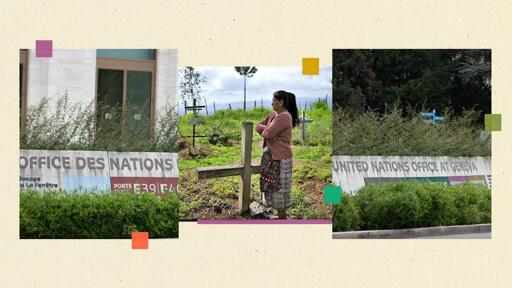
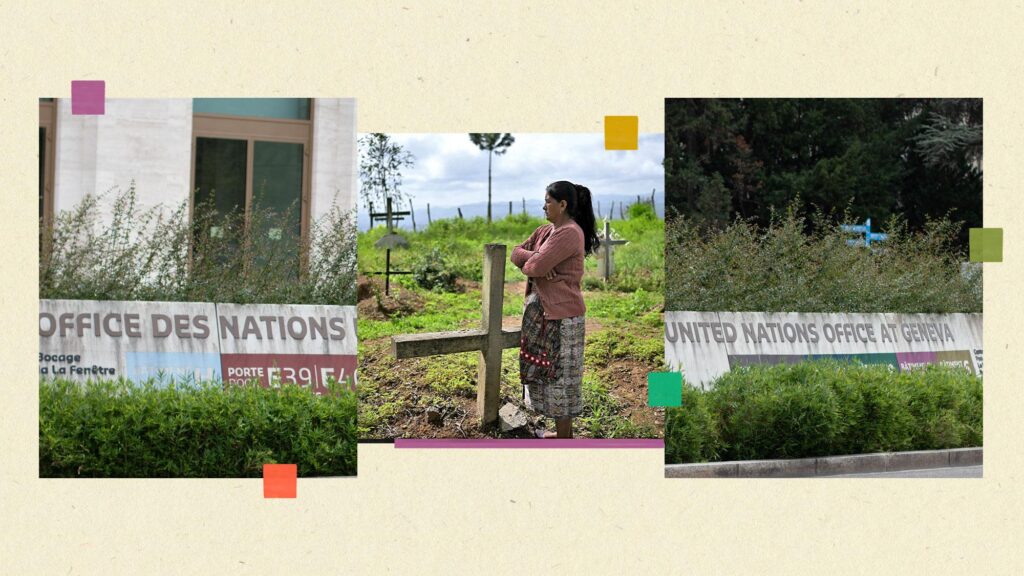
Illustration by Grist, photos by Dionne Phillips and Getty Images
This story is published through the Indigenous News Alliance.
Content warning: This article contains details about sexual violence and genocide. Please read with care for your spirit.
Guatemala’s 36-year civil war led to the killing of around 200,000 people, the destruction of hundreds of villages, and the raping of more than 100,000 women.
Indigenous Maya people experienced these crimes at disproportionate rates, and both the United Nations and the country’s truth commission found state forces committed acts of genocide.
That brutal conflict ended in 1996, but nearly three decades after the peace accords were signed, Mayan leader Mario Simón Chávez says the violence has not truly ended.
“Fortunately, Guatemala is no longer experiencing an armed conflict,” he said. “However, the internal armed conflict has left indelible scars on our people.”
READ MORE: Indigenous leaders confront overlapping crises at UN, as climate and conflict collide
Chávez said Indigenous communities continue to experience structural forms of conflict through state corruption, dispossession of their lands, and attacks on their self-determination.
“For our peoples, peace is only possible when our collective rights, our right to self-determination, and our ancestral relationship with our territories are fully respected,” he said.
Indigenous nations and communities around the world are confronting the enduring legacy of conflict. This week, Indigenous delegates are bringing these ongoing challenges to the United Nations Expert Mechanism on the Rights of Indigenous Peoples (EMRIP), in Geneva.
For many, colonization and its lingering effects represent an ongoing state of warfare.
“In too many parts of the world, Indigenous peoples bear the heaviest cost of conflicts they did not choose,” Sidharto Reza Suryodipuro, president of the UN Human Rights Council, said in opening remarks on Monday.
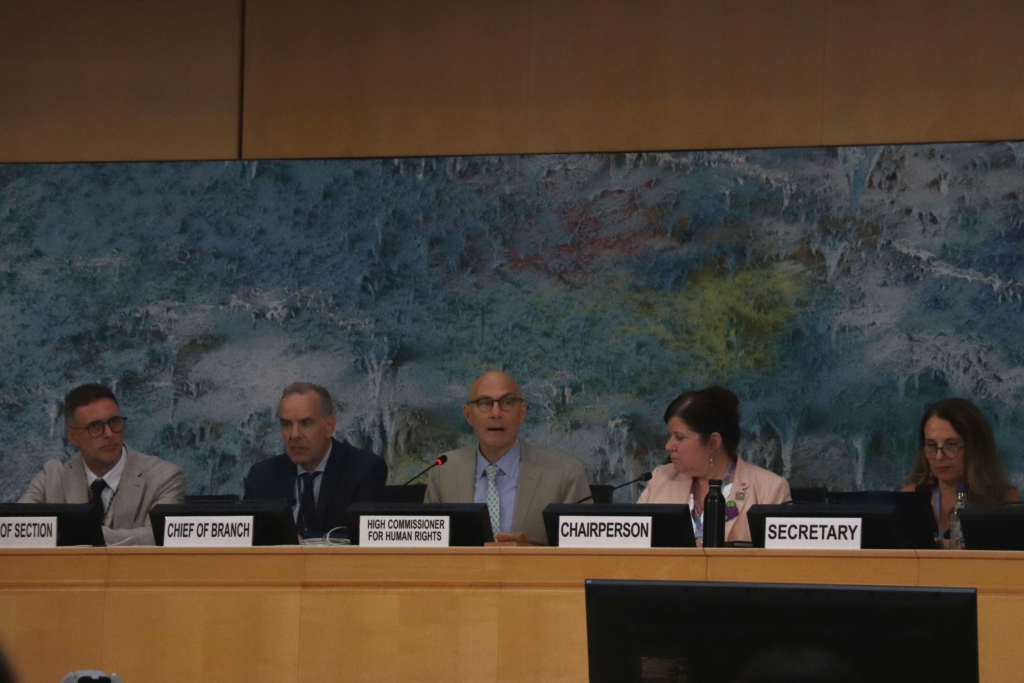
Volker Türk, the United Nations High Commissioner for Human Rights, speaks to UN Expert Mechanism on the Rights of Indigenous Peoples delegates alongside other UN Human Rights Commission leaders on Tuesday in Geneva. Photo by Dionne Phillips
‘Affects virtually every dimension of Indigenous peoples’ lives’
According to a draft study — prepared by EMRIP and informed by more than 80 submissions from a wide range of Indigenous peoples and other experts — this ongoing strife must be understood as more than armed violence.
It includes militarization, occupation, forced displacement and structural violence linked to colonization, resource extraction, and political repression.
During Monday’s discussion of the study, speaker after speaker praised its authors for broadening the definition to more accurately reflect the challenges Indigenous peoples face.
READ MORE: As disasters worsen, Indigenous peoples threatened by a ‘crisis communication gap’
The experiences shared by Indigenous delegates at EMRIP reflect many of the study’s central findings: Conflict is often rooted in unresolved questions of land, self-determination, governance, and inequality, and that peace processes cannot succeed without the meaningful participation of Indigenous peoples.
“The study demonstrates that conflict affects virtually every dimension of Indigenous peoples’ lives,” said Ojot Miru Ojulu, who is Anywaa from Ethiopia and led the session. “It threatens the right to live, liberty and security.
“Across every region, Indigenous peoples possess longstanding traditions of diplomacy, mediation, customary law, and peace-building.”
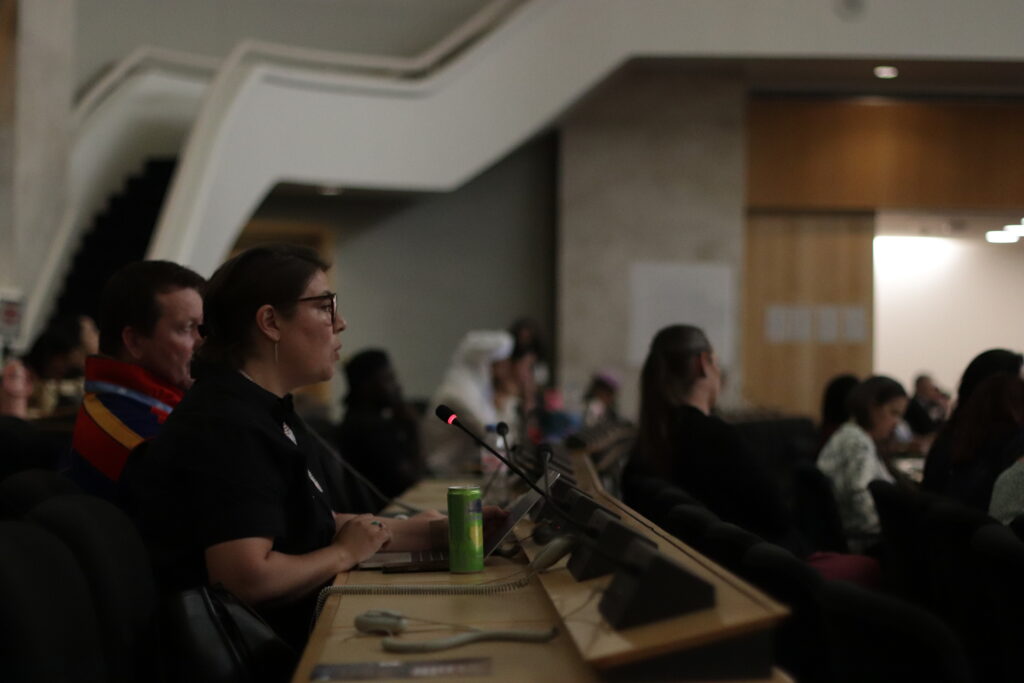
A delegate to the UN Expert Mechanism on the Rights of Indigenous Peoples speaks at the annual. meetings in Geneva. Photo by Dionne Phillips
EMRIP advises the UN Human Rights Council and wants the study to strengthen international guidance on protecting Indigenous rights before, during and after conflict — while recognizing Indigenous peoples not only as communities affected by that violence, but as rights holders and participants in its prevention, reconciliation, and subsequent peace-building.
Maryann Stancich, who is Ngāti Manu and Ngāpuhi from Aotearoa (New Zealand), said this understanding is important for recognizing how colonial systems continue to affect Indigenous peoples even without physical violence.
“In Aotearoa, settler colonialism is not a historical event we have moved past,” said Stancich, who teaches law at Waikato University.
“Many of the impacts of colonization continue today through laws, policies and governance arrangements that affect [Indigenous] self-determination, participation and authority over our own affairs,” she said.
READ MORE: War, climate change, and AI: What’s at stake at this year’s UN Indigenous forum
According to Stancich, recognizing Indigenous legal systems also is an essential part of peace-building, with Māori customs and other Indigenous legal traditions providing frameworks for resolving disputes, repairing harm, and restoring relationships.
Those traditions should be recognized as legitimate legal systems that can operate alongside those of the state and other entities to strengthen communities and resolve conflict in culturally meaningful ways.
“Peace is not simply defined by the absence of war,” Stancich said.
“Lasting peace also requires justice and the meaningful implementation of the minimum standards affirmed in the UN Declaration on the Rights of Indigenous Peoples.”
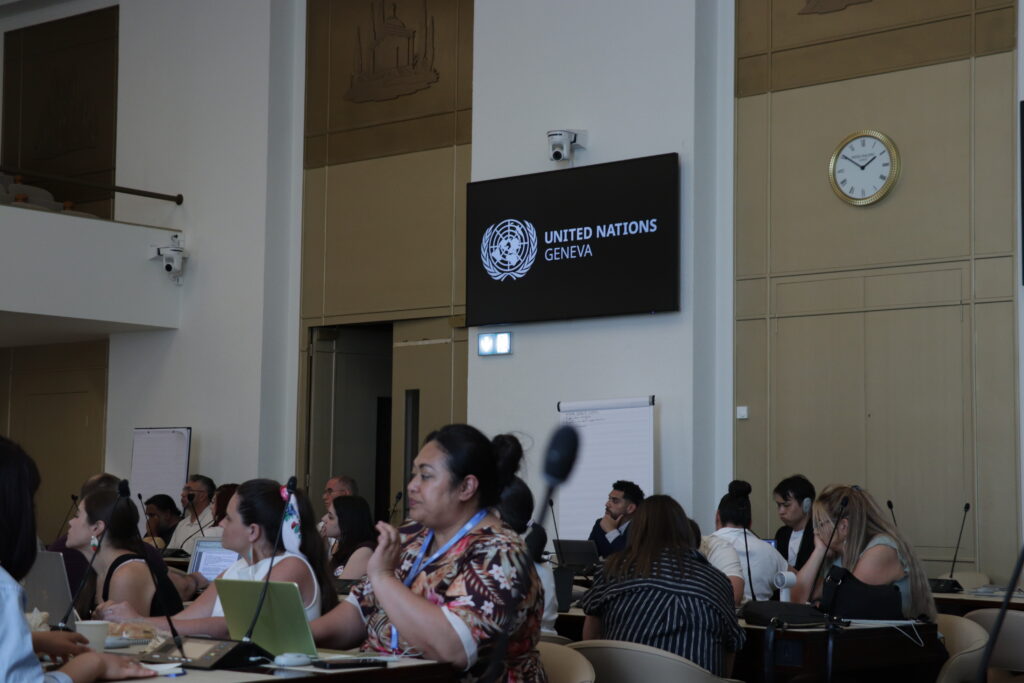
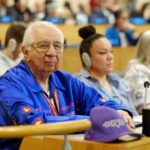
Delegates listen to a presentation at the UN Expert Mechanism on the Rights of Indigenous Peoples annual meetings in Geneva on Tuesday. Photo by Dionne Phillips
‘Excluded here in their own country’
In 2024, the French government proposed changes to the electoral system of Kanaky — as the Indigenous Kanak people call “New Caledonia” — that Kanak groups feared would dilute their political representation.
France governs the territory, and the Kanak independence movement has been fighting for self-determination for decades. In response, unrest erupted, leaving 14 people dead — most of them Kanak — and caused an estimated C$3.5 billion (US$2.5 billion) in damage.
Roselyne Makalu, who is from Lifou Island and a member of the Pacific Women Mediators Network, said women played a critical role in de-escalating tensions among young people during the unrest — using culture, dialogue and healing to prevent further harm.
“Children have anger in their bodies, and they don’t know why or where it comes from, but they feel excluded here in their own country,” Makalu said.
She said that although the immediate unrest has eased, Kanaky remains politically and socially tense — and the deeper, generational trauma of colonization is often missing in international discussions about violence.
Viro Xulue, the human rights and Indigenous advisor to the Customary Council of Drehu in Kanaky, said the territory’s experience demonstrates why true peace cannot be separated from decolonization.
According to UN human rights mechanisms and France’s own National Human Rights Consultative Commission, the territory’s decolonization remains unfinished. Unresolved questions include political status, Indigenous representation, and the full recognition of Kanak land and other rights continue to shape tensions.
READ MORE: At the UN, Mohawk leader calls for UNDRIP watchdogs to ensure standards are met
Xulue said the struggle for self-determination is part of a wider Pacific movement among Indigenous peoples. “French Polynesia,” Guåhan (Guam), Tokelau, and “American Samoa” are also among the territories on the UN list of non-self-governing territories seeking true independence.
“The Pacific Blue, peace of the Pacific, cannot happen when it isn’t totally decolonized,” Xulue said.
Although Indigenous delegates stressed the importance of a broader definition of conflict, Xulue and others also raised the issue of ongoing active violence.
In a statement delivered Monday, Xulue mentioned West Papua — where Indigenous communities have long raised concerns over militarization, resource extraction, and the impacts of large-scale development, including the world’s largest deforestation project, on their lands.
He called on EMRIP to remind all states of their obligations to uphold the rights of Indigenous people everywhere.
“Peace,” he said, “is inseparable from self-determination.”
The post For Indigenous peoples worldwide, conflict means so much more than war appeared first on Indiginews.
From Indiginews via This RSS Feed.