

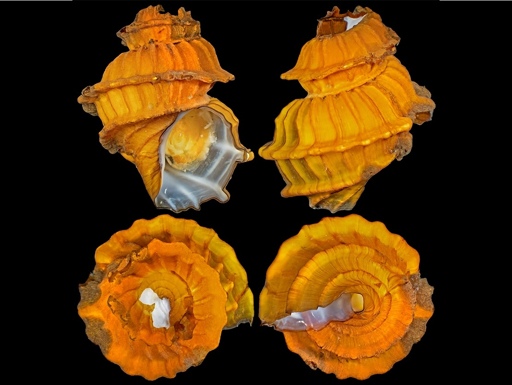
In its most recent update to the Red List of threatened species, the International Union for Conservation of Nature (IUCN) identified deep-sea mining as the biggest threat to a critically endangered deep-sea snail. Discovered in 2021, scientists named the mollusk Lirapex felix — the lucky lirapex — because of the luck it took to find the roughly 2.5 millimeter (0.1 inch) long sea snail. So far, only two individuals have been recorded in one location 2,000 kilometers (1,242 miles) south of Madagascar in the Longqi vent field on the Southwest Indian Ridge. “Luckily, these two specimens gave us just enough information on its morphology and DNA so we could describe it comprehensively and give it a name,” Chong Chen, the scientist who first described the species, told Mongabay via email. “This likely means this species is naturally rare, making it especially vulnerable to anthropogenic impacts like deep-sea mining.” The species was found in an area that overlaps with a 15-year exploration license for polymetallic sulfide mineral extraction. The license was issued by the International Seabed Authority to China and expires this year. If exploitation-phase mining goes ahead, sediment plumes could smother and kill vent communities, Chen said. Even though little is known about the Lirapex felix, it was classified as critically endangered. By assigning the highest risk category the IUCN has taken a precautionary approach and recommends further research into mining impacts. It has also called for surveys to see if the species exists at other vent sites along the…This article was originally published on Mongabay
From Conservation news via This RSS Feed.