

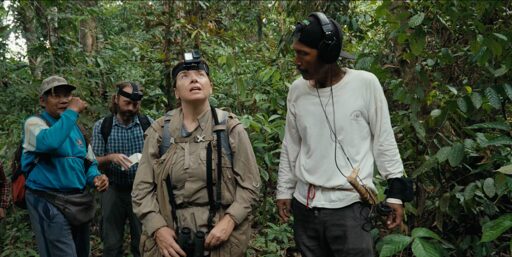
PEMALUAN, East Kalimantan — Indonesia’s plan to build a new capital in the province of East Kalimantan has captured global attention. Called Nusantara, the project is intended to ease pressure on Jakarta, a sinking and overcrowded megacity, by shifting the country’s administrative centre to the island of Borneo. But the new city is also reshaping a forested landscape that is both rich in biodiversity and home to Indigenous communities who have lived there for generations. As construction advances, scientists and local residents are racing to document what remains of the forest before it changes forever. With audio recorders placed throughout the rainforest, researchers have created an acoustic baseline of its ecosystem. The calls of birds, frogs, insects and mammals offer a living record of biodiversity, helping scientists to identify species, track wildlife and measure how the landscape responds to rapid change. For the Indigenous Balik community, the project has another layer of meaning: the forest’s sounds are also part of their cultural heritage. Working alongside researchers, they are helping to preserve an acoustic archive of a place that may soon be permanently altered. As this corner of Borneo transforms, these recordings may stand as a lasting record of the forest at a pivotal moment. For the Balik community, the future will depend not only on the fate of the forest but on how they adapt to sweeping environmental and social change. Sound Guardians is a collaboration between Mongabay, Scientific American and Project Multatuli, with support from the Pulitzer Center on…This article was originally published on Mongabay
From Conservation news via This RSS Feed.