

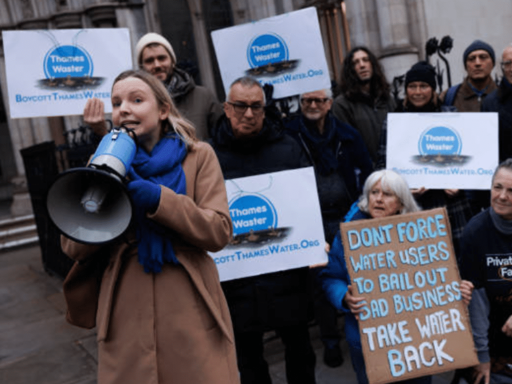
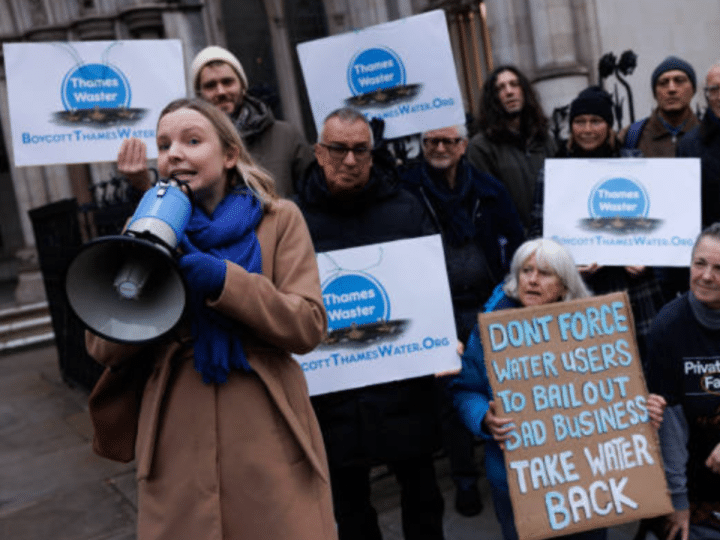
Thames Water’s shareholders are panicking as the prospect of public ownership threatens to bring their gravy train to an end.
The company is now sitting on £18.5 billion of debt, up from £16.8 billion a year ago. Instead of accepting responsibility for years of failure, the profiteers at the top are desperately trying to recapitalise the business to retain their cash cow.
Thames Water is the UK’s biggest water company, charging 16 million customers for access to water whilst failing to invest in crumbling infrastructure which has resulted in sewage leaks polluting rivers and waterways.
Signalling just how much money these greedy shareholders are reluctant to part with, the company increased its underlying profits by £191 million in a single year.
However, the company’s mountain of debt and years of underinvestment show exactly how badly British consumers have been short-changed. It only strengthens the case for nationalisation, and Thames Water is where that process should begin.
BREAKING: Thames Water is due to run out of money by the end of the year, as it remains in discussions with creditors, regulators and government to recapitalise the business.
Its annual results revealed it’s £18.5bn in debt pic.twitter.com/pjq8J5No5E
— Sky News (@SkyNews) July 15, 2026
Thames Water and privatisation
The private ownership of the country’s water companies has meant higher bills for consumers, with profits going to shareholders rather than being reinvested into maintaining pipes and infrastructure to ensure people get good quality water.
Moreover, Thames Water’s flagrant breaches of sewage regulations have polluted our waterways, rivers and even oceans with sewage.
This has led to resounding calls to take it back into public ownership, with Thames Water being a prime example of how badly the privatised model has failed.
However, now it is getting closer to nationalisation being a sure thing, those who have been reaping the profits are doing whatever they can to keep their hands on the purse strings.
Windsor MP Jack Rankin says when companies fail, investors & creditors should lose their money.
That’s what should happen with Thames Water. But Ofwat is still locked in negotiations with them.
Keep the pressure on. Write to Ofwat and tell them to reject the creditors:… pic.twitter.com/UIKGs0dQUE
— We Own It (@We_OwnIt) July 15, 2026
For instance, it was only in recent weeks that Environment Secretary, Emma Reynolds, rejected a plea from 100 investors to Ofwat for a £10 billion bailout to rescue the failing company. Had it been granted, the bailout would once again have forced taxpayers and consumers — who are, in large part, the same people — to foot the bill.
You can’t polish a turd, as they say
Those who have been making pretty decent money despite its abysmal management insist that Thames Water’s performance is improving. They point to an 18% reduction in pollution compared to a year prior and a 17% improvement in meeting Ofwat’s common performance commitment targets.
However, the company still hits just 55% of the targets it should meet, proving these improvements remain nowhere near good enough.
The future where targets are finally met becomes far more achievable when an essential service serves the public, not shareholders chasing profits.
Bath MP Wera Hobhouse says Thames Water customers have been let down ‘time and again’ by the failing firm.
Its creditors want permission to pollute outside the rules until 2030. Ofwat’s Board is still deciding whether or not to agree.
Can you take 2 mins to email the Board,… pic.twitter.com/Tb5iSNbWPA
— We Own It (@We_OwnIt) July 14, 2026
Thames Water claims to be doing better
Thames Water’s chief executive, Chris Weston, has insisted that these improvements show the company is “turning around”.
He told the Guardian:
While we have a lot more to achieve, the progress we have made in turning the company around has meant we are now performing better and are in a strong position to accelerate the delivery of the biggest upgrade of our infrastructure in 150 years.
This upgrade will, over time, address asset resilience issues and translate into sustained improvements in the services we provide for our customers and impact on the environment.
But fixing problems of its own making doesn’t prove Thames Water has turned a corner. It is only starting to address a failure to meet even half of its responsibilities.
After all, it is hardly like there has been any public show of humility or public apology. Instead, the company treats these problems like they were inevitable. (But hey, look at how its leadership is making it better.)
Like they say, you cannot polish a turd. It remains, no matter what you do to make it look more appealing. The same is true for the privatisation of our water companies.
Privatisation has hurt ordinary people and reduced our access to clean water. These environmental and health issues will only grow worse with water-hungry AI data centers cropping up across the UK.
After his recent victory in Makerfield, Andy Burnham has talked about “greater public control”. But as long as private shareholders remain, the ultra-wealthy will continue to rip us off.
Years of chronic neglect and corporate mismanagement have already done enormous damage. The government should take the industry into public hands now, before things get even worse.
Set an example of Thames Water
Thames Water is not the only offending privatised water company. They are all guilty of failing in their responsibilities to consumers and in maintaining the critical infrastructure.
If the state brings Thames Water into public ownership, it will do more than hold the biggest player to account. It would send a message to every other water company: deliver value for money or risk losing your monopoly.
If they wish to continue being work-shy, then they lose out, which is fair enough, frankly. Shareholders do not have a permanent claim over these lucrative monopolies. The state can and should step in and take them back.
At least then, those astronomical profits could benefit everyone, rather than the handful of people who have had their hands in our pockets for far too long.
Featured image via the Canary
From Canary via This RSS Feed.