

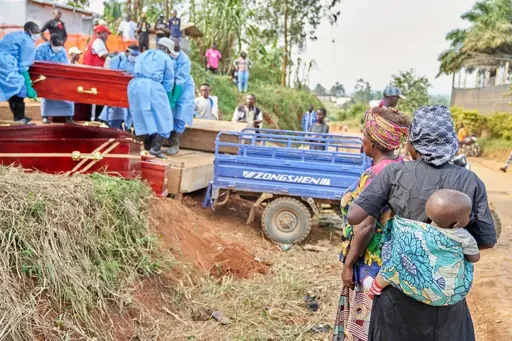
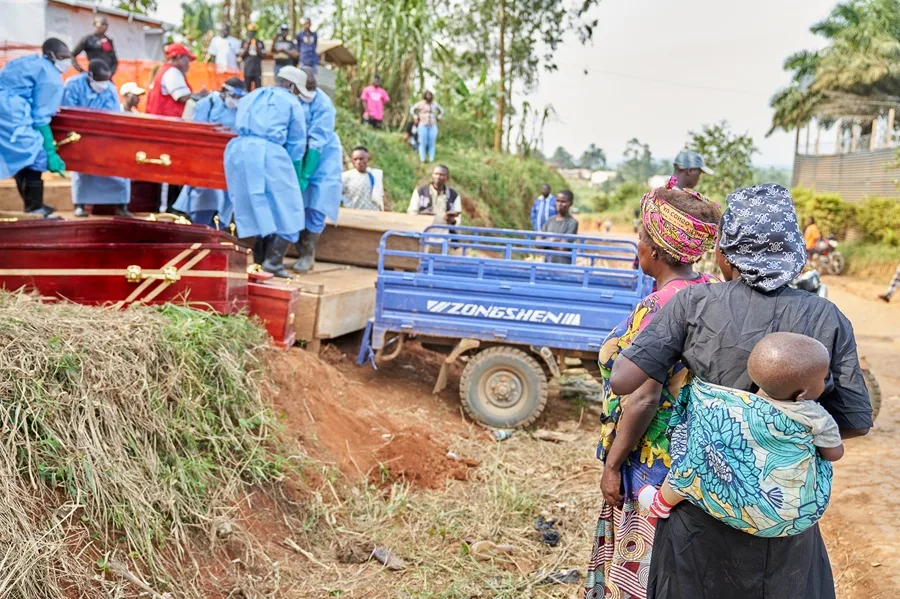
The outbreak has killed 754 people, with authorities reporting continued spread across five affected provinces.
The Democratic Republic of Congo (DR Congo) has recorded 2,011 confirmed Ebola cases, including 754 deaths, as health authorities continue responding to an outbreak declared in the country’s east on May 15.
RELATED: DRC Ebola Death Toll Surpasses 700 as Community Transmission Persists
According to the latest bulletin from the Congolese Ministry of Communication and Media, based on data collected through July 13, the outbreak’s case fatality rate stands at 37.5%. A total of 753 patients remain in isolation or hospitalized, while 366 people have recovered from the disease.
Outbreak Expands Across Multiple Provinces
The outbreak has affected Ituri, where it was first identified and which remains the epidemic’s epicenter, as well as North Kivu, South Kivu, Tshopo in central-northern DR Congo, and Haut-Uele in the northeast.
The Ministry of Communication and Media said authorities are carrying out a “continuous reinforcement of surveillance, patient care and contact tracing” as infections continue to rise.
Ver esta publicación en Instagram
Una publicación compartida por World Health Organization (@who)
The National Institute of Public Health (INSP) of DR Congo warned that the emergence of new cases in Haut-Uele indicates a wider geographic spread requiring additional response measures.
“The appearance of new cases in Haut-Uele highlights a geographic expansion that requires immediate strengthening of surveillance, diagnosis and operational preparedness,” the INSP said in its latest bulletin.
The outbreak was officially declared on May 15 in Ituri, a province located along the borders with Uganda and South Sudan.
Uganda has since reported 20 confirmed infections, including 15 cases considered to have been imported from DR Congo. Two deaths have been recorded among those cases.
WHO Maintains Global Risk Assessment as Low
The outbreak involves the Bundibugyo strain of Ebola, which has a reported case fatality rate ranging from 30% to 50%. According to the World Health Organization (WHO), there is currently no authorized vaccine or specific treatment for this strain.
The WHO has assessed the risk of further spread as “high” in sub-Saharan Africa while considering the global risk “low.”
The organization estimates that the virus began circulating in Ituri approximately two months before the outbreak was officially declared. On May 17, the WHO classified the situation as a “public health emergency of international concern.”
The current outbreak is the third-largest Ebola epidemic recorded to date and the 17th outbreak reported in DR Congo.
It follows the Ebola epidemic in West Africa between 2014 and 2016, which caused around 11,000 deaths and 28,000 infections, and the outbreak that affected eastern DR Congo between 2018 and 2020, which resulted in 2,299 deaths and 3,481 cases.
Ebola is transmitted through direct contact with bodily fluids from infected people or animals. The disease can cause severe hemorrhagic fever, vomiting, diarrhea and internal bleeding.
From teleSUR English via This RSS Feed.