

Environmental authorities aim to prevent improper debris disposal and protect coastal ecosystems during post-earthquake recovery.
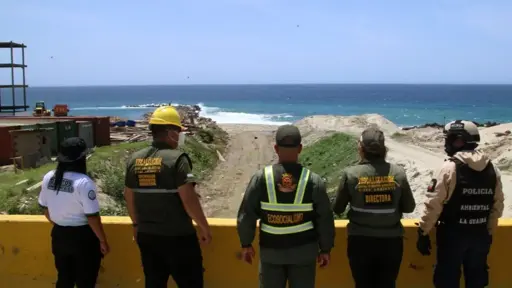
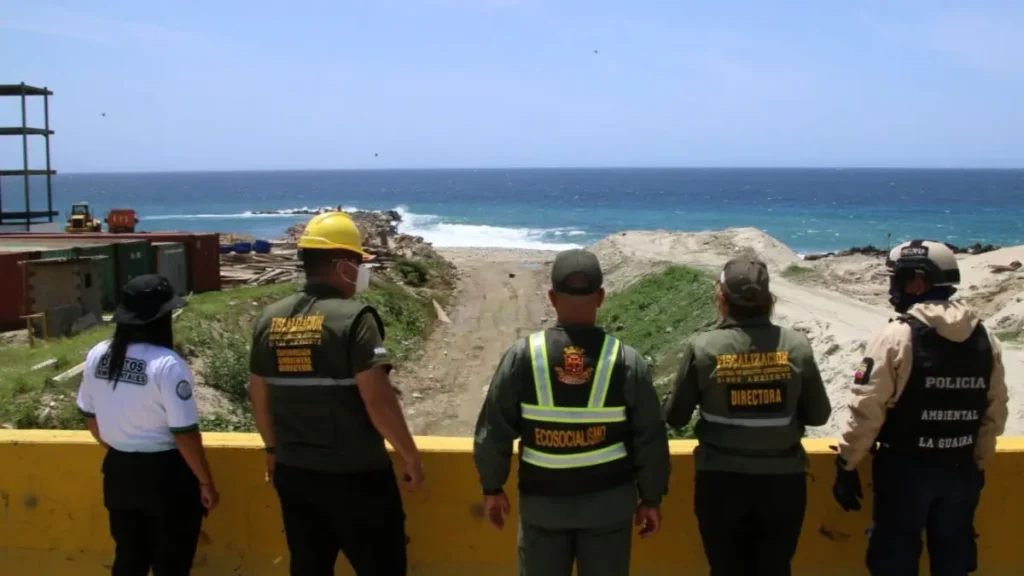
Venezuelan authorities have launched a Special Environmental Monitoring and Control Operation along the marine and coastal zone of La Guaira state to prevent the improper disposal of debris generated by the twin earthquakes that struck the country on June 24.
RELATED: Acting President Delcy Rodriguez Thanks CARICOM for 88 Containers of Humanitarian Aid
The operation was deployed Tuesday by the General Directorate for the Oversight and Control of Environmental Impacts of the Ministry for Ecosocialism, under the National Committee for the Oversight and Control of Environmental Impacts. Officials said the initiative is intended to support reconstruction efforts while reducing environmental risks associated with earthquake debris.
The monitoring plan includes more than 20 motorcycle units, multi-purpose radio patrol vehicles and a drone (RPAS) team that will conduct continuous aerial surveillance across the coastal corridor to detect and help curb illegal activities affecting the environment.
Ver esta publicación en Instagram
Una publicación compartida por Madelein Garcia (@madeleintelesur)
Text Reads: The earthquake doesn’t discriminate: the reality from La Guaira
The earthquake in La Guaira state demonstrated that nature makes no political or socioeconomic distinctions.
The collapsed structures belong to projects of the Great Housing Mission Venezuela, such as OPE 26, as well as to private developments.
At the site, security, rescue, and civil protection teams remain deployed along the coastal strip to recover bodies.
Despite the pain of the projects and lives buried under the rubble, the survivors express their determination to remain in the region and work tirelessly to rebuild their homes.
According to authorities, the operation’s primary objective is to ensure the proper management of solid waste and earthquake debris in order to prevent negative environmental impacts and safeguard the coastal ecosystem.
A multidisciplinary team of 55 personnel is participating in the operation, including members of the Bolivarian National Guard’s Environmental Protection Unit, the National Environmental Police, the National Park Rangers Corps and the Environmental Crimes Division of the Scientific, Criminal and Criminalistic Investigations Corps (CICPC).
Officials also designated two exclusive sites for the final disposal of debris: the Santa Eduvigis Sanitary Landfill in Catia La Mar, covering 30 hectares, and the Caraballeda Debris Disposal Area, which spans five hectares.
Text Reads:  STATEMENT | The Ministry of Popular Power for Ecosocialism, in its role as the governing body for environmental management in the country, reaffirms:
Our coasts and bodies of water are NOT waste disposal sites.
Dumping solid or liquid waste, or any polluting substance, into the sea or natural areas is an illegal activity that carries penalties ranging from fines to criminal prosecution, as well as the obligation to restore the affected areas.
On June 24, twin earthquakes measuring 7.2 and 7.5 struck several regions of Venezuela, leaving 4,734 people dead and 16,740 injured after 190 residential buildings collapsed.
International assistance remains underway. According to official figures, 2,471 rescue workers from multiple countries continue operating in affected areas. More than 10 million tonnes of food and 21 million liters of water have been distributed, while 6,462 people have been rescued from beneath the rubble.
From teleSUR English via This RSS Feed.