

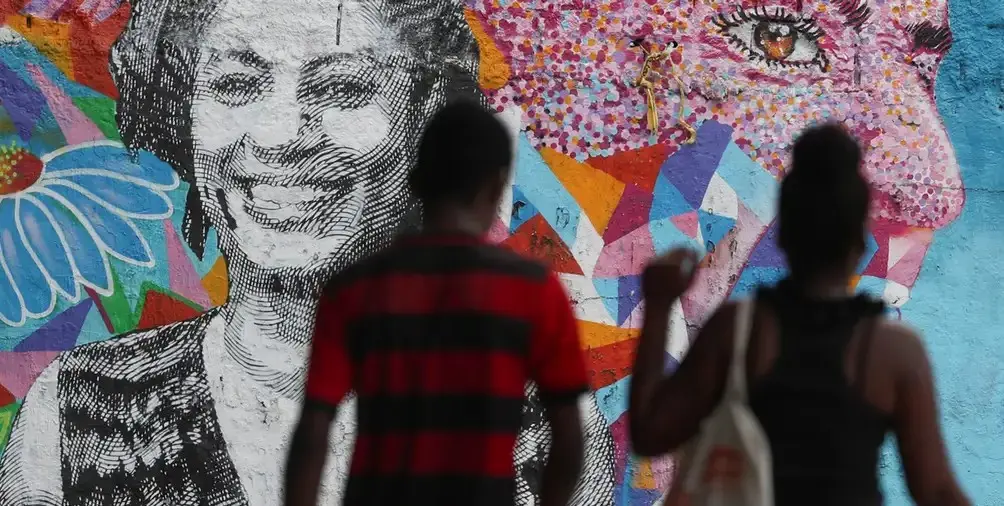
Brazil’s Supreme Federal Court (STF) has ordered the immediate enforcement of prison sentences against those convicted in the 2018 assassination of Marielle Franco and Anderson Gomes, marking a decisive step in one of the country’s most emblematic political crime cases.
Judge Alexandre de Moraes ruled this Tuesday that the prison sentences imposed on those convicted in the assassination of Franco and Gomes must be executed immediately after determining that the last appeal submitted by the defense sought only to delay the enforcement of the judgment.
By declaring the criminal case final, the Supreme Federal Court cleared the way for the convicted masterminds and accomplices to begin serving their sentences after years of legal proceedings.
RELATED: Brazilian Supreme Court Condemns Marielle Franco’s Killers
The court’s decision follows the February ruling by the Supreme Federal Court’s First Chamber, which sentenced former Rio de Janeiro State Court of Auditors member Domingos Brazão and his brother, former federal lawmaker Chiquinho Brazão, to 76 years and three months in prison as the intellectual authors of the murders.
Former Rio de Janeiro Civil Police chief Rivaldo Barbosa was sentenced to 18 years in prison after being found guilty of obstruction of justice and passive corruption. Former military police officer Ronald Paulo Alves Pereira received a 56-year prison sentence, while Robson Calixto Fonseca was sentenced to nine years for his role in the criminal scheme.
Ver esta publicación en Instagram
Una publicación compartida de teleSUR English (@telesurenglish)
According to the court’s ruling, all those convicted must serve their sentences under a closed prison regime. The only exception is Chiquinho Brazão, who was granted humanitarian house arrest because of his health condition. His defense argued that he suffers from chronic coronary disease, type 2 diabetes, kidney disease and hypertension.
Justice Moraes established that the humanitarian measure will remain in force for an initial period of 90 days, after which it will be reassessed. During that time, Chiquinho Brazão must wear an electronic ankle monitor, is prohibited from receiving visitors without authorization and cannot use social media.
A Political Symbol
Marielle Franco and her driver, Anderson Gomes, were murdered on March 14, 2018, after leaving a public event in downtown Rio de Janeiro. Their vehicle was ambushed, and both were shot dead in an attack that immediately sparked national outrage and drew international attention.
Franco, a sociologist, human rights activist and city council member, had become one of Brazilian most prominent voices against police abuse, social inequality and the growing influence of criminal militias in Rio de Janeiro. Her assassination quickly transcended country’s borders, prompting demonstrations and calls for justice from governments, international organizations and human rights groups around the world.
For years, the investigation advanced slowly amid criticism over delays and the complexity of identifying not only the gunmen but also those responsible for planning the crime. A major breakthrough came in March 2024, when Brazil’s Office of the Prosecutor General formally charged the Brazão brothers and Rivaldo Barbosa with orchestrating and facilitating the murders.
The case was transferred to the Supreme Federal Court because one of the defendants enjoyed parliamentary immunity at the time the investigation reached its final stages. Prosecutors argued that the assassination was politically motivated and linked to Franco’s opposition to illegal land occupation schemes in Rio de Janeiro’s western districts.
According to the prosecution, accepted by the Supreme Court, the Brazão brothers believed that Franco’s political activity threatened their political and economic interests in the region, leading them to organize the plot that resulted in her assassination.
The Supreme Court’s decision to enforce the sentences represents one of the most significant judicial milestones since the killings occurred more than eight years ago. While the ruling does not erase the profound impact of the murders, it is widely viewed as a landmark step toward accountability in a case that exposed the dangerous intersection of organized crime, political power and violence in Brazil, reinforcing the judiciary’s commitment to combating impunity in crimes against public officials and human rights defenders.
From teleSUR English via This RSS Feed.