

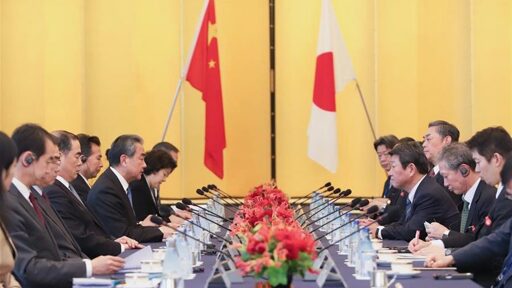
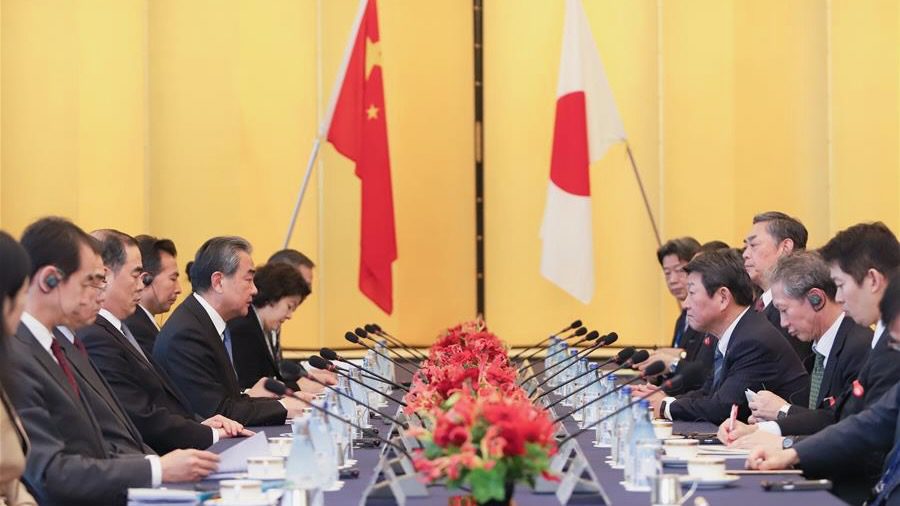
The Chinese embassy in Japan “voiced strong protest” over Japan’s joint statement with the US and other countries commemorating the 10th anniversary of an arbitration award dismissing Chinese claims of sovereignty in the South China Sea.
China has maintained that the arbitration award was illegal, null, and void, and has no binding force and Japan’s push to invoke the document is nothing but an irresponsible provocation and part of its remilitarization project.
“Japan’s egregious words and deeds, including continued interference in the South China Sea issue and political manipulation of the illegal and invalid ‘award,’ challenge the postwar international order and the international rule of law, undermine peace and stability in the South China sea and run counter to the shared interests and aspirations of regional countries,” China’s official communication with Japan said, as per a report in Xinhua on Tuesday, July 14.
The joint statement, signed by the US, the Philippines, Australia, Britain, New Zealand, and several NATO members from Europe, along with Japan, cited the 2016 arbitration award, claiming that Chinese sovereignty in the South China Sea has “no legal basis.”
Japanese foreign minister Toshimitsu Motegi also issued an individual statement claiming that Japan affirms that the Chinese rejection of the award goes “against the principle of peaceful settlement of disputes in accordance with international law, as reflected in UNCLOS, and undermines the rule of law in the international community.”
Toshimitsu Motegi also claimed Japan to be a “legitimate stakeholder” in the issue and accused China of hampering freedom of navigation in the South China Sea through its actions.
The Japanese foreign minister’s statement adds a new chapter in hostile diplomatic maneuvering between the two countries, which began with Prime Minister Sanae Takaichi’s statement last year about her country initiating a military intervention if China acts on its Taiwan reintegration claims.
China has maintained that Japan’s ruling classes, under US influence, have adopted a new Cold War mentality and wants to revive their country’s imperialist past in the region in the name of national rejuvenation.
Read more: China warns that growing Japanese militarization threatens world peace
Why China rejects the arbitration award
The statement also repeated that the arbitration award in 2016 was based on incorrect reasoning and deliberate misinterpretrations of the facts. “In rendering the ‘award,’ the ‘arbitral tribunal’ exceeded its authority and abused its jurisdiction” China claimed, saying it “gravely undermined the sanctity and authority of the United Nations Convention of the Law of the Sea.”
China has maintained that by deliberately ruling out Taiping Dao, the largest naturally-formed island in the Nansha Qundao (Spratly Islands), as an island, the arbitral tribunal eliminated Chinese claims of the legitimate extension of its exclusive economic zone and therefore the award was a “serious blow to the international rule of law.”
“China neither accepts nor recognizes the ‘award,’ and opposes and will never accept any claim or action arising from it,” the Chinese Ministry of Foreign Affairs claimed.
Part of Japan’s neo-militarist agenda
In reply to Toshimitsu Motegi’s comments, the Chinese Ministry of Foreign Affairs issued a formal statement on Sunday calling his remarks a disinformation campaign designed to threaten “peace and stability in the region.”
It rejected the Japanese claims of being a “legitimate stakeholder” in the affairs of the South China Sea by saying that it is in “no position to pass judgement on China’s territorial sovereignty and maritime rights and interests.”
It emphasized that the Japanese attempts to meddle in the South China Sea recalls its aggressive criminal actions during World War II, when it occupied a large part of the region. The Japanese statements serve as a warning of its lack of guilt about its imperialist crimes and its neo-militarism which wants to recreate that imperial past, China claimed.
It cited Japan’s attempts to remilitarize the country in violation of its pacifist constitution. China has also cited Japan’s growing military cooperation with the Philippines and several other countries and noted its departure from post-war arrangements by deploying weapons to third countries and talking about national rejuvenation.
Zoe. , July 14, 2026
From BT News via This RSS Feed.