

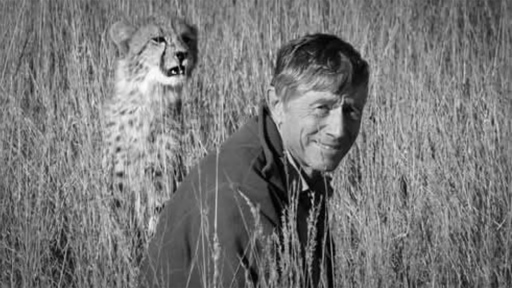
His nephew recalled that the children were taught to chant, “Hyaenas are beautiful!” as often as possible.On visits to Kruger National Park, he got them out of bed at midnight to look for bushbabies and again at five in the morning to search for big cats. Wildlife was often most active at inconvenient hours, and he expected anyone accompanying him to adjust. Michael “Gus” Mills, who died on July 13th, spent more than 40 years studying Africa’s large carnivores, especially hyenas, wild dogs, and cheetahs. He published more than 150 scientific papers, chapters, and reports, advised conservation bodies, and trained younger researchers. Much of his working life was spent in a vehicle on a sandy track, waiting beside an animal that might sleep for most of the day. Gus and Margie Mills. Sourced via the Endangered Wildlife Trust At school he had seemed an unlikely future scientist. He described himself as a “very bad student,” failed South Africa’s high-school leaving examination, and was told that science was beyond him. After passing the examination on a second attempt, he joked that he had earned an MA: “Matric Again.” Three years of psychology persuaded him that he did not want to be a psychologist. Zoology held his attention. A visit to Kruger in 1954, when he was eight, had already pointed him toward field biology. “It did something to me,” he said. From then on he wanted to work in the bush. After studying at the University of Cape Town and completing…This article was originally published on Mongabay
From Conservation news via This RSS Feed.