

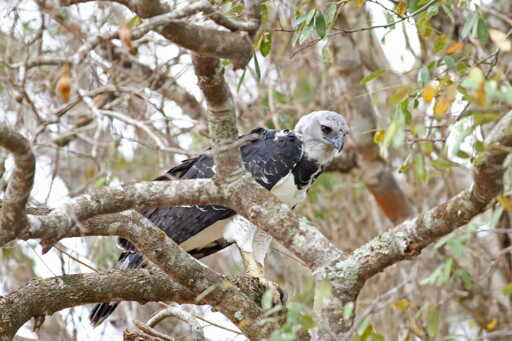
From its nests high in the canopy of the Amazon, the harpy eagle depends on — and is critical to — the health of the forest around it. The species controls the numbers of animals such as sloths and monkeys that, unchecked, could consume too many leaves and turn the canopy into lace. But the massive loss of trees in the world’s largest rainforest has hampered the survival of the harpy eagle (Harpia harpyja). Too few tall trees in the vicinity of their nests means fledgling chicks don’t have enough safe places to land as they learn to fly. Habitat loss, along with hunting, has led to the bird’s listing as vulnerable by the IUCN. Removing it entirely could accelerate the demise of the entire ecosystem, conservationist Harvey Locke told Mongabay in an interview, which could have knock-on effects such as diminished rainfall on farmland in the region. “The harpy eagle is not just an amazingly cool bird,” said Locke, the co-founder of the Yellowstone to Yukon Conservation Initiative based in Canada. “It’s not a luxury in that biome. It’s vital to it.” Just as other keystone species, such as elephants, beavers and bison, play similar roles in their respective environments, harpy eagles help hold together even heavily impacted ecosystems, Locke said. “If we pull these pieces out, it unravels,” he added. Research shows keystone species, such as the harpy eagle (Harpia harpyja) pictured here with a tufted capuchin (Cebus apella), play essential roles in maintaining the health of the…This article was originally published on Mongabay
From Conservation news via This RSS Feed.