

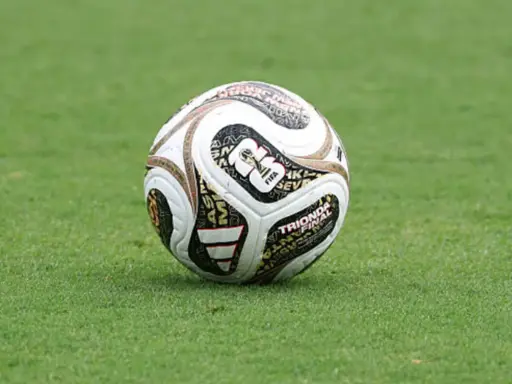
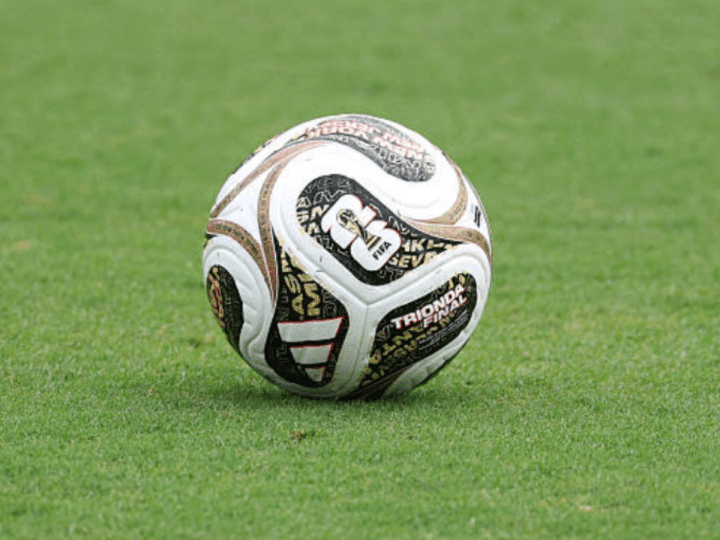
FIFA and Adidas have announced the launch of a new official match ball for the final four matches of the 2026 World Cup. This marks the first time the tournament has seen a change in the official match ball before the competition draws to a close.
After the ‘Trionda’ ball has been in use from the start of the tournament through to the end of the quarter-finals, the new version – named the ‘Trionda Final’ – will feature in the semi-finals between France and Spain, and England and Argentina, as well as the third-place play-off and the final.
This change is part of an effort to give the decisive stages a distinctive visual identity that reflects the significance of the title race, whilst retaining all the technical characteristics of the original ball.
World Cup design inspired by journey to glory
The new ball features a distinctive look combining gold and black with white, in a design that Adidas says embodies “the journey towards achieving the ultimate prize in the world of football”.
The company explained that the gold colour symbolises the World Cup, whilst the black background gives the ball a more luxurious and distinctive look; meanwhile, the red and pink accents add a vibrant touch that reflects the speed and rhythm of the decisive matches.
The design also features graphics inspired by the four cities hosting the final matches – Atlanta, Miami, Dallas, and New York – alongside the names of all the cities that have hosted tournament matches in the United States, Canada and Mexico, printed on the surface of the ball, serving as a visual record of the tournament’s journey.
Advanced technology with unchanged performance
Despite the complete overhaul of its visual identity, Adidas has confirmed that the ‘Trionda Final’ retains all the technical specifications of its predecessor, both in terms of its four-panel construction and its aerodynamic properties and feel, ensuring the same performance on the pitch.
The ball also continues to utilise an AI-powered internal sensor capable of tracking its movement at a rate of up to 500 times per second, providing real-time data that helps Video Assistant Referees (VAR) make more accurate and rapid decisions, as well as generating advanced statistics on the speed of shots, the power of goals and the ball’s trajectory during matches.
Technology that resolved one of the most controversial incidents
The importance of this technology was highlighted during the England v Norway quarter-final, after doubts were raised about the ball touching camera cables before England’s first goal was scored – an incident that would have led to the goal being disallowed under the laws of the game.
However, FIFA relied on data from the sensor embedded within the ball, which showed no record of contact with an external object, to confirm the validity of the goal.
Featured image via the Canary
By Alaa Shamali
From Canary via This RSS Feed.