

Bullets:
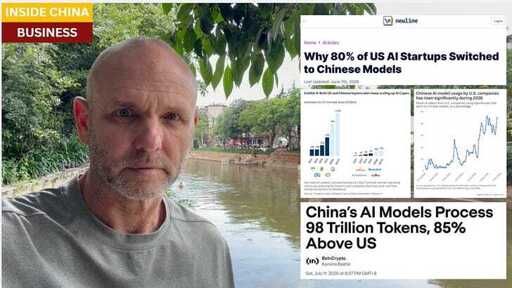
Chinese-built Artificial Intelligence (AI) systems have closed the performance gap with models from Silicon Valley.
Demand for Chinese AI is booming, across global enterprises.
Chinese systems are open-source, and cost about a tenth of comparable platforms from the United States.
China is taking over the “token economy” of AI, and is “exporting tokens” to users across the world.
Today most US tech companies, even the largest ones, use Chinese LLM’s.
Inside China / Business is a reader-supported publication. To receive new posts and support my work, consider becoming a free or paid subscriber.
Report:
Good morning.
Upon the release of DeepSeek’s Large Language Model early last year, we predicted that it would be banned in Western countries. DeepSeek’s performance was on par with the best LLM’s out of Silicon Valley, and it didn’t cost anything to use. It is also open-source, so can be deployed easily by tech engineers.
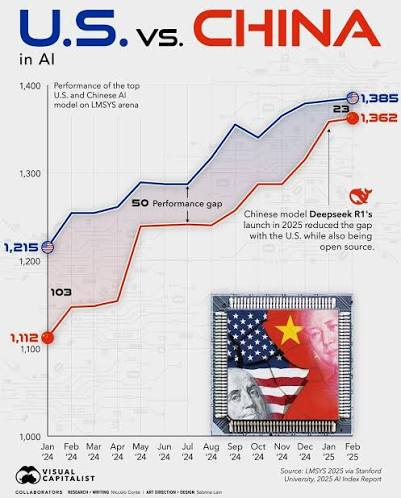
That release of DeepSeek closed the gap in performance between Chinese AI systems, and those of the leading American models. In just one year, the difference in performance dropped by over 75%. And our thinking was, that DeepSeek was so transformative, and such a threat to other AI systems like OpenAI, that Western policymakers would have little choice but to ban it, along with the other Chinese LLM’s.
Since DeepSeek, Chinese labs have released over a dozen new top LLM systems, and narrowed that gap even further. And our thesis rested on that simple math, that the market capitalization of Wall Street itself has been driven by the Artificial Intelligence theme, and upstart Chinese companies are producing models that perform just as well, and for a fraction of the cost, so Washington would inevitably ban Chinese models, just like they did with Chinese electric cars.
None of that happened, and Chinese LLM’s are taking over everywhere. China’s newest export boom is in the AI tokens used to power these systems, as these Chinese labs have effectively commoditized the technology.
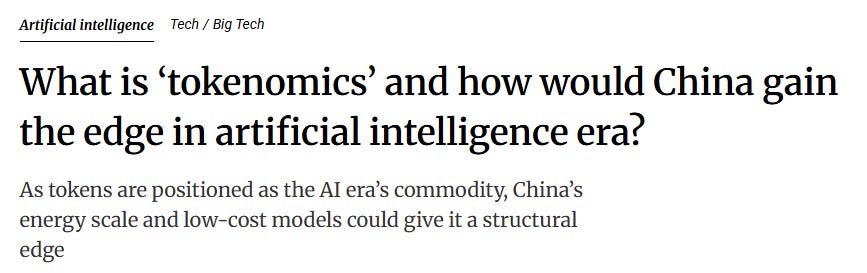
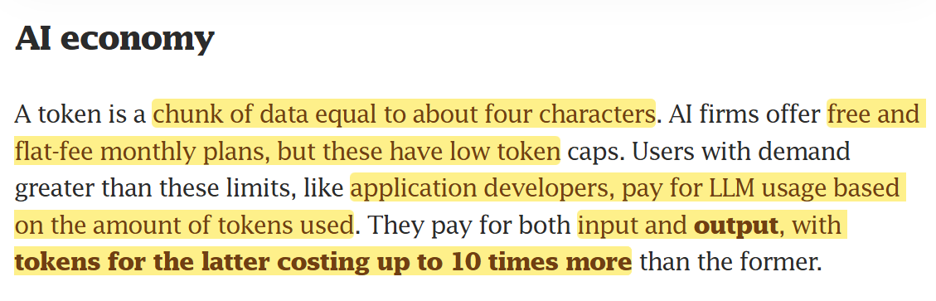
A “token” is the smallest unit of AI input, or output, and counting up tokens is how the industry measures itself. It’s a tiny chunk of data, just a handful of characters. Most AI companies offer their basic services for free, to users who don’t use a lot of tokens. But for bigger companies and creators, they cost, and users pay to make queries, and to generate results. The output costs much more than what it costs for the user to ask the questions, and questions that are more complex burn up a lot more tokens and computing power.
Chinese models now are the top three LLM’s used for this work: Xiomi, Alibaba, and DeepSeek.
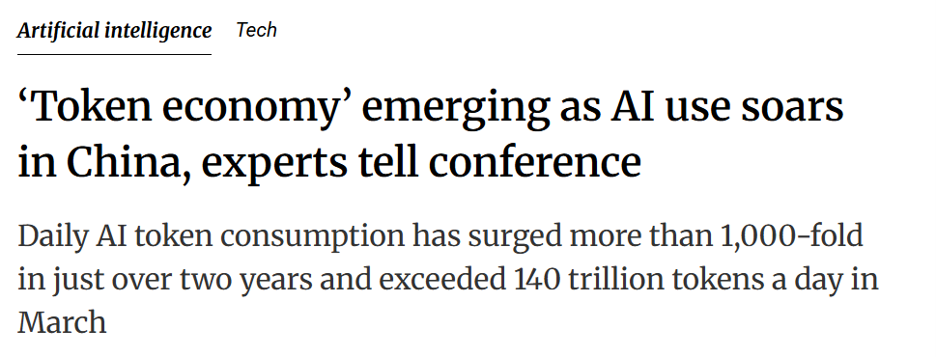
Here in China, token usage increased over a thousand times in just two years. Again, this is a measure of AI usage itself, so we can say that Chinese companies and individuals are using AI at over a thousand times the levels of two years ago. Overall, AI usage here is almost twice as high as in the United States, and Chinese Large Language Models are also booming, everywhere. Not only here.
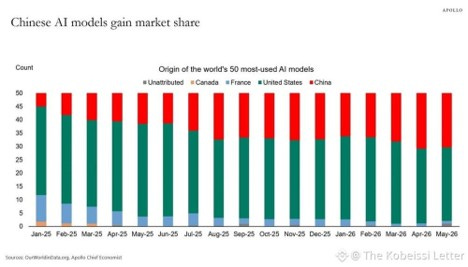
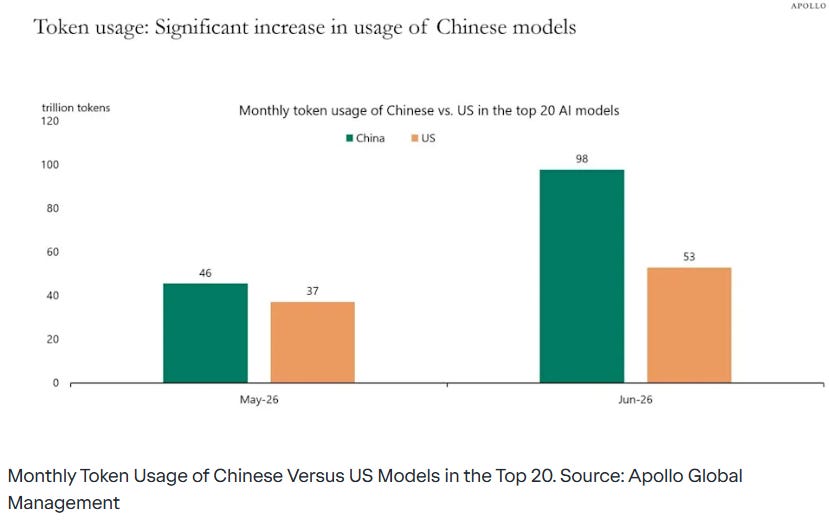
At the beginning of last year, China had five of the top 50 most-used LLM’s; now it’s twenty. And for the top 20 most used models, Chinese AI processed 98 trillion tokens last month, compared to US models at 53 trillion. Token demand is soaring, everywhere; it’s just growing much faster in China. Token usage in the United States grew by 43% in a single month, but in China it more than doubled:
These data also led us to believe that lawmakers would slam the door on these Chinese models in the American market. Chinese labs deploy their models at a far lower cost, compared to the hyperscalers in Silicon Valley:
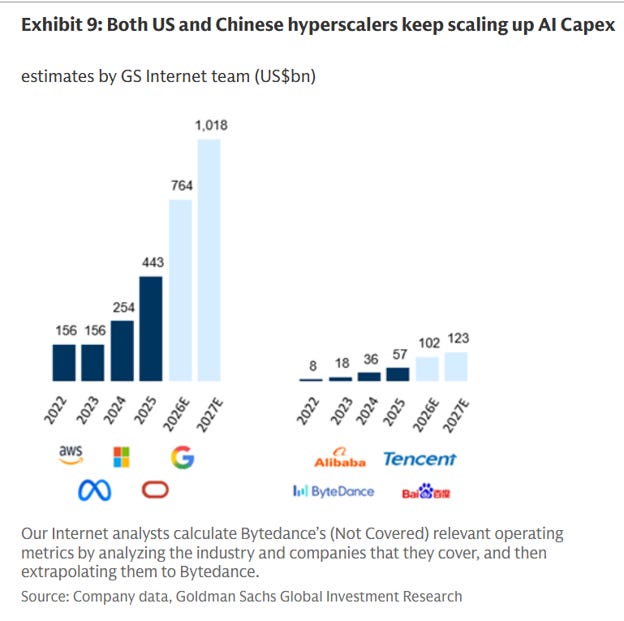
This year, Chinese CapEx for AI from their top names is estimated at about $100 billion; those five American companies will spend $764 billion. The forecast for 2027 is for over a trillion dollars in new capital expenditures for American AI, over eight times what Chinese tech companies plan to spend.
We’ll pull back here to point out that those massive increases in demand—here in China—is putting a strain on some companies in the industry. In the beginning, AI users were making simple queries. Then as these models gained popularity, so did the complexity of the tasks, which grew to 10,000 tokens, and now to over 50,000 tokens, on average.
Chinese AI providers are making more money; Zhipu’s revenues went up 60 times in Q1 compared to last year; Alibaba is the company behind Qwen, and their revenues are up 15 times just since the beginning of this year. The lion’s share of the profits, though, are still being realized by the hardware side; the chipmakers, at least for now. The model companies’ revenues are rising, and steeply. But so is their cost of compute.
That dynamic is causing some Chinese labs to raise prices; the cost to use Tencent Cloud increased by over five times in March, and Alibaba, Zhipu, and ByteDance also hiked prices.
DeepSeek, however, went the other way. Their latest version is priced at just a fourth of their introductory product, and they rolled out dynamic pricing that is aimed at corporate users, who use their models during the workday.
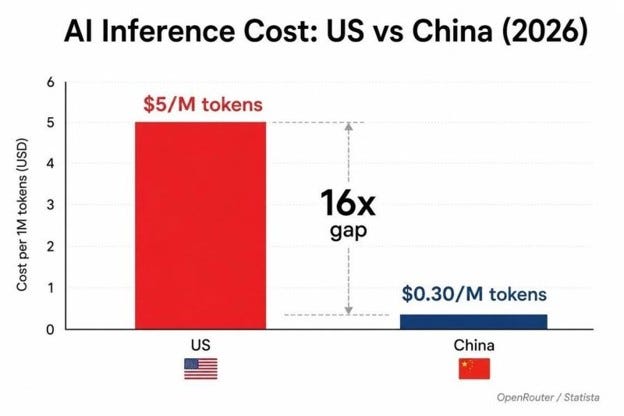
But even with these price increases, Chinese models just cost far less than those on offer from Silicon Valley, and explains those big jumps in the exports, we can say, of Chinese AI tokens. The LLM’s out of China are “90% as good at 10% of the cost”, and American firms are buying more tokens from Chinese companies. In early 2025, token demand from Chinese LLM’s was about zero. Even the release of DeepSeek didn’t move the needle much, but by the end of the year the secret was out, and it’s been a choppy but steady ride up to 46%, today.
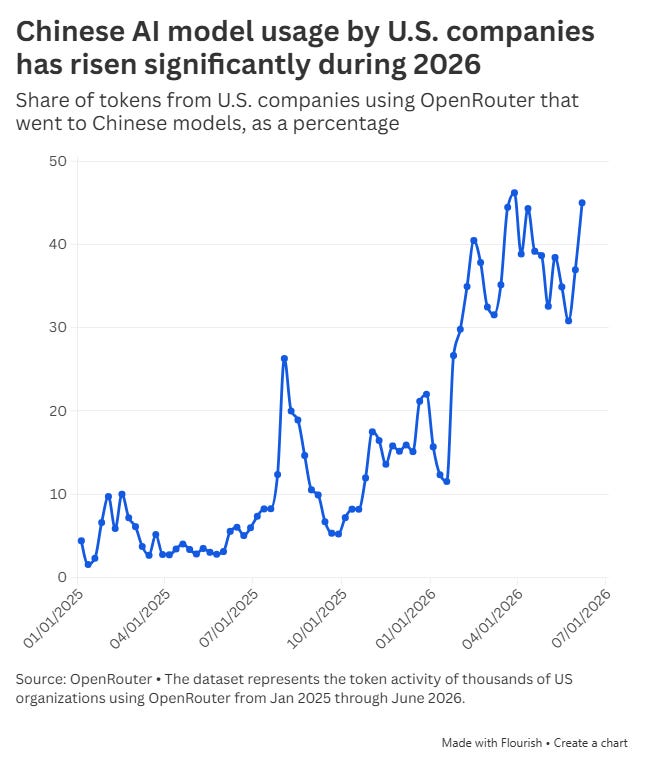
In the end, the enterprise users are switching to the Chinese models, because of far lower cost, with little impact on performance. DeepSeek’s V4 costs 14 cents per million tokens, compared to ChatGPT 5.5 at $5.00. For the high-volume enterprise consumers, the difference in cost is orders of magnitude higher, and so now DeepSeek and Alibaba combined are over 30% of the total token usage across the world.
This report concerns how commercial real estate firms in the United States are migrating to Chinese models, and why. Processing a 30-page lease agreement costs a few dollars using a Silicon Valley LLM; using a Chinese model costs a few pennies. For big real estate companies that manage lots of leases, that’s a material impact to their financials.
The stories are piling up, now, of companies—even major ones—in the United States who are dumping LLM’s put out by Silicon Valley companies, that are just up the street. Token usage is going up, compute costs are going up, and companies have no choice but to switch over. Lindy was using Claude, and moved completely—100%–of its AI work to DeepSeek. Their cost curve “crashed to the ground”, the company will save millions of dollars, and using DeepSeek means their company will survive, instead of going under.
Be Good.
Resources and links:
DeepSeek will be banned: it’s good, it’s fast, and it’s free. So it cannot be allowed.
Another week, another DeepSeek, and another insane valuation for OpenAI
youtu.be/mmdX3yjTVic
The AI Trade Hits Overdrive, Powering Stocks to Historic Gains
https://www.wsj.com/finance/stocks/ai-stocks-trade-e7b19a9f
Just a Handful of AI Stocks Are Carrying Everything. History Says It Doesn’t Have to End Badly
https://www.aol.com/articles/just-handful-ai-stocks-carrying-143519000.html
AI Stocks Drive Nearly All of S&P 500’s Gains, Data Reveals
https://finance.yahoo.com/markets/stocks/articles/ai-stocks-drive-nearly-p-094305210.html
What is ‘tokenomics’ and how would China gain the edge in artificial intelligence era?
https://www.scmp.com/tech/big-tech/article/3347495/how-china-could-dominate-ai-eras-tokenomics-vast-power-grids-and-low-cost-models
‘Token economy’ emerging as AI use soars in China, experts tell conference
https://www.scmp.com/tech/article/3359974/token-economy-emerging-ai-use-soars-china-experts-tell-conference
AI TRENDS | China AI Model Weekly Token Usage Tops U.S. by More Than Fourfold, OpenRouter Data Shows
https://www.binance.com/en/square/post/07-13-2026-ai-trends-china-ai-model-weekly-token-usage-tops-u-s-by-more-than-fourfold-openrouter-data-shows-344159634300961
China’s AI Models Process 98 Trillion Tokens, 85% Above US
https://tech.yahoo.com/ai/articles/china-ai-models-process-98-123726333.html
The AI token takeover in China
https://www.businesstimes.com.sg/startups-tech/technology/ai-token-takeover-china
AI’s token economy revolution creates new China tech winners
https://www.businesstimes.com.sg/companies-markets/telcos-media-tech/ais-token-economy-revolution-creates-new-china-tech-winners
Cheaper AI is better: Soaring bills are reshaping how businesses choose models
https://www.businesstimes.com.sg/startups-tech/technology/cheaper-ai-better-soaring-bills-are-reshaping-how-businesses-choose-models
Chinese AI Models Now Capture Up to 46% of US Enterprise Token Usage
https://finance.yahoo.com/technology/ai/articles/chinese-ai-models-now-capture-020440715.html
Chinese AI models are gaining ground with U.S. companies as OpenAI, Anthropic costs surge
https://www.cnbc.com/2026/07/07/chinese-ai-models-costs-us-openai-anthropic.html
Chinese AI Models Hit 46% of US Usage: What It Means for CRE Investors
https://www.theaiconsultingnetwork.com/blog/chinese-ai-models-us-usage-cre-investors-2026
Why 80% of US AI Startups Switched to Chinese Models
https://www.newline.co/@Dipen/why-80percent-of-us-ai-startups-switched-to-chinese-models--9b216c28
Airbnb CEO Brian Chesky Called Chinese AI Fast And Cheap. Now, Congress Wants Answers
https://www.forbes.com/sites/anishasircar/2026/05/21/airbnb-ceo-brian-chesky-called-chinese-ai-fast-and-cheap-now-congress-wants-answers/
Inside China / Business is a reader-supported publication. To receive new posts and support my work, consider becoming a free or paid subscriber.
From Inside China / Business via This RSS Feed.