

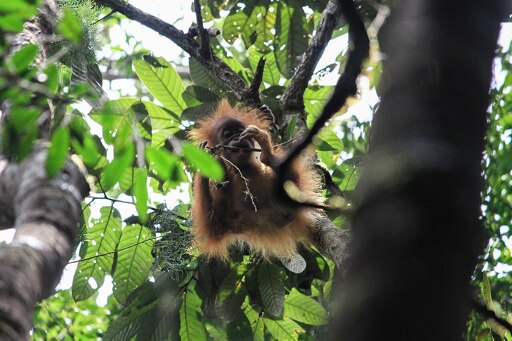
JAKARTA — Large infrastructure projects have long dominated debate over the future of Indonesia’s Batang Toru ecosystem, the main stronghold of the critically endangered Tapanuli orangutan. But a new study suggests that while those projects have accelerated forest loss, the greatest direct threat to the ape’s habitat now comes from a much less visible source: the cumulative impact of small-scale agriculture and logging. Recently published in the journal Biological Conservation, the study combines satellite imagery, causal inference, and years of ethnographic fieldwork — including interviews with local communities — to assess the drivers of forest loss in Batang Toru. Home to an estimated 716 Tapanuli orangutans (Pongo tapanuliensis), Batang Toru lost 7,659 hectares (18,925 acres) of forest — about 5% of its forest cover — between 2000 and 2023, the researchers found. Forest loss accelerated markedly after 2012, increasing at a rate significantly higher than historical trends would have predicted. The shift coincided with the development of three major extractive projects in the landscape: the Martabe gold mine, the Batang Toru hydropower project, and the Sarulla geothermal project. Using a counterfactual analysis, the researchers estimated that Batang Toru lost an additional 3,472 hectares (8,579 acres) of forest after the projects began, compared with what would have been expected had they never happened. At the same time, however, the researchers found that small-scale agriculture and logging accounted for roughly 70% of direct forest loss in the landscape during the same period. The findings suggest that while large-scale development projects remain an…This article was originally published on Mongabay
From Conservation news via This RSS Feed.