

Tehran submitted a strategic Strait of Hormuz bill after rejecting recent U.S. claims over the strategic waterway.
Iran has formally introduced a strategic bill on the management of the Strait of Hormuz and the Persian Gulf, following recent U.S. assertions over the strategic waterway and amid renewed tensions between Tehran and Washington.
RELATED: Yemen’s Houthis Reaffirm Their Support for Iran
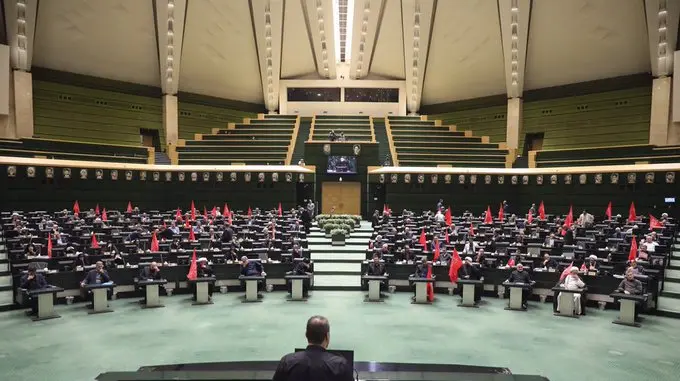
Ibrahim Azizi, head of the National Security and Foreign Policy Committee of the Iranian Majlis (Parliament), announced on Monday that the “Strategic Action for Security and Sustainable Development in the Strait of Hormuz and the Gulf” bill had been officially submitted to parliament.
“This is the first step,” Azizi said. “Further measures will follow that will make the enemy regretful,” he added, stressing the legislature’s commitment to defending Iran’s red lines regarding the administration of the strait.
The US launches more strikes on Iran as President Donald Trump says the blockade on the Strait of Hormuz will be reimposed in the coming hours.
Al Jazeera’s Mike Hanna and Resul Serdar reports. pic.twitter.com/aFUpUKjTxk
— Al Jazeera English (@AJEnglish) July 14, 2026
The parliamentary initiative followed a statement by Iran’s Khatam al-Anbiya Central Headquarters, which reiterated that Tehran would not permit U.S. involvement in managing the strategic maritime passage.
The headquarters said that “American adventures to intervene in management have seriously endangered regional security, international trade, and the transit of oil tankers.”
Around one-fifth of global petroleum shipments transit the Strait of Hormuz, making it one of the world’s most critical maritime chokepoints. Iran has repeatedly warned it could close the waterway in response to hostile actions or severe sanctions, while the United States maintains a naval presence in the region, citing the protection of freedom of navigation.
The bill was introduced after U.S. President Donald Trump declared that Washington was effectively in control of the Strait of Hormuz and demanded compensation from countries whose cargo moves through the passage.
In a Truth Social post published on July 13, Trump wrote: “The Hormuz Strait is OPEN, and will remain OPEN, with or without Iran. We are reinstating the THE IRANIAN BLOCKADE, so named because it is only stopping Iran’s ships or customers from entering or leaving”
He added: “All other countries will have fair and open use of the Strait. The U.S.A. will be, from this point forward, known as ‘THE GUARDIAN OF THE HORMUZ STRAIT,’ but as such, and as a matter of FAIRNESS, will be reimbursed, at the rate of 20% on all cargo shipped, for any and all costs necessary to do the job of providing safety and security to this very volatile section of the World.”
Ver esta publicación en Instagram
Una publicación compartida por Al Mayadeen English (@arenas.tv)
Speaking to reporters in the Oval Office on July 14, Trump again called on Gulf countries to reimburse the United States for military operations in the Strait of Hormuz.
“I want to be reimbursed because we’re protecting a very rich portion of the world. We’re spending money, so… we are going to be reimbursed for protection,” Trump said.
He named Saudi Arabia, the United Arab Emirates, Qatar, Bahrain and Kuwait as beneficiaries of U.S. military commitments, adding: “We’re protecting allies… including Israel, including Saudi Arabia, including Qatar, including UAE. We’re protecting all of them, and we’ve done a very effective job.”
From teleSUR English via This RSS Feed.