

By Misión Verdad – Jul 13, 2026
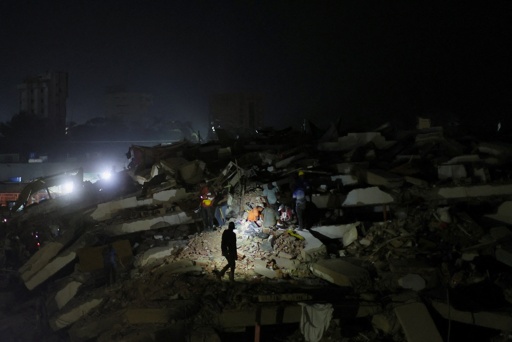
The June 24 double earthquake exposed the irresponsibility and lack of basic ethics of some Venezuelan influencers and content creators during a time when greater tact and solidarity were needed. Far from acting as channels of support, they promoted unfounded rumors, collective hysteria, and sensationalist narratives that, in many cases, hampered rescue efforts.
Furthermore, the lack of filters and the desperate need for attention were fully exposed. The tragedy was used as an opportunity to generate content to gain likes and go viral during one of the most vulnerable moments the nation has ever faced. Thus, the disaster zones became a stage for projecting their supposed altruism, heroism, and sensitivity—values that apparently gain greater worth when publicized.
Institutional, official, and private organizations, along with ordinary citizens, were organizing campaigns to collect food, medicine, water, basic necessities, and clothing for those affected. Meanwhile, some influencers became the center of controversy on social media when they were accused of exploiting the tragedy to gain greater visibility, increase their interactions, or generate content for personal promotion.
Two examples of digital misery
One of the first to be singled out was Gianpiero Fusco, a well-known content creator who promotes calisthenics and the keto diet. Shortly after the earthquakes, he posted a video claiming that some people’s physical condition influenced their chances of survival. The video was deleted after receiving strong criticism.
“Now, imagine the obese person who was caught by the earthquake on the 14th floor, because health is not just physical; health is about being able to survive in an optimal way,” he said, adding, “That skinny, weak person who has a sick relative and could not help them during the earthquake. Imagine all the people who experienced these kinds of situations.”
Gianpiero apologized after his comments, following a barrage of criticism. “I am not here to make excuses or say it was artificial intelligence, or that it did not happen recently. I take full responsibility: it was me, and I apologize.” He argued that he had taken the earthquake out of context and did not imagine the magnitude of the tragedy.
View this post on Instagram
However, this was not the only controversy the content creator was involved in. He later uploaded videos of himself walking through the rubble shirtless, barefoot, and without protective gear. Users and commentators considered the recording staged and claimed it trivialized the tragedy.
Another well-known case was that of Paola Faría, who was criticized after a video circulated showing her posing for photographs next to a shipment of water bottles and food supplies at a collection center for disaster victims. Many users interpreted the images as a photo shoot intended to gain attention during an emergency.
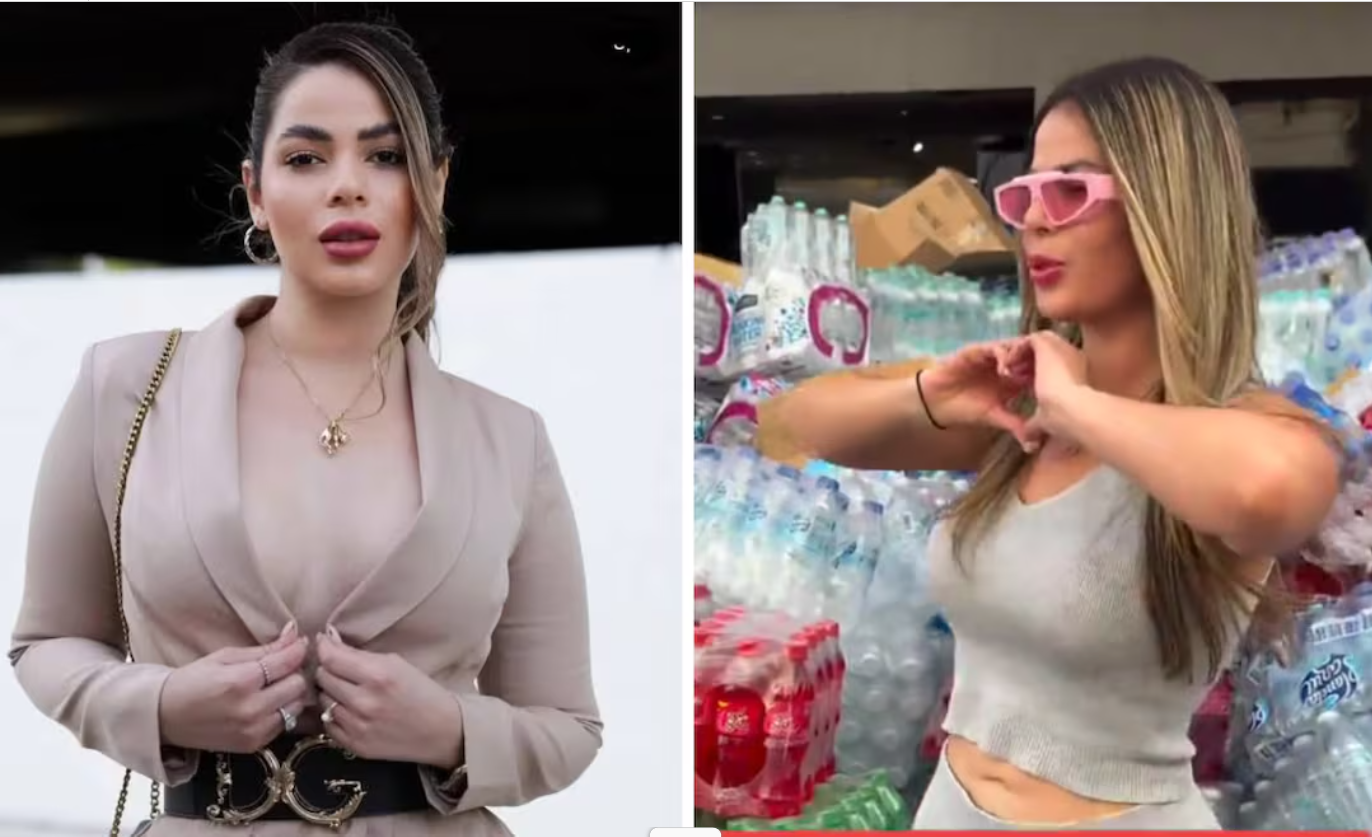
Paola Faría was criticized after a video of her posing next to aid for earthquake victims was released. File photo.
The content creator took advantage of the program Sin Filtro Radio Show, a project she works for, to apologize “to those who have felt offended by the images.” She argued that the video material was taken out of context because she was only trying to express her gratitude.
The Venevisión channel produced a report on the public outrage over the attitude of certain content creators who went to the affected areas solely to record videos for their digital platforms, a practice that capitalized on the tragedy to gain followers and hindered search-and-rescue efforts.
“While rescue teams, journalists, and humanitarian organizations work to assist the families affected by the June 24 earthquakes, another reality also emerges: the presence of people who turn the pain of others into content for social media,” Luis Olavarrieta said in the editorial of the report.
The media outlet questions where the right to inform ends and the exploitation of human suffering begins. “Reporting during an emergency carries enormous responsibility. Every image, every interview, and every question can influence the emotional state of those who have just lost a family member, their home, or part of their history,” it notes, adding that some sectors have expressed concern about the presence of people documenting these situations without ethical protocols or measures to protect victims.
“We were there, all of us working hard, and someone stood next to me with a phone doing a live stream. I asked him, ‘What are you doing? Who are you supporting?’ ‘I am recording because my followers want to know what is going on,'” an indignant rescue worker said in an interview.
The journalistic community affirms that the practice of journalism is not limited to reporting events. It also involves editorial criteria and ethical principles aimed at protecting people experiencing vulnerability. Journalistic practice manuals indicate that revictimization of those affected should be avoided to prevent them from re-experiencing the fear and frustration that the tragic events evoke. Constant exposure to people experiencing tragedy can negatively impact on their mental health.
Why you cannot trust influencers and content creators
In 2019, Forbes published an article that hinted at the dangers of relying on information spread by influencers. According to a UNESCO study, most social media influencers do not verify information before sharing it with their audiences.
The UN agency underlines the concern that digital personalities may uncritically spread misleading claims.
A survey revealed that 62% of content creators do not verify the accuracy of information before sharing it. The study also showed that the majority of content creators (59%) were unfamiliar with or had barely heard of regulatory frameworks and international standards related to digital communications.
Another study from the University of Portsmouth revealed that social media influencers pose psychological risks to health and safety and therefore need stricter regulation.
Social media has shaped societal behavior in recent years. However, its reach raises ethical and psychological concerns. The goal is to sell, regardless of whether dangerous products are promoted, unrealistic beauty standards are imposed, a culture of comparison is fostered, or privacy is compromised.
The study indicates that influencer marketing is expected to reach $480 billion by 2027, which is why companies are increasingly turning to content creators to promote products and foster consumer “trust”.
A 2024 survey by the Digital Marketing Institute found that 60% of consumers trust influencer recommendations, leading to growing concerns about potential negative societal consequences. Many content creators act as opinion leaders or experts in their respective fields, or present themselves as guides.
In Venezuela, many influencers gain “fame” because they hit the jackpot when one of their posts goes viral, a gateway to being hired by brands and companies that take advantage of the moment.
The important thing is to sell
For marketing “geniuses,” the important thing is to capitalize on momentum to position the products they sell. A few days after the double earthquake, Pink Pilates Caracas posted a controversial AI-generated image that led to the deletion of its account. The photo recreated a gym scene amid rubble with a torn Venezuelan flag in the background.
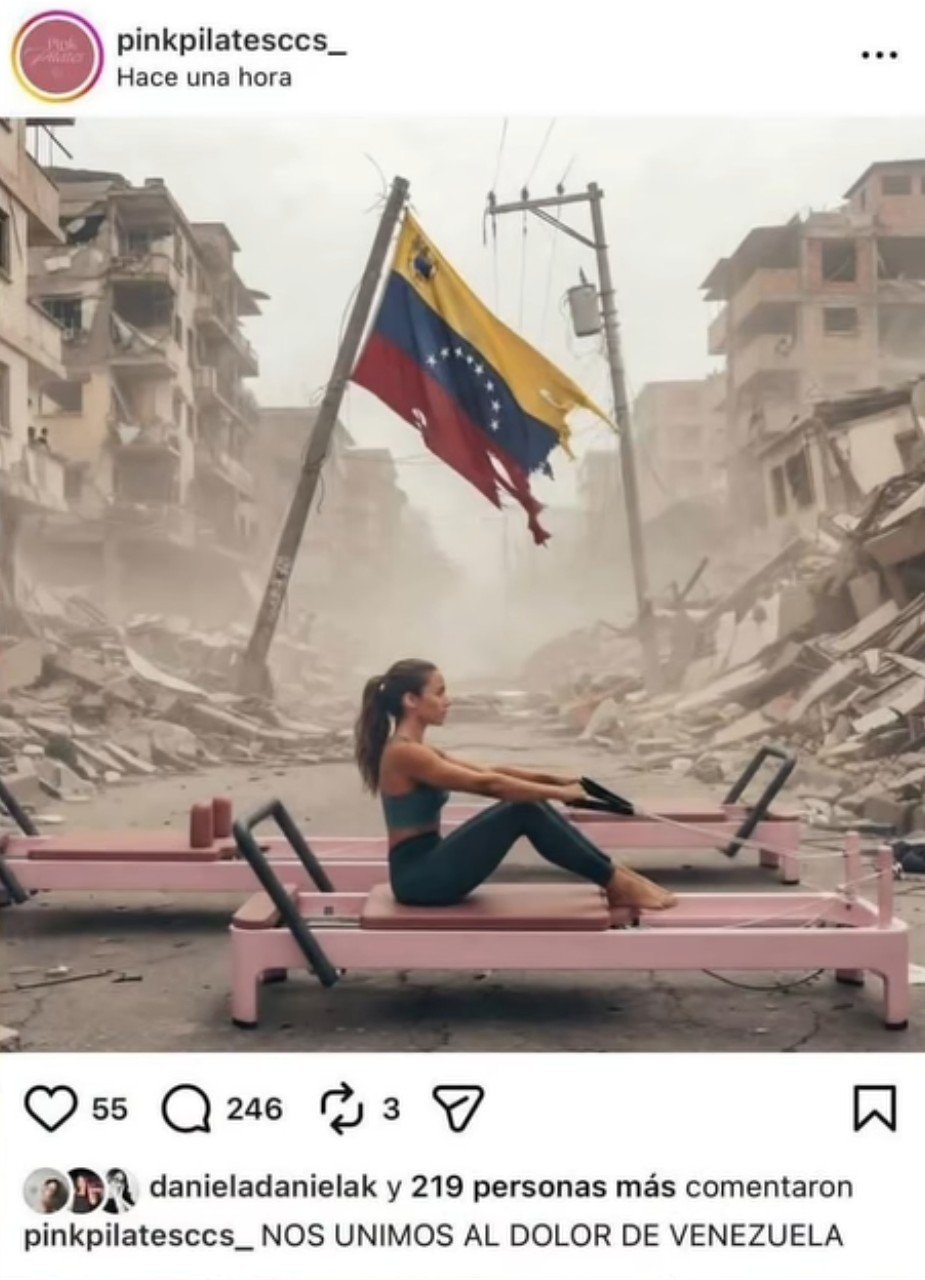
The post led to the account’s deletion. File photo.
Venezuelan actress and presenter Gaby Espino also took advantage of the tragedy to promote her multi-level marketing business, Farmasi. She begins the video by expressing concern about the situation in the country, then shifts her tone when she invites her followers to join an informational call about how to generate income through her business.
“What a blessing to have a business that gives so many people around the world the opportunity to help their families, to be the breadwinners for their households, especially during this time of crisis, this difficult time. I have a call scheduled for tonight at 9 p.m. Miami time; 7 p.m. Mexico time, where I will tell you how you too can do business from anywhere in the world, from your cell phone or your computer. Now more than ever, we need to work,” she said.
The post sparked immediate backlash on social media. Several users felt it was inappropriate to promote a business during a national emergency.
View this post on Instagram
The information management by these content creators in the aftermath of the earthquakes revealed a lack of timeliness and professional rigor in addressing the situation. It also demonstrated, in some cases, that the need to project a strong presence on social media prevailed in a context that demanded coverage appropriate to the circumstances.
Since their inception, social media platforms have been revolutionary in their ability to connect people and democratize information. However, their design, geared towards immediate gratification, has created fertile ground for other problems that negatively impact society in general and mental health in particular.
It is necessary to emphasize that, despite those who tried to transform the catastrophe into a spectacle of irresponsible sensationalism, what prevailed at the community level was a genuine interest in helping the victims of the earthquake, as seen in the massive mobilization of human and material resources to the affected areas.
It is also worth noting that inappropriate posts by content creators, public figures, and brands were widely condemned by users themselves, which shows that common sense prevailed.
Translation: Orinoco Tribune.
OT/JRE/SF
From Orinoco Tribune via This RSS Feed.