

Bullets:
Companies that buy directly from Chinese manufacturers enjoy substantial cost savings, compared to going through local distributors and big box stores.
But there are other major advantages. Companies who do so are assured of new supply, even during times of supply chain stress.
In the construction industry, strong storms and other natural disasters result in acute shortages of materials needed to rebuild.
Globally, the industry suffers from a severe lack of construction supplies and materials, and despite soaring demand for tens of millions of new homes, builders cannot bid for jobs without those supplies on hand.
China’s industrial trade fairs attract tens of millions of visitors a year, many from abroad. Tariffs and freight charges are surprisingly irrelevant in most of their sourcing decisions.
Inside China / Business is a reader-supported publication. To receive new posts and support my work, consider becoming a free or paid subscriber.
This is a transcript, for the YouTube video here:
Report:
Good morning.
This week our group is in Guangzhou, for the International Building Materials Show, . It’s a huge fair, the biggest in Asia, so we’re here along with 200,000 others, and nearly 10,000 from overseas.
In our previous video we walked through real-world examples, of why property developers and homebuilders in G7 countries are here, or sending their representatives to Guangzhou this week. There are enormous cost savings, even for small companies, by working directly with factories in China to source products. And those savings make for a competitive advantage in markets in the United States and Europe, for companies who are bidding on jobs.
Simply by eliminating the middleman companies and local distributors, and the big box stores, translates right away to double-digit percentage savings in materials costs.
There are other advantages in moving up the supply chain, and those involve ensuring that your own company can get materials in the first place, at price points and on delivery schedules that you control. Costs are rising, and steeply, and especially across the product lines that are hit by higher tariffs:
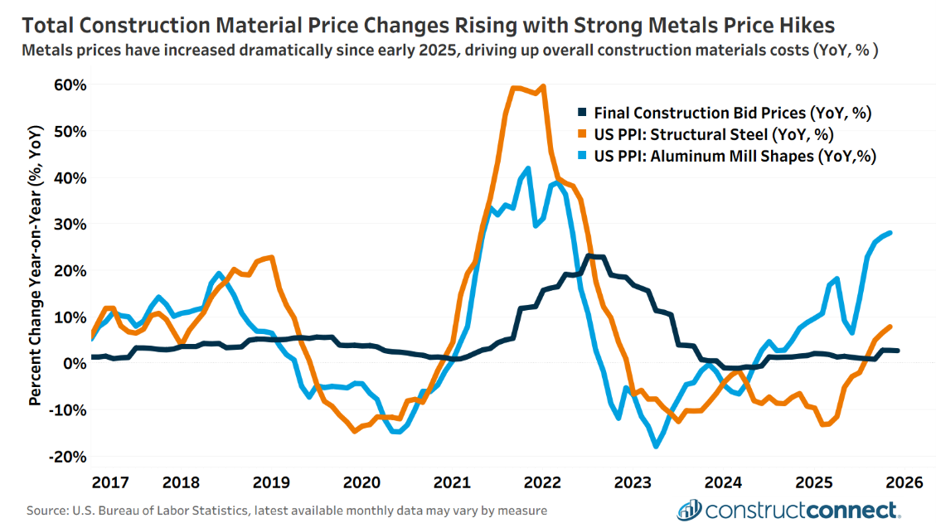
Building contractors in the United States face these higher costs for plumbing, heating and HVAC equipment, and lighting fixtures. For anything coming out of Chinese factories and heading to the US, higher tariff rates apply. And construction companies are paying them. That’s to say that local distributors, or big box stores like Lowe’s and Home Depot pay inbound freight and customs fees, and pass along those higher costs to their local customers.
You’re paying these tariffs and freight charges anyway, just paying someone else to do the paperwork and mark up the price for taking the trouble.
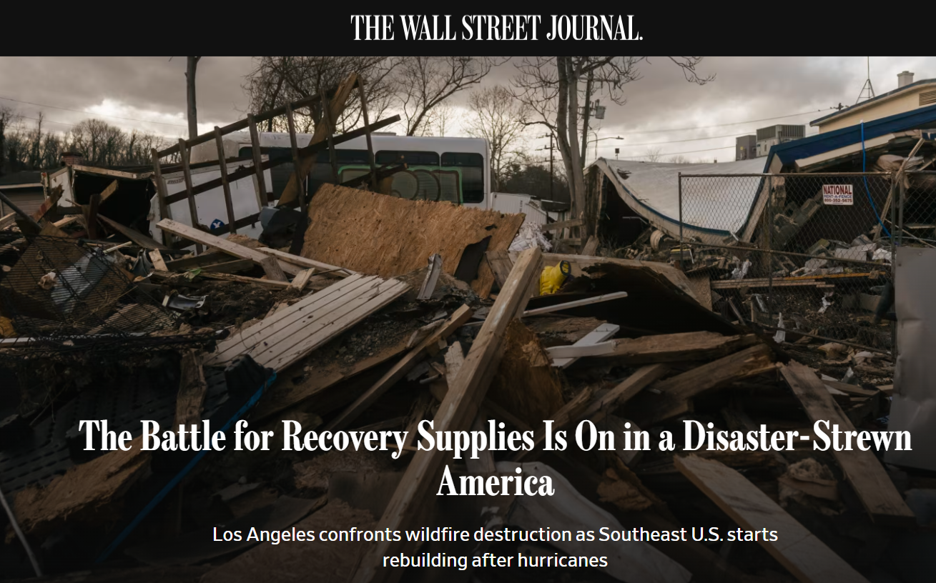
But another major driver of the higher costs, besides those tariffs, is the massive boom in materials demand every time there’s a fire in California, or a hurricane on the Gulf Coast. Builders everywhere have lots of work to do, but they can’t get materials. Clever local governments and contractors should have bought in bulk, in advance, and just pay the bill for storage so at least the materials are there when needed. Most did not, and do not, so builders are only now looking for substitute materials that ARE available.
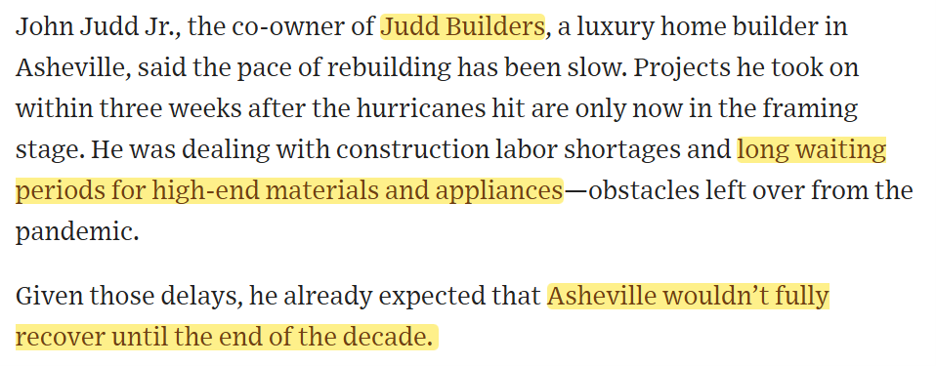
This story in North Carolina is typical of builders almost everywhere—long wait times for high-quality building materials and appliances, which slow down projects and build times for companies, and for cities.
Builders who source direct from China, then, have far better control over their input costs, and avoid the problems of stockouts almost completely. They know that they have more containers on the way, and so can compete for jobs that other builders cannot. So that explains why there are a lot of visitors here from North America, in Guangzhou this week.
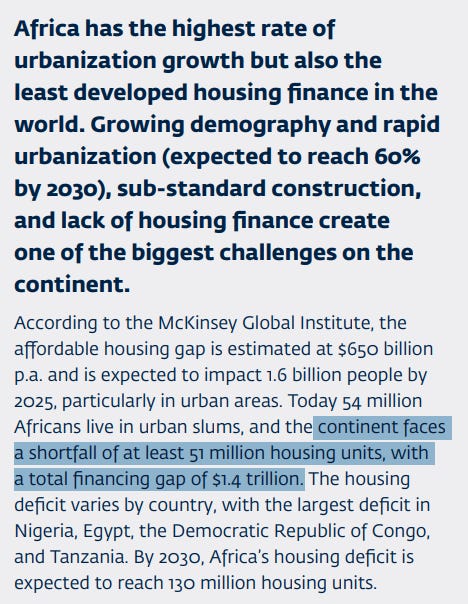
And there are thousands more from countries, where tens of millions of new housing units are needed to satisfy demand, right now, from booms in their middle class. Indonesia is the 4th largest country in the world by population, and has one of the fastest-growing economies in the world. What’s more, the country is spending $40 billion to move their capital.
Vietnam is another; the government there is building over a million new apartments over the next five years.
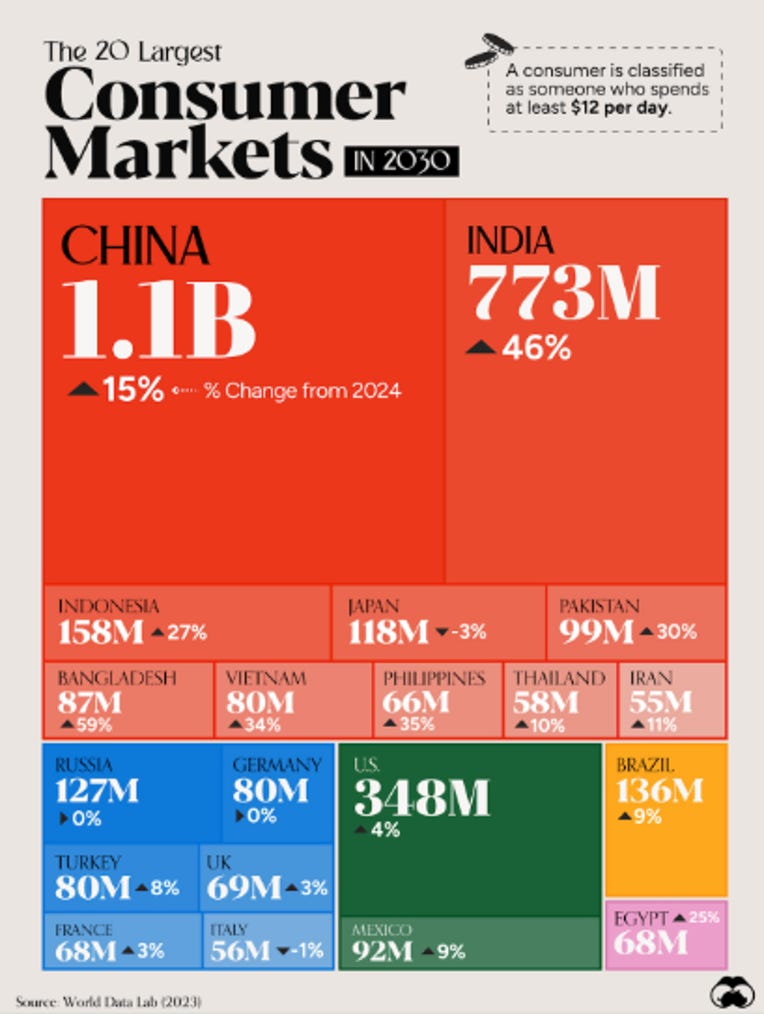
Of all the countries that will grow their consumer class by double-digit percentages in the next five years, only one—Egypt—is not in Asia. And that emerging middle class in Asia—they want new homes.
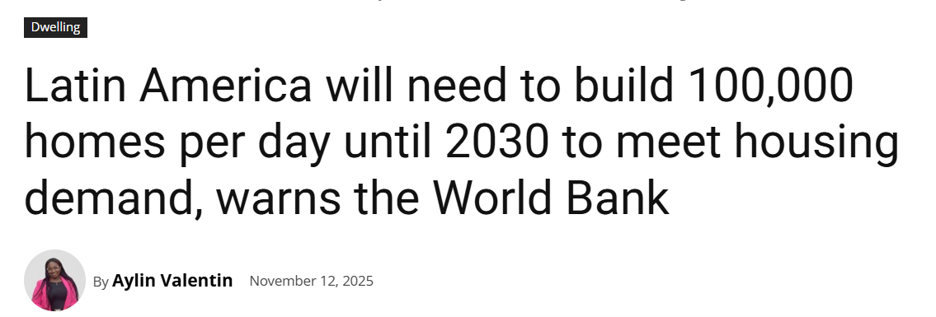
But the housing crunch is everywhere. It’s global. South and Central America need to build 100,000 homes a day, every day, for the next three years to meet today’s demand. Mexico needs 800,000 new houses a year; builders in Colombia need to build 400,000 a year.
So it’s a worldwide problem, and lots of people from lots of companies in lots of countries are here asking mostly the same questions. We are business buyers, buying in bulk, and we need them put on a ship. The people who are here aren’t looking for a sauna or a spa for their apartment in Shenzhen. They build apartments in Boston, or Bogota, and need 20 a month. And it’s the same story for all the exhibitors here. They’re meeting with buyers who need 5,000 smart doors and 20,000 windows.
Whole-home construction companies are here for custom builds in luxury markets; you send them the plans, they build the house, send it to you, and your crew puts it together.
We used the example in our previous video, of companies that build patios and decks, and the companies here in Guangzhou sell billions of dollars’ worth of supplies for that industry segment, to over a hundred countries.
Windows and doors. One company made $380 million selling armored doors. Another has everything you’ll need to build a football stadium or a convention center. So the booths for the armored doors and the stadium buildings don’t get as much foot traffic as most of the others, but the customers who do talk to them have all the money in the world. Or they are agents for the people who have all the money in the world.
There is another huge section that is mostly for the other Chinese companies here. The construction materials manufacturing industry requires expensive and complex machinery, so that they can offer wider and deeper product selections, at low cost.
Manufacturers have Minimum Order Quantities. But with this specialized heavy equipment here, building materials companies can scale up new production of small and custom orders, and offer low MOQ’s to their customers. And that’s a common feature in these Chinese industry fairs, too—giant sections that are for Chinese manufacturers, mainly, who need the newest and best equipment.
And these industry shows are everywhere in China, and attract tens of thousands of international visitors, coming for the same reasons. The same supply chain cost dynamics that drive small – but growing building contractors, source their most commonly used materials directly from factories China, are also motivating companies in the maritime industry to do the same thing.
The foreigners who show up to the Beijing auto show, for example, or especially to the aftermarket car parts show–they’re not looking to buy a new sports car, or a new muffler. They need a hundred cars a month, or a thousand transmissions a year.
Industry trade shows are still the best way ever invented, whereby it’s possible to see in just a few days the new products that are coming to the industry, and to meet personally with the engineers who build them, and the companies that ship them to wherever you are.
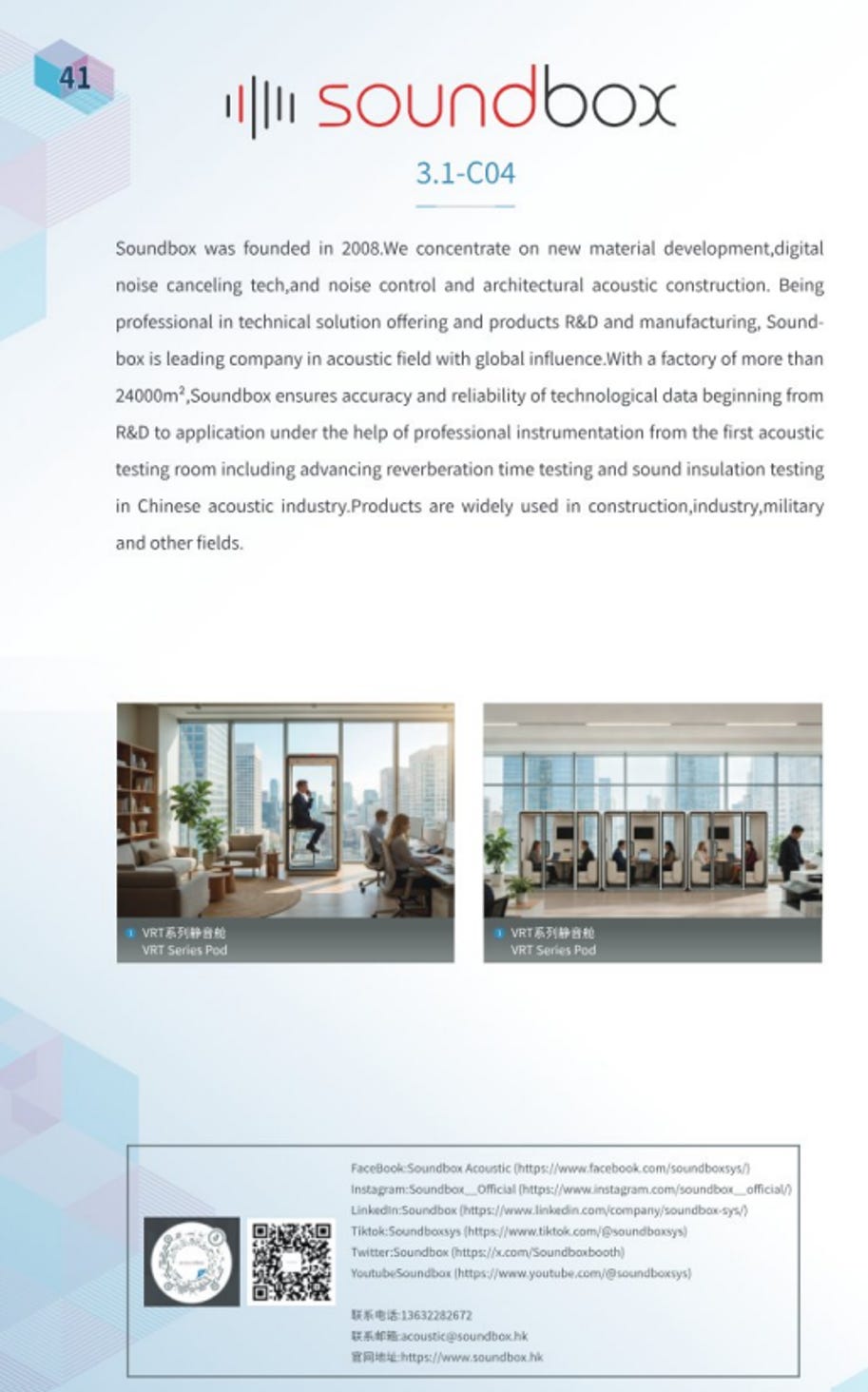
An example here, of a company that my own group hopes to work with, as an OEM. They build soundproof cubicles and workstations that can be set up in airports, for example. I see them all the time in Asia, paid to use one a few months ago, and just learned how much they cost and that the payback period on them is just a few months. Put them in a nice area with internet, and those things are a license to print money, and if money is one of those things that you like, it’s another reason to hit these industry shows, to learn of these opportunities before other people in your neighborhood do.
Be Good.
Resources and links:
Are higher construction materials prices the new normal?
https://www.bcis.co.uk/insight/are-higher-construction-materials-prices-the-new-normal/
Why are construction material prices rising?
The Battle for Recovery Supplies Is On in a Disaster-Strewn America
Construction Costs on the Rise: Unpacking the PPI Price Surge
https://news.constructconnect.com/construction-costs-on-the-rise-unpacking-the-ppi-price-surge
IFC Scaling Housing Finance in Africa
https://www.ifc.org/content/dam/ifc/doc/2024/scaling-housing-finance-in-africa-factsheet.pdf
LATIN AMERICA RESIDENTIAL REAL ESTATE MARKET SIZE & SHARE ANALYSIS - GROWTH TRENDS AND FORECAST (2026 - 2031)
https://www.mordorintelligence.com/industry-reports/residential-real-estate-market-in-latin-america
Latin America will need to build 100,000 homes per day until 2030 to meet housing demand, warns the World Bank
Insight: The Top 5 Global Construction Markets
https://www.oxfordeconomics.com/resource/insight-the-top-5-global-construction-markets/
The World’s Largest Consumer Markets in 2030
https://www.visualcapitalist.com/the-worlds-largest-consumer-markets-in-2030/
https://www.china-toy-expo.com/en
https://www.chinabizgateway.com/china-trade-fairs-2026/auto-china-2026-beijing
Inside China / Business is a reader-supported publication. To receive new posts and support my work, consider becoming a free or paid subscriber.
From Inside China / Business via This RSS Feed.