


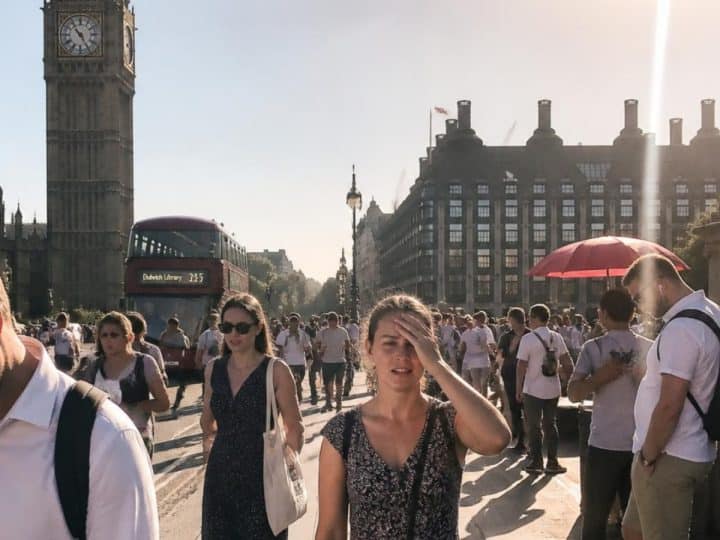
The heatwaves in the UK over May and June are estimated to have caused over 2,700 excess deaths. Around 42% of those deaths are thought to be a consequence of climate change, which increased maximum temperatures by 3-4°C.
That’s according to a study conducted by the Met Office, Imperial College London and the London School of Hygiene & Tropical Medicine. It builds on previously published UK research from 2022, which found that rising temperatures caused nearly 800 excess deaths annually.
Imperial College London’s Dr Clair Barnes stated that:
Every time we have a heatwave, our news is filled with reporters at swimming pools, images of people eating ice cream and sunbathers on beaches. We all love the sun, but people need to be aware that we are now seeing dangerous climate-change-fuelled heat that is claiming lives, disrupting schools and hospitals and shutting down transport and infrastructure.
It’s time we woke up to the fact that we now live in a country with dangerously hot summers. To protect people during future extremes, we must urgently adapt to the reality of the climate we now have, and double down on global efforts to reach net zero emissions to stop this from getting worse.
Heatwaves ‘longer and more frequent’
The researchers compared historical mortality records using rapid-analysis modelling methods. They focused their efforts on England and Wales, as Scotland and Northern Ireland didn’t face the same extraordinary high heat.
Professor Lea Berrang Ford, chief of the Centre for Climate and Health Security’s UK Health Security Agency (UKHSA), explained more:
These modelled estimates are based on past trends in temperature effects on mortality and provide an important indication of the potential health impacts of sustained hot weather, particularly for the most vulnerable among us. While they are not a measure of observed mortality, they help illustrate the scale of risk associated with extreme heat and the growing threat climate change poses to our wellbeing.
As set out in our most recent Health Effects of Climate Change report, periods of heat in the UK are likely to become more intense, longer and more frequent as the world continues to warm.
During May’s heatwave, West London saw temperatures of 35.1°C. Likewise, in June, meteorologists recorded temperatures above 37°C for East Anglia. Both of these figures broke national records for their respective times of year.
The Met Office explained that temperatures like these would be extreme even in mid-summer, noting that they occurred during the start of the season. Normally, July and August bring the highest temperatures of the year across the country.
The Met Office’s Dr Mark McCarthy emphasised that these extremes are due to human activities, stating:
it is clear that human-caused climate change is leading to more frequent and more intense summer heatwaves. This intensification is driving many impacts, including those affecting human health and mortality and other issues, such as agriculture, effects on transport infrastructure and biodiversity.
‘A major health risk’
During the May heatwave, the study estimated that around 550 people died due to the heat. Approximately 59% of those deaths are attributable to human-caused climate change.
June’s heat event was even more devastating, with around 2,200 excess deaths according the the model’s findings, of which 38% were due to climate change.
It’s also notable that the risk pattern associated with the heat is shifting northwards. Although the highest temperatures were recorded in the south, the Midlands showed similar estimated rates of fatalities. The researchers attributed this trend to the fact that the Midlands are less accustomed to extreme heat.
Dr Malcolm Mistry of the London School of Hygiene & Tropical Medicine said:
With climate change driven by human activity making summer heatwaves more frequent and more intense, these spikes of extreme hot weather are rapidly evolving into a major health risk for people in the UK.
It is vital that action on adapting Britain’s homes, workplaces, and critical infrastructure to extreme heat outpaces these health risks, especially if we are to protect those most vulnerable to its impacts, such as older people, babies, and children.
As the Canarypreviously reported, over 1,500 people participated in a heat strike in the last week of June. Workers staged symbolic lunchtime-walk-outs and took thermometers into work to demonstrate their unsafe conditions.
Participants in the strike are calling on ministers to set a maximum working temperature – a demand already voiced by the Bakers Union for over a decade. In doing so, the UK would join countries like Austria, Belgium, China, India, Portugal and Spain, which already regulate maximum working temperatures.
Featured image via the Canary
By Grace
From Canary via This RSS Feed.