

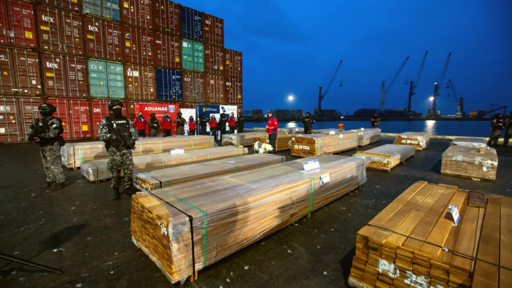
A new case has exposed the connection between drug trafficking webs and the export of timber from the Amazon and other regions of Bolivia. After Chile announced in June the largest drug seizure — 108 tons of cocaine and ketamine — in its history, authorities confirmed the substances were detected impregnated in Bolivian wood planks. This is not the first time shipments of the so-called “narco-timber” have been caught: The illicit practice dates back at least 20 years, using the same recurring routes. Mongabay accessed prosecutorial sources in both Chile and Bolivia, two Andean nations in South America sharing a land border of 861 kilometers (535 miles). According to investigations in Chile, 32 shipments were made from Bolivia by 15 timber companies, mostly in 2026. In financial terms, the total amount of drugs moved through this system had a value exceeding $8.3 billion in international markets, according to the breakdown. “It is a six-month investigation developed by the Prosecutor’s Office of Arica [a northern Commune], the Maritime Police, and the National Customs Service of Chile, which culminated in the detection of 45 contaminated containers [with drugs] in the ports of Arica, Valparaíso, and San Antonio,” the Prosecutor’s Office of Arica and Parinacota stated in a report. Cocaine and ketamine impregnated in timber were detected in Arica, northern Chile. Image courtesy of the National Customs Service of Chile. The timber shipments departed from Bolivia, mainly from the departments of Pando, Santa Cruz, Cochabamba, Beni and La Paz. The cargoes had ports…This article was originally published on Mongabay
From Conservation news via This RSS Feed.