

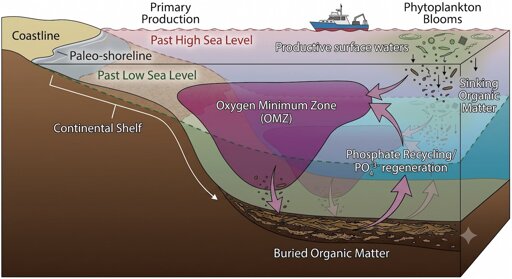
Earth has a natural thermostat that has kept the planet habitable for more than 100 million years. Scientists have struggled to fully explain how it works, but new research identifies a missing link between phosphate availability and sea level. Temperature influenced the size of polar ice sheets and sea level. Sea level changes drove the availability of this nutrient and controlled how much carbon was buried in the ocean, which in turn regulated how much carbon dioxide stayed in the atmosphere and how warm or cool the planet ran.
From Earth News - Earth Science News, Earth Science, Climate Change via This RSS Feed.
You must log in or # to comment.