

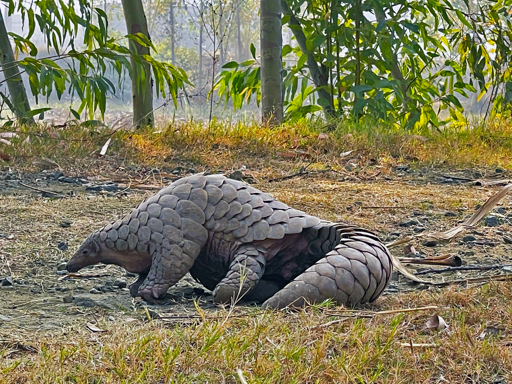
The endangered Indian pangolin, already devastated by the illegal wildlife trade, is facing another crisis in Pakistan, one of the four countries where it’s found: rapid habitat loss. Key habitats of the Indian pangolin (Manis crassicaudata) have particularly disappeared in Pakistan’s rural, mountainous northern province of Khyber Pakhtunkhwa, according to new research, reports contributor Emma Smith for Mongabay. The province is Pakistan’s third most densely populated region, where development projects such as roads, mining, and industrial sites have fractured vital habitats. In 2021, ecologist Tariq Ahmad, with the Khyber Pakhtunkhwa Wildlife Department, and his colleagues revisited 102 sites in the province where pangolin signs had been detected in a survey conducted in 2000. They found signs of pangolins in only 67 of those sites. According to Ahmad, the study’s lead author, pangolin populations in the province have plummeted by 25-40% over the last 25 years. “It was heartbreaking to return to sites where pangolins once thrived and find them replaced by roads and buildings. We are pushing this species to the edge,” Ahmad said. Beyond physical displacement, the species remains a primary target for the illegal wildlife trade. Poachers target the pangolin for its scales, made of keratin, which are used in traditional Chinese medicine and claimed to hold special curative powers. There is no scientific evidence for these claims. Asim Haider, a wildlife ecologist and conservationist with WWF in Pakistan, who wasn’t involved in the study, said some communities in the country also kill pangolins due to the myth…This article was originally published on Mongabay
From Conservation news via This RSS Feed.
You must log in or # to comment.