

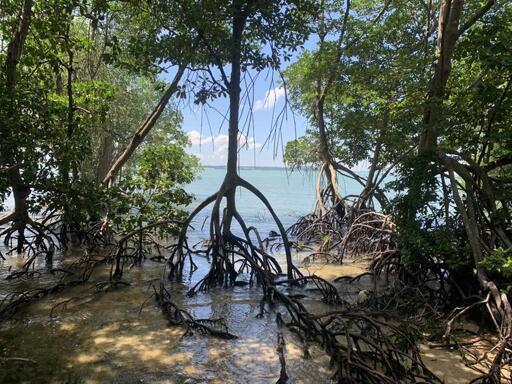
For decades, Southeast Asia was the global epicenter of mangrove deforestation, but a recent study reveals a dramatic reversal: Since 2010, the region has transitioned from a net loss to a net gain in mangroves, making it a primary contributor to a global mangrove rebound. The study, which analyzed 40 years of satellite data, found that Southeast Asia accounted for nearly 60% of global mangrove losses between the 1980s and 2010. The region saw its highest rates of mangrove loss between 1990 and 2005. Since 2010, however, mangrove cover in the region has expanded, according to the study: Between 2010 and 2023, Southeast Asia accounted for roughly 43% of global mangrove gain. “Southeast Asia was a hotspot for deforestation and degradation in the late 1990s and 2000s,” study co-author Zhen Zhang told Mongabay in a video call. “But after 2010, we see some very hopeful signals. It’s a good story.” The transition in Southeast Asia is mainly due to shifts in mangrove cover in Indonesia and Myanmar, the study found. In Indonesia, the expansion of the agricultural industry and the construction of aquaculture ponds had been the major drivers of mangrove deforestation in the country, Zhang said. Yet, the world’s most mangrove-rich nation, stopped seeing steep declines in its mangrove forest area after 2005. Meanwhile, Myanmar, historically the most severely deforested major mangrove country, has seen a 10% increase in area covered by mangrove since 2010, according to the study. “While some mangroves are still being lost, this could make…This article was originally published on Mongabay
From Conservation news via This RSS Feed.