

Venezuela earthquake humanitarian aid expands with 108 camps assisting over 19,000 people, providing food, health care and emotional support.
Related: Venezuela Earthquake Camps: 94 Crucial Shelters Provide Urgent Relief to Thousands
Venezuela earthquake humanitarian aid expands with ongoing support for affected families
The Venezuela earthquake humanitarian aid response continues to expand as authorities maintain uninterrupted assistance for thousands of people affected by the devastating earthquakes of June 24. Across the country, 108 temporary camps are currently operating, providing shelter, food, healthcare and emotional support to displaced families.
The Venezuela earthquake humanitarian aid system has become a central pillar of the national response, ensuring the well-being of more than 19,500 people who lost their homes. Authorities emphasized that the coordinated effort between government institutions and community organizations has enabled continuous protection and care in the most affected regions.
At facilities such as the Juan Lovera school in Macarao, Caracas, the Venezuela earthquake humanitarian aid framework is visible in daily operations, where families receive comprehensive support under a structured system designed to restore stability.
Venezuela earthquake humanitarian aid ensures food, health and social care
The Venezuela earthquake humanitarian aid network provides integrated services that go beyond emergency shelter. In temporary camps, food preparation and distribution are organized through coordinated community efforts, supported by state institutions that supply equipment such as refrigeration units to preserve essential goods.
At the Macarao facility, 21 families—more than 70 people—continue to receive daily meals, reflecting the sustained logistical capacity of the program. Authorities highlighted that ensuring food security remains a priority within the Venezuela earthquake humanitarian aid strategy.
Healthcare services are also a core component. Medical personnel from the Ministry of Health operate on-site care units, providing consultations and responding to immediate needs. This ensures that displaced individuals have continuous access to medical attention, reducing risks associated with overcrowding and displacement.
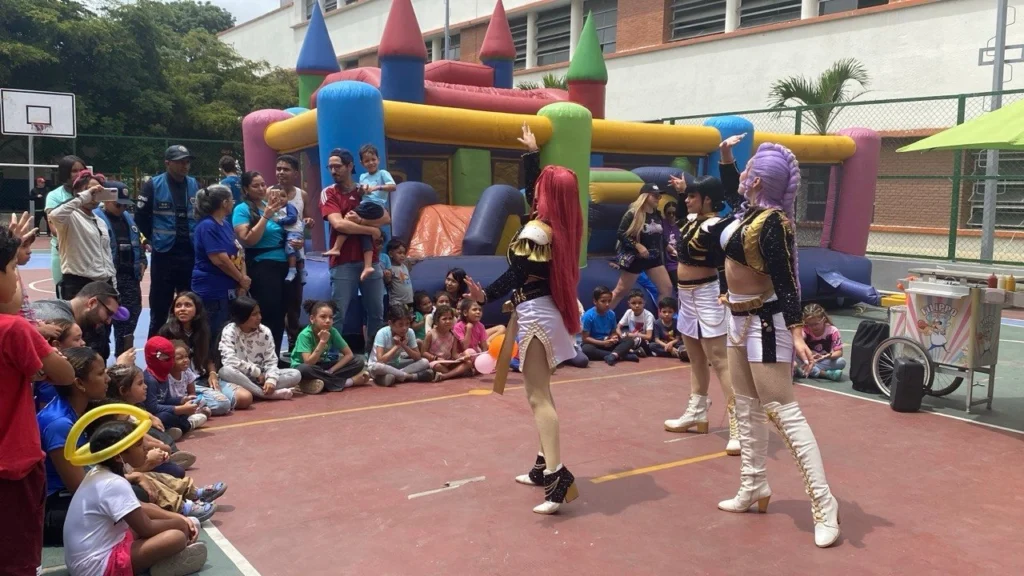
Children in the camps benefit from recreational and psychosocial activities, designed to support emotional recovery after the trauma of the earthquakes. These initiatives aim to restore a sense of normalcy and stability, particularly for younger populations.
Venezuela earthquake humanitarian aid camp distribution and capacity
The Venezuela earthquake humanitarian aid system currently includes 108 camps nationwide, with a total installed capacity of 25,087 spaces, of which 19,583 are occupied. These facilities are strategically distributed to maximize coverage in the most affected regions.
In Caracas, authorities have established 41 camps with a capacity of 11,172 spaces, currently hosting 6,429 people. These centers serve as key hubs for coordination and service delivery within the Venezuela earthquake humanitarian aid framework.
La Guaira, the region most severely impacted by the earthquakes, operates 28 camps, including six undergoing expansion. These facilities are designed to accommodate up to 10,908 individuals, reflecting the scale of displacement in the coastal area.
In Miranda state, 29 camps are active, with a capacity of 3,760 spaces, currently sheltering 1,696 people. Meanwhile, Aragua has 10 camps with 550 available spaces, all of which are fully occupied.
The distribution of camps demonstrates the adaptability of the Venezuela earthquake humanitarian aid system, which continues to adjust capacity based on evolving needs.
Community participation and solidarity networks
A defining feature of the Venezuela earthquake humanitarian aid response is the active participation of local communities. Volunteers, social organizations and residents contribute to the daily functioning of camps, creating what authorities describe as “communities of solidarity.”
This collaborative approach enhances efficiency and fosters social cohesion during a period of crisis. In many camps, residents themselves participate in organizing activities, distributing food and supporting vulnerable groups, reinforcing the collective dimension of the humanitarian response.
Officials stressed that this model strengthens resilience and helps communities recover more quickly from the social and psychological impacts of disaster.
Continued assistance and recovery outlook
The Venezuela earthquake humanitarian aid program remains in full operation as recovery efforts progress. Authorities indicated that camps will continue to function until permanent housing solutions are secured for displaced families.
Ongoing assessments are being conducted to monitor conditions within camps and identify additional needs. These include infrastructure repairs, employment reintegration and long-term social support, ensuring a comprehensive recovery process.
The government reiterated its commitment to maintaining 24-hour assistance services, highlighting the importance of sustained support during the transition from emergency response to reconstruction.
Geopolitical context
The Venezuela earthquake humanitarian aid response takes place within a broader regional and global context where natural disasters increasingly test national capacities and international cooperation mechanisms. The scale of the Venezuelan response reflects both internal mobilization and the importance of external support in managing large-scale crises.
The situation also highlights challenges related to economic constraints and access to resources, which can affect the speed and scope of humanitarian operations. At the same time, the emphasis on community participation demonstrates an alternative model of response based on local organization and solidarity networks.
Regionally, the experience underscores the need for stronger disaster preparedness systems in Latin America, where seismic risks remain significant. The effectiveness of the Venezuela earthquake humanitarian aid system may inform future strategies for managing humanitarian emergencies.
Colectivos artísticos y culturales se desplegaron voluntariamente en los campamentos transitorios de Caracas para brindar acompañamiento psicosocial, recreativo y pedagógico a la infancia afectada por los recientes sismos.
Esta iniciativa busca resguardar la salud…
— teleSUR TV (@teleSURtv) July 11, 2026
From teleSUR English via This RSS Feed.